 AI Rankia
Google Search Ignores the file
“Will neither harm nor help your site's visibility or rankings in Google Search, as Google Search ignores them.”Google's guide to its AI features · checked Oct 9, 2026
Draft an llms.txt from your sitemap, titles and meta descriptions, or test the one you publish against the llmstxt.org format.
Google says Search ignores llms.txt. Who reads it ↓
We read your sitemap (up to 300 URLs), pick up to 40 pages and fetch each one's title and meta description. On a slow site it can take up to about 30 seconds.
Jeremy Howard proposed it on September 3, 2024. It's a proposal, not a web standard: each AI product decides whether to read it.
#Site name (H1)The only required line.>SummaryA blockquote after the H1. Optional, so a missing one shows as info, not an error.##SectionsH2 headings with - [name](url): notes links.##OptionalLinks an agent can leave out when it needs a shorter context.“Will neither harm nor help your site's visibility or rankings in Google Search, as Google Search ignores them.”Google's guide to its AI features · checked Oct 9, 2026

Its crawler page covers robots.txt and doesn't say its bots read llms.txt.
OpenAI crawlers · checked Oct 9, 2026
We haven't seen an llms.txt shown to make ChatGPT, Perplexity or any assistant cite a site. So we don't sell that.
Publish it for tools and agents that read itNo language model is involved: every name and note comes from your own HTML.
Site name from og:site_name or the brand part of the <title>; summary from its meta description.
Sitemap: lines in robots.txt, else /sitemap.xml, /sitemap_index.xml or /sitemap-index.xml.
Home first, then the shortest paths and newest lastmod. Titles and meta descriptions become links and notes.
Caps set in the tool's code.
Sections are named after each URL's first folder; top-level pages go under “Main pages”.
It does: Reads /llms.txt at the root.
It doesn't: Read subpath files like /docs/llms.txt. The proposal allows them, and agents should use the most specific.
It does: Reads 300 sitemap URLs and keeps 40 pages.
It doesn't: Map everything on a large site: it's a starting point.
It does: Uses the titles and meta descriptions in your HTML.
It doesn't: Read titles added by JavaScript. A stale sitemap, frozen lastmod dates or missing meta descriptions pick the wrong pages or leave notes empty.
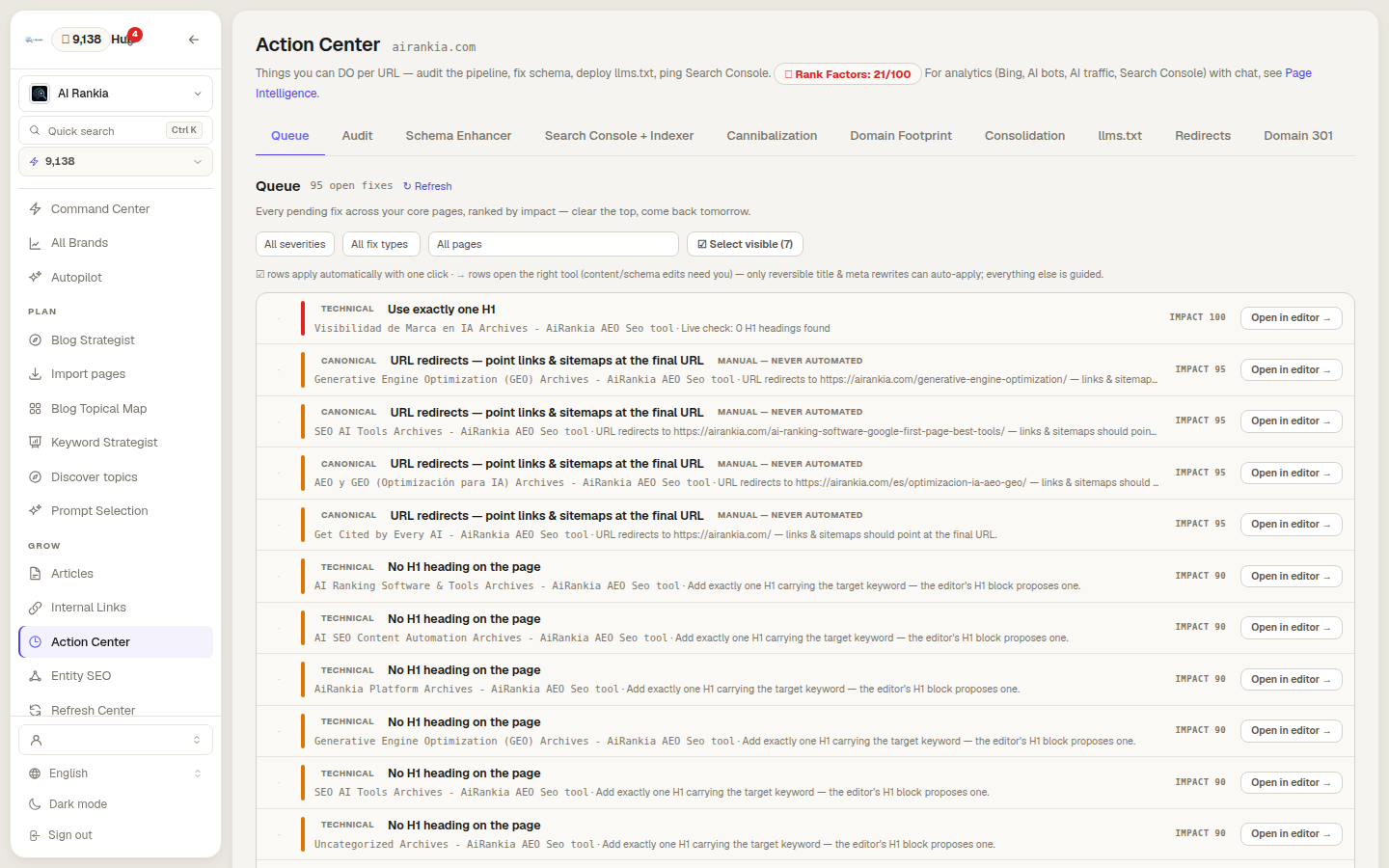
Content Hub's llms.txt tab, in the Action Center, builds the file from up to 100 pages of its internal-links scan, grouped by topic.
/llms.txt with a short summary of a site and links to its key pages, for language models. Jeremy Howard proposed it on September 3, 2024 at llmstxt.org. It's a proposal, not a web standard..md. This tool creates neither.wp-config.php) or use a plugin that serves it, so https://yourdomain/llms.txt answers as plain text. If that URL shows your theme, WordPress is still answering it with a page.The free scan asks AI engines the questions buyers in your category ask, then shows whether they name you, who they name instead and which sources they cite.
/docs/startFirst folder: docs## Docs/tag/invoicingTag pageSkipped/cartCartSkipped/files/guide.pdfFileSkippedWe request https://yourdomain/llms.txt and review it against the llmstxt.org format.
- [name](url): notes; a tool that follows the format may skip any other line/llms.txt with status 200 is called out: a wrong folder, or a plugin catching the URLIt does: Writes one llms.txt.
It doesn't: Write an llms-full.txt or Markdown copies of your pages.
It does: Logs the domain and result counts.
It doesn't: Store your pages' HTML.
One run a day without an email; up to 5 with one.