Key Takeaways for Agency Leaders
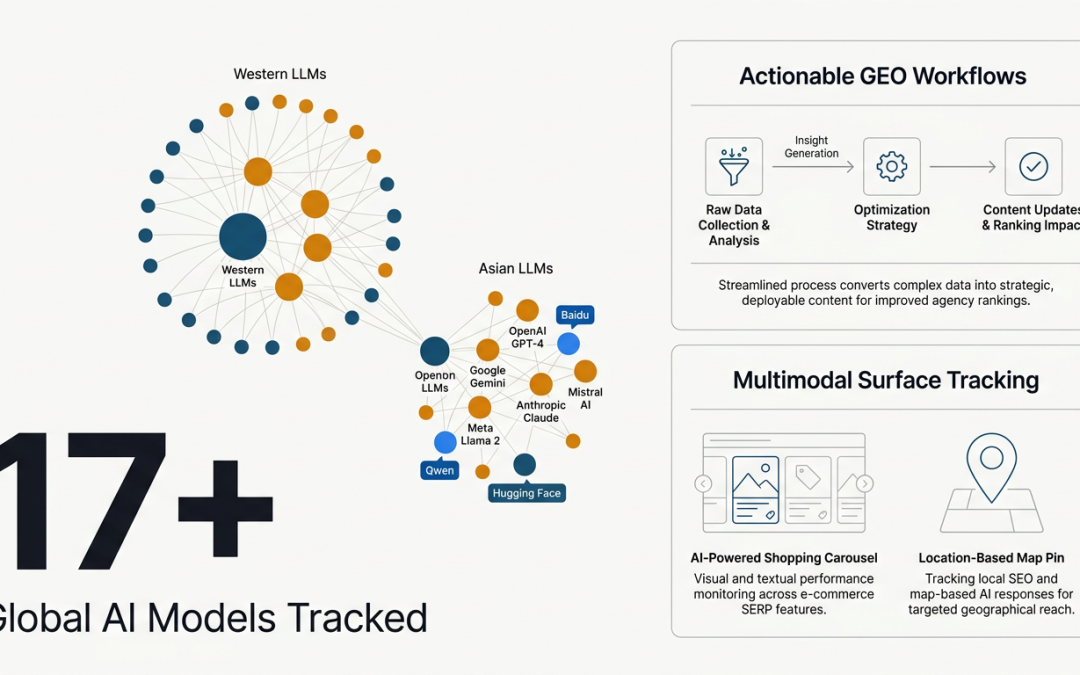
- Best AI Ranking Software for Agencies: The top platforms must move beyond passive tracking. They need to analyze real user-facing answers across 17+ global AI models (including Baidu and Qwen) and provide automated action plans for Generative Engine Optimization (GEO).
- Three Critical Capabilities for 2026:
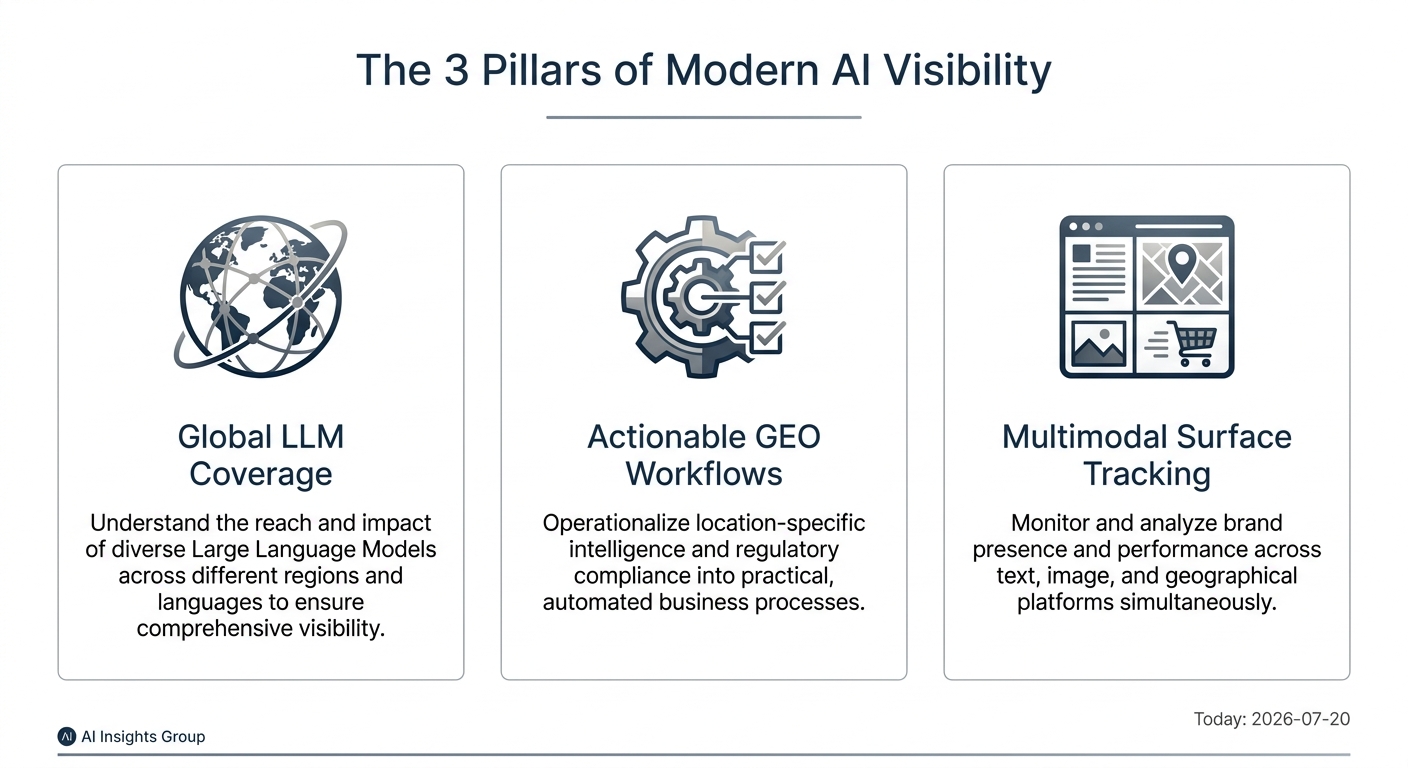
An infographic showing the three critical capabilities for AI ranking software: Global LLM Coverage, Actionable GEO Workflows, and Multimodal Surface Tracking.
1. Global LLM Coverage: Your tool must track beyond Western models like ChatGPT and Gemini to include Asian market leaders, securing true enterprise visibility for clients.
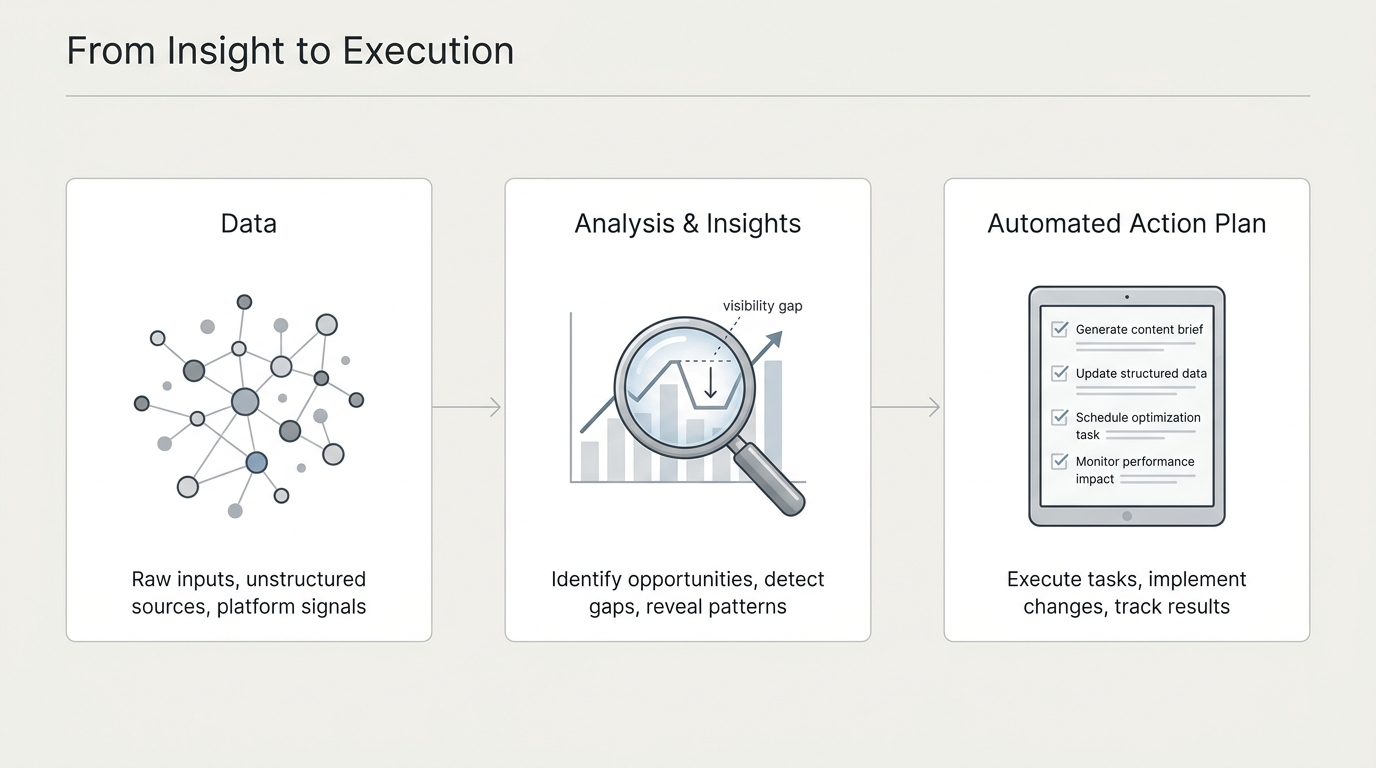
2. Actionable GEO Workflows: The software must convert raw visibility data into specific, automated content update recommendations, bridging the gap between insight and execution.
3. Multimodal Surface Tracking: Visibility tracking must parse real UI elements, including AI-powered Shopping carousels and Map integrations, not just rely on incomplete text-from-API responses.
The ground beneath the digital marketing world has fractured. For years, agencies built their value on mastering the predictable logic of search engine results pages (SERPs). Today, that predictability is gone. When a high-value prospect asks an AI assistant for the best AI for business, they don’t get ten blue links—they get a single, synthesized, and seemingly definitive answer. If your client isn’t in that answer, they don’t exist.
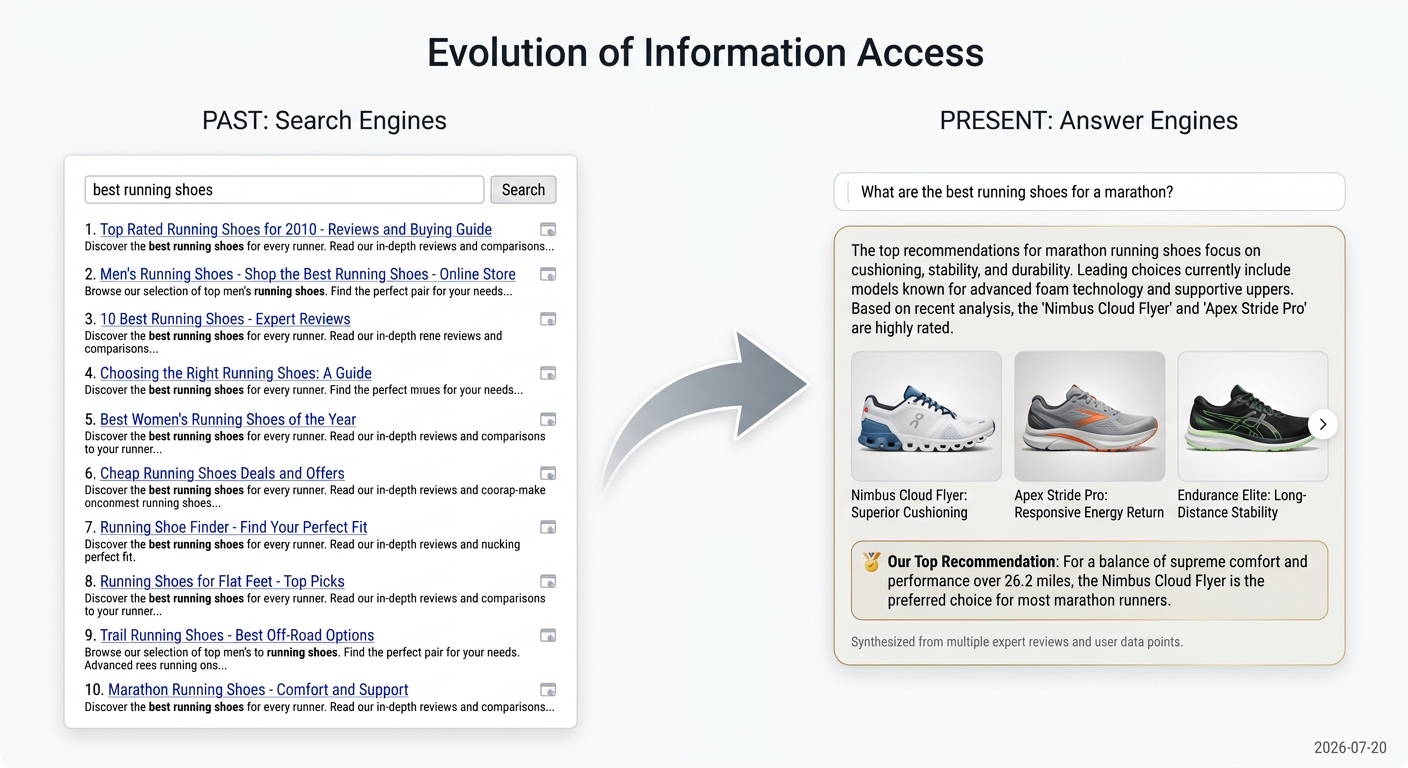
This seismic shift from search engines to answer engines is creating a new and urgent class of client churn risk for agencies still relying on last-generation tools. Finding the best AI ranking software for agencies
⚠️ Urgent Churn Risk
Agencies relying on last-generation SEO tools face a critical blind spot. If your clients are invisible in AI-generated answers, you risk significant client churn as their relevance and revenue decline.
is no longer a forward-thinking initiative; it’s a critical defensive maneuver to protect client revenue and agency reputation.
However, the market is now flooded with legacy SEO platforms that have merely bolted on rudimentary AI tracking. Most fail to capture the nuance of how different Large Language Models (LLMs) generate responses, leaving agencies with a dangerous blind spot. This guide provides a strategic evaluation of the top AI visibility tools for 2026, moving beyond a simple feature list to offer a framework for choosing a platform that not only tracks global AI models but provides the actionable workflows needed to win visibility in this new ecosystem.
Author Credentials & Transparency Disclosure
Pedro Spota
Director of Growth at ELOGIA (Viko Group) and Co-Founder of AI Rankia.
With a background in deploying over 200 AI agents for marketing and SEO, Pedro specializes in building data-driven growth systems and pioneering Generative Engine Optimization (GEO) strategies.
LinkedIn Profile
Transparency Disclosure: This guide is authored by the Co-Founder of AI Rankia. While we evaluate multiple third-party tools (including Profound, ZipTie, and SE Ranking) based on objective 2026 market data and industry reports, we highlight AI Rankia’s specific capabilities in global LLM tracking and automated GEO workflows where they offer a distinct solution.
The Paradigm Shift: From SEO Rank Tracking to GEO Visibility
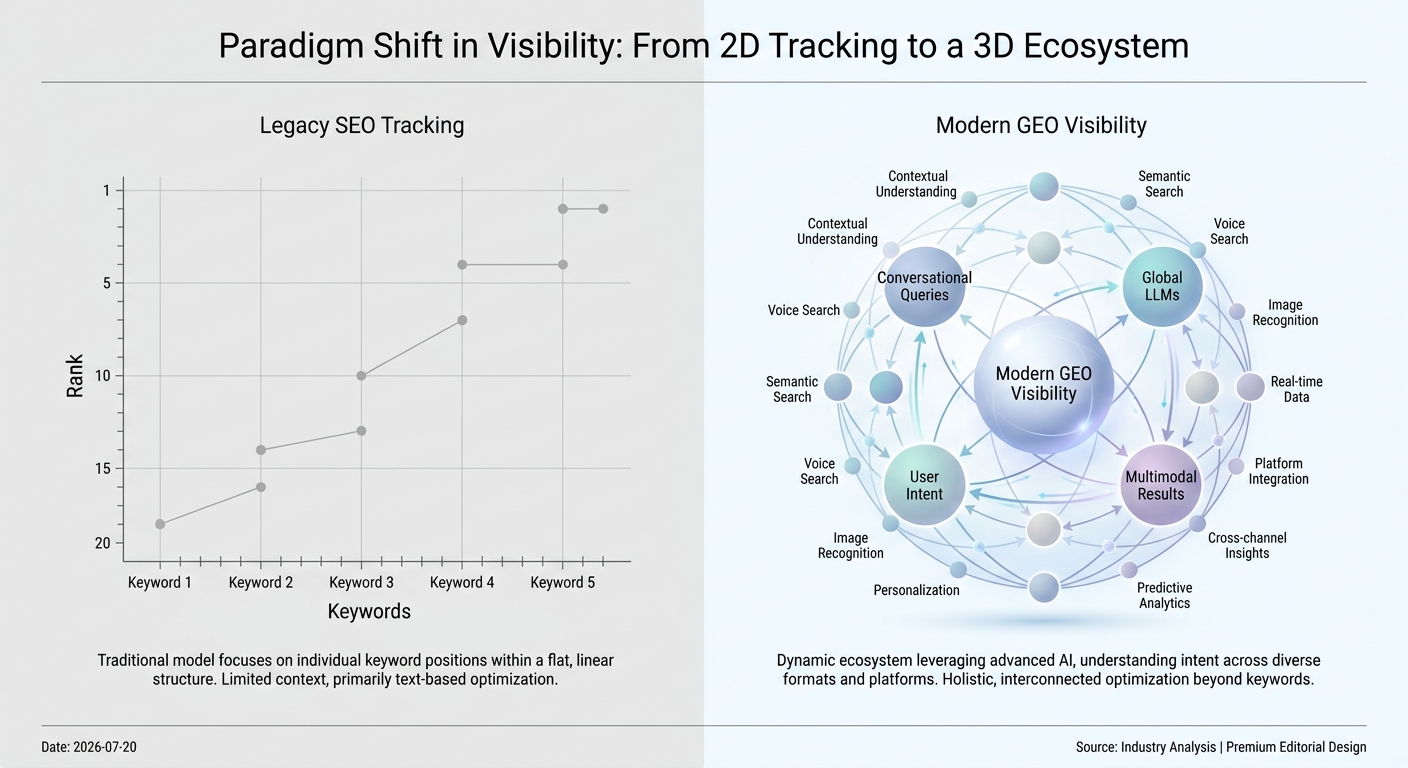
The core difference between a legacy rank tracker and a native AI visibility tool is both architectural and philosophical. Traditional trackers were built to scrape static, list-based SERPs for fixed keywords—a predictable, two-dimensional game. An effective AI visibility tool, however, must operate in a three-dimensional space, simulating complex, conversational queries across a dynamic web of interconnected language models. As experts confirm, the most effective platforms run queries directly on LLM chatbots, mirroring the actual user experience rather than relying on outdated scraping methods [4]
.
This isn’t just a technical distinction; it’s a strategic one. For US agencies managing enterprise B2B SaaS clients, relying on traditional metrics is like using a map of New York to navigate Tokyo. The landscape is fundamentally different. You need software built for the new terrain. The best AI ranking software for agencies provides concrete data on how often clients are recommended as the best AI for business or the top solution for a specific problem, directly measuring influence at the point of decision.
Below is a comparative overview of the top platforms evaluated for the 2026 market:
AI Ranking Software Comparison for Agencies
| Option | Pros | Cons |
|---|---|---|
| AI Rankia | Tracks 17+ global models (incl. Baidu/Qwen) and provides automated GEO execution plans. | Enterprise focus may be overly complex for small, single-market businesses. |
| Profound | Strong agency features like client management, brand configurations, and pitch enablement. | Focuses primarily on Western models; does not parse multimodal UI elements. |
| ZipTie | Practical, focused tracking for Google’s AI Overviews and major answer engines. | Primarily a monitoring tool without automated action plans; limited global coverage. |
| SE Ranking | Hybrid all-in-one platform merging traditional SEO tools with AI search visibility. | AI tracking is an add-on; lacks deep GEO workflow integration and global model depth. |
| Platform | Best For | Core Differentiator | Key Limitation for Agencies |
|---|---|---|---|
| AI Rankia | Global Enterprise GEO | Tracks 17+ global models (Baidu/Qwen) and provides automated execution plans to fix visibility gaps. | Enterprise-grade focus may be overly complex for small, single-market businesses. |
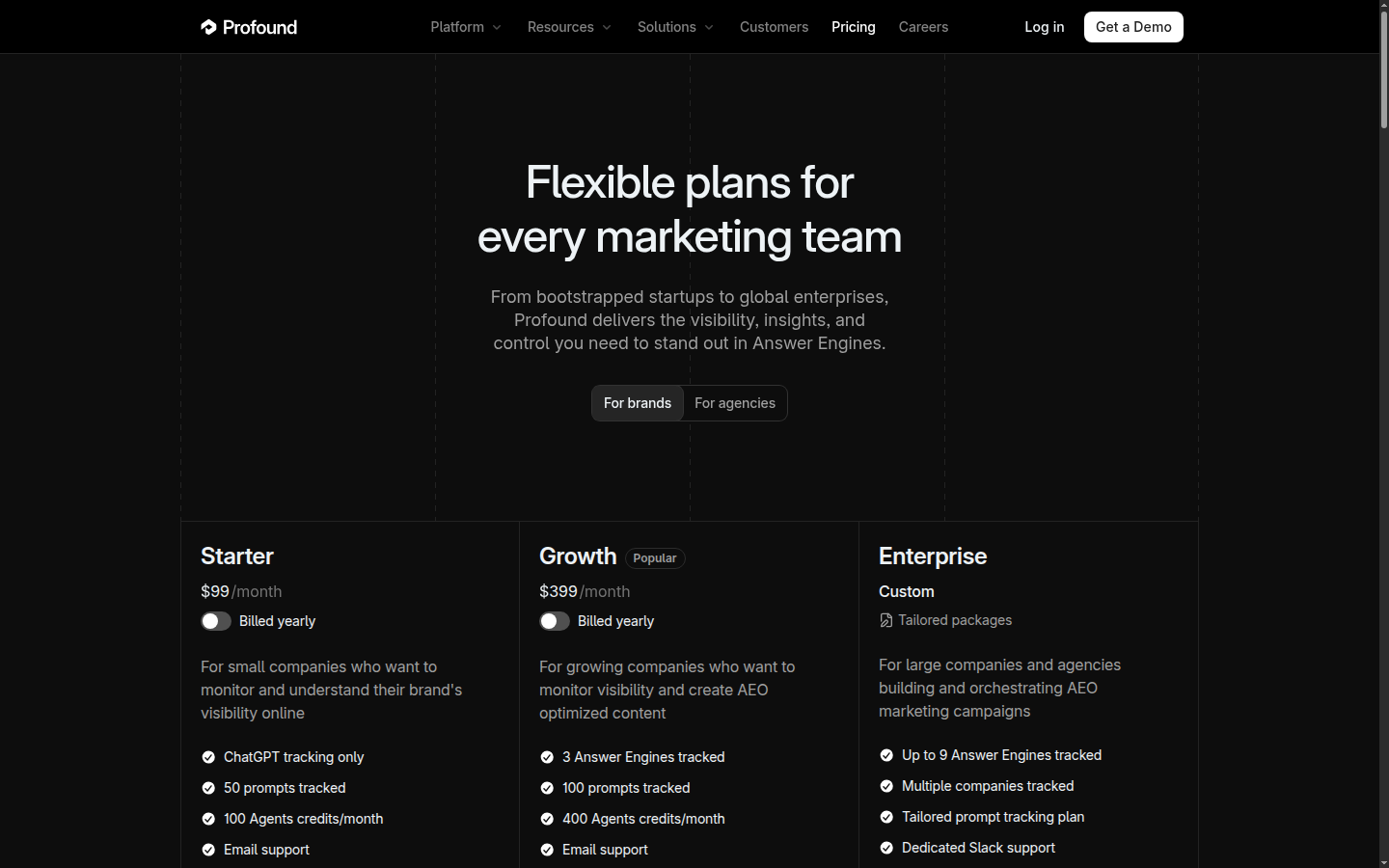
| Profound | Agency Client Management | Features a dedicated “Agency mode” with brand configurations, multi-client management, and pitch enablement features [1]. | Focuses primarily on Western models; does not parse multimodal UI elements like shopping or maps. |
| ZipTie | Focused Google AI Overviews Tracking | Practical, focused tracking specifically designed for Google’s AI Overviews and major answer engines [2]. | Primarily a monitoring tool without automated action plans; limited global model coverage. |
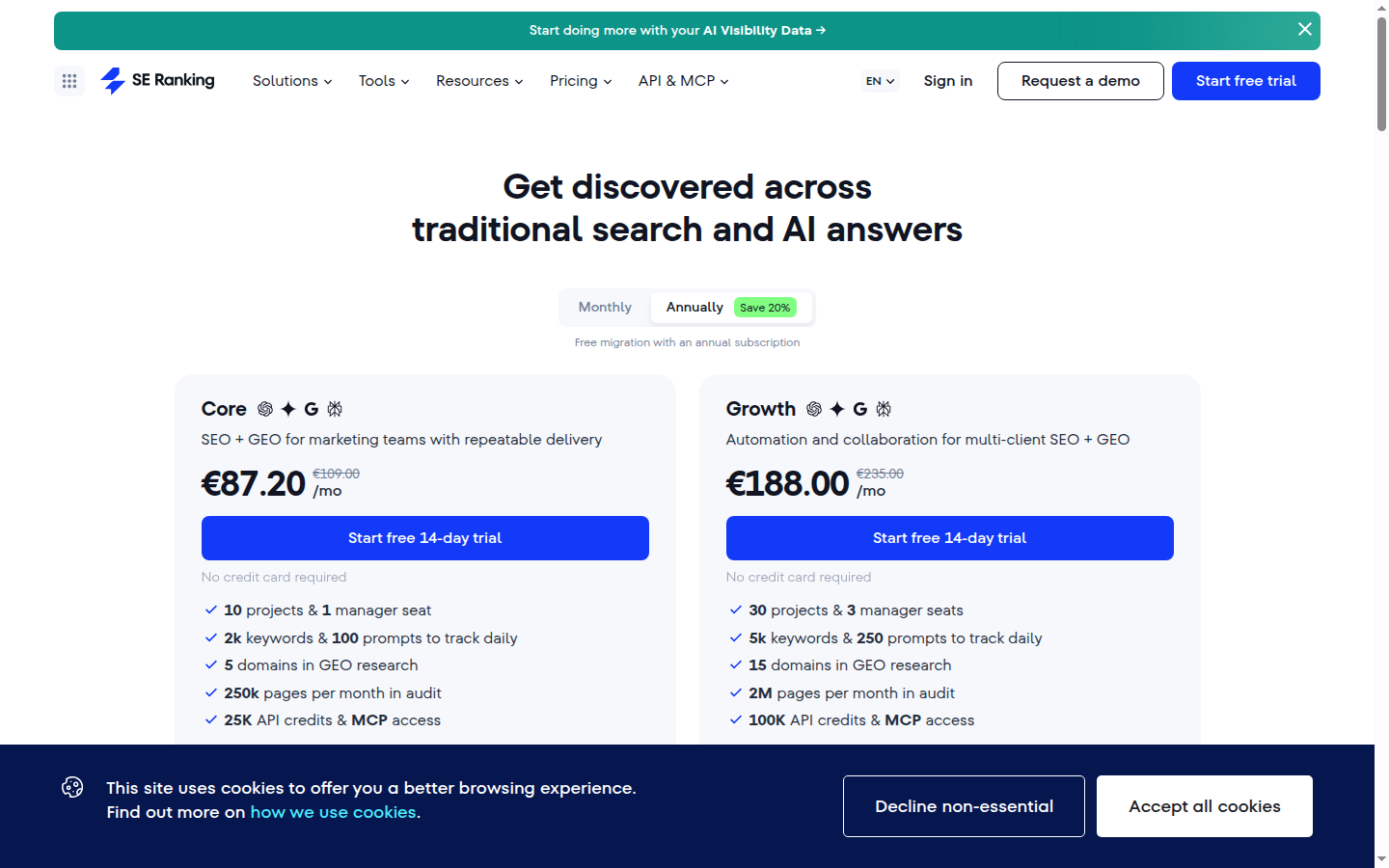
| SE Ranking | All-in-One SEO & AI Tracking | Hybrid capabilities that merge traditional rank tracking, keyword research, and AI search visibility in one platform [3]. | AI tracking is an add-on to a legacy SEO framework; lacks deep GEO workflow integration and global model depth. |
Selecting the right platform depends entirely on an agency’s client roster and strategic goals. While agencies with a domestic focus may find value in Google-centric tools, those serving multinational brands require a comprehensive, global solution to remain competitive.
A Strategic Framework for Evaluating AI Ranking Software
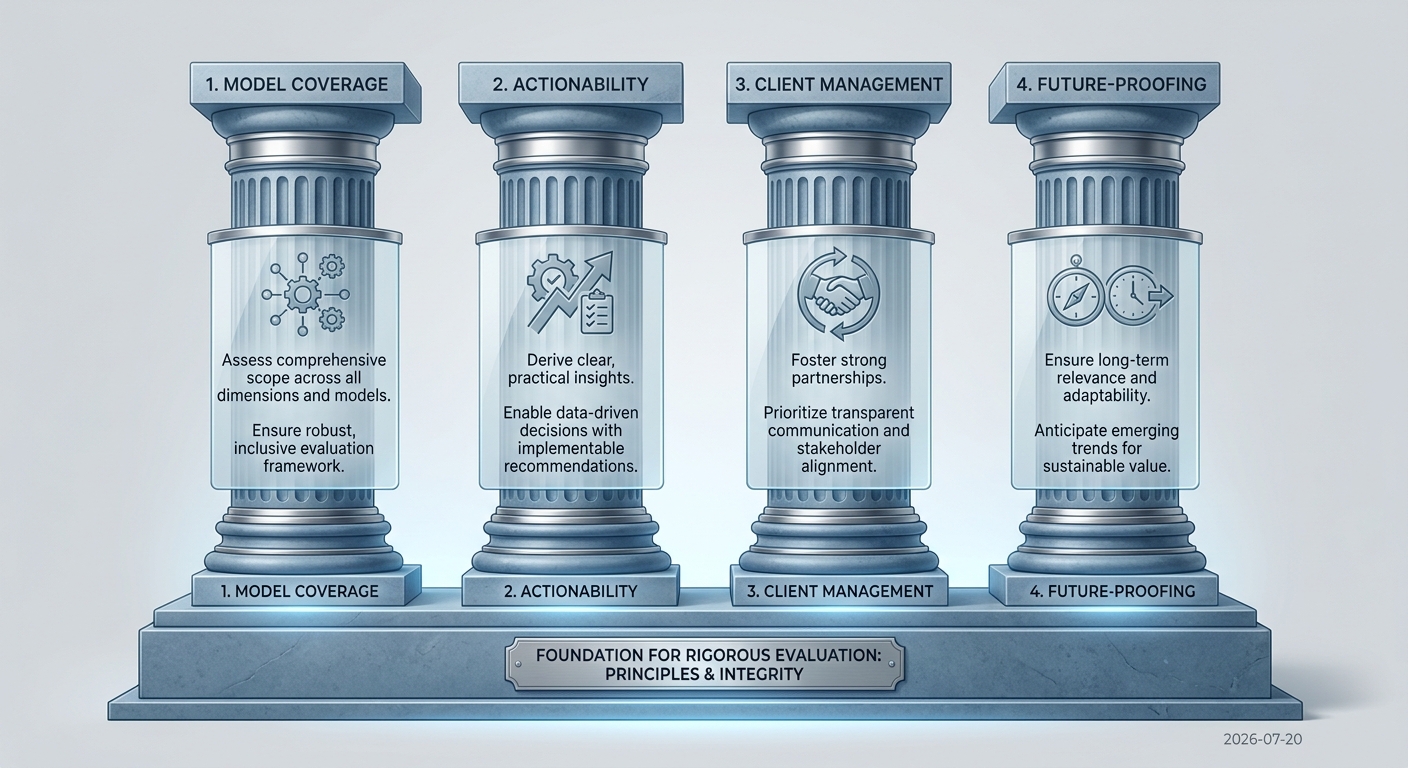
To move beyond marketing claims, agencies need a clear framework for assessing these tools. Use these four pillars to evaluate which platform truly aligns with your agency’s and your clients’ needs for 2026 and beyond.
1. Model Coverage & Granularity (The Global Blind Spot)
The first question must be: what is the software actually tracking? A tool that only monitors ChatGPT and Gemini is insufficient for any client with global ambitions. This Western-centric view is a critical vulnerability for agencies with enterprise clients. A B2B SaaS company cannot afford to ignore the primary answer engines used in the Asian manufacturing hubs it serves.
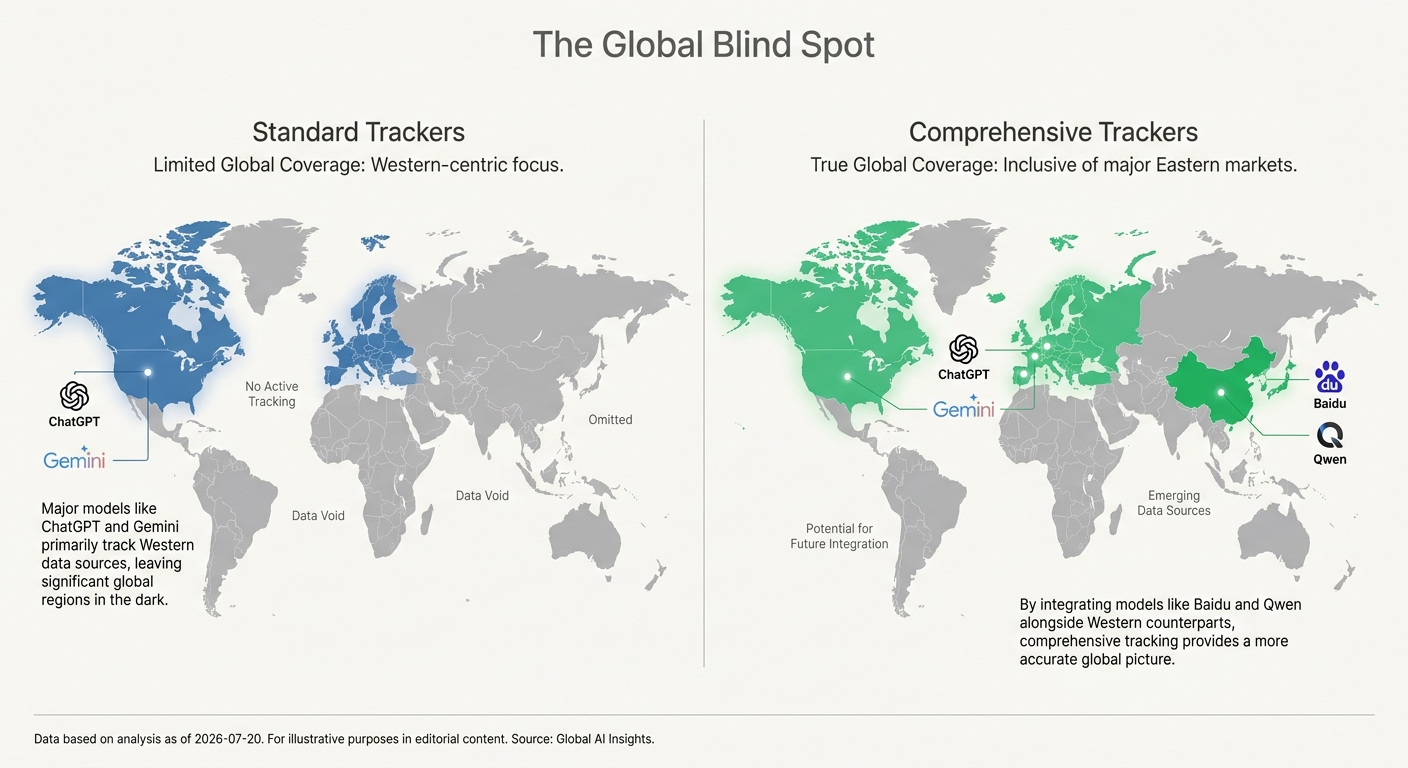
- Global vs. Regional Models: Does the tool cover key international models like China’s Baidu (ERNIE Bot) and Alibaba’s Qwen (Tongyi Qianwen)? Ignoring these cedes entire continents of visibility to competitors. Understanding how LLMs integrate into modern search engines across different regions is vital.
* Standard Trackers (4-6 Models): Typically cover ChatGPT, Claude, Gemini, and Perplexity. They provide a solid baseline for North American and European markets but offer zero visibility into Asian market penetration.
* Comprehensive Trackers (17 Models): Cover Western models alongside Baidu, Qwen, and other localized regional models. This allows agencies to monitor brand presence across diverse linguistic and cultural datasets, providing a true global picture of brand health.
2. Actionability & Workflow Integration (The Actionable Plan Void)
Data without a plan for execution is just noise. Knowing your brand is missing from a Claude response doesn’t tell you how to fix it. This is the core frustration for agencies: passive data creates work without providing a solution. It forces your team to manually diagnose the problem and formulate a content strategy from scratch—a non-scalable process. With 94% of CMOs increasing AEO spending, the pressure is on agencies to deliver results, not just reports.
📊 CMO Investment in AEO
A staggering 94% of Chief Marketing Officers are increasing their budgets for Answer Engine Optimization. Agencies must demonstrate clear ROI and results to meet this growing executive demand.
- Data vs. Insights: Does the tool just report a “share of voice” metric, or does it perform a gap analysis to show why a competitor was mentioned instead of your client?
- Insights vs. Execution: Does the platform stop at analysis, or does it provide an automated workflow to fix the identified gaps? The best systems use AI agents to generate specific content briefs, semantic update recommendations, and structured data adjustments—turning insights directly into actionable tasks. This systematic approach to Generative Engine Optimization / GEO strategies transforms a reporting dashboard into a proactive growth engine.
3. Reporting & Client Management (The Agency-Enablement Layer)
For an agency, the software must also function as a client communication, retention, and acquisition tool. The features must be designed for managing a portfolio of clients, not just a single brand.
Essential Agency-Enablement Features
Multi-Client Architecture
Manage a portfolio of clients with distinct tracking needs, user permissions, and reporting schedules from a single dashboard.
White-Labeling & Brandability
Customize reports with your agency’s branding to reinforce your value and present a unified, professional front to clients.
Pitch Enablement
Run quick visibility audits on prospects to reveal their ‘AI gap’ and demonstrate your ability to solve it, turning software into a new business tool.
- Multi-Client Architecture: Is the platform built for managing multiple client accounts with distinct tracking needs, user permissions, and reporting schedules? Tools like Profound excel here with dedicated “Agency Mode” features designed for this purpose [1].
- White-Labeling & Brandability: Can you customize reports with your agency’s branding to reinforce your value and present a unified front to clients?
- Pitch Enablement: Can you quickly run a visibility audit for a prospective client to demonstrate their “AI visibility gap” and showcase your agency’s ability to solve it? This feature turns the software into a new business tool.
4. Future-Proofing & Scalability (The Multimodal Frontier)
The AI landscape is evolving weekly. A tool that is cutting-edge today could be obsolete in six months. A critical oversight in the current AEO landscape is the assumption that AI visibility is limited to text-based chat responses.
- Roadmap Transparency: Is the provider clear about their roadmap for integrating new and emerging LLMs?
- Multimodal Support: Does the platform’s architecture support the future of search, which is increasingly visual, local, and conversational? AI is rapidly integrating into local maps and shopping graphs. A brand mention is valuable, but having your client’s product appear in an interactive AI shopping carousel is a different order of magnitude.
- API vs. Real UI: Does the platform rely solely on text-based API calls, or does it parse the actual user-facing interface? As practitioners note, API data can be misleading. True visibility means tracking how a brand appears in rich formats. This is essential for effectively managing brand reputation across AI models
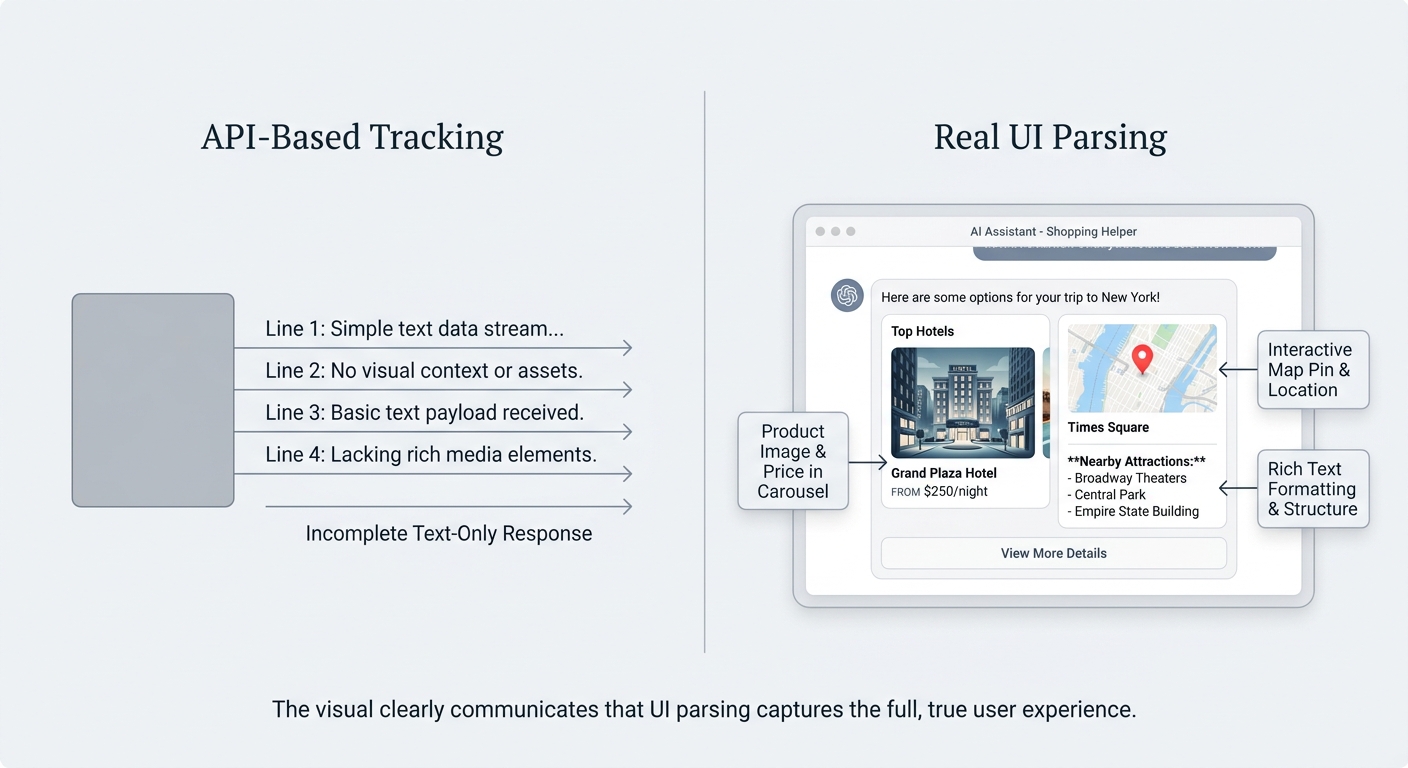
A comparison showing that API tracking provides incomplete text, while Real UI parsing captures the full visual user experience with images and maps. , as a negative review in an AI shopping graph can be far more damaging than a missing text mention.
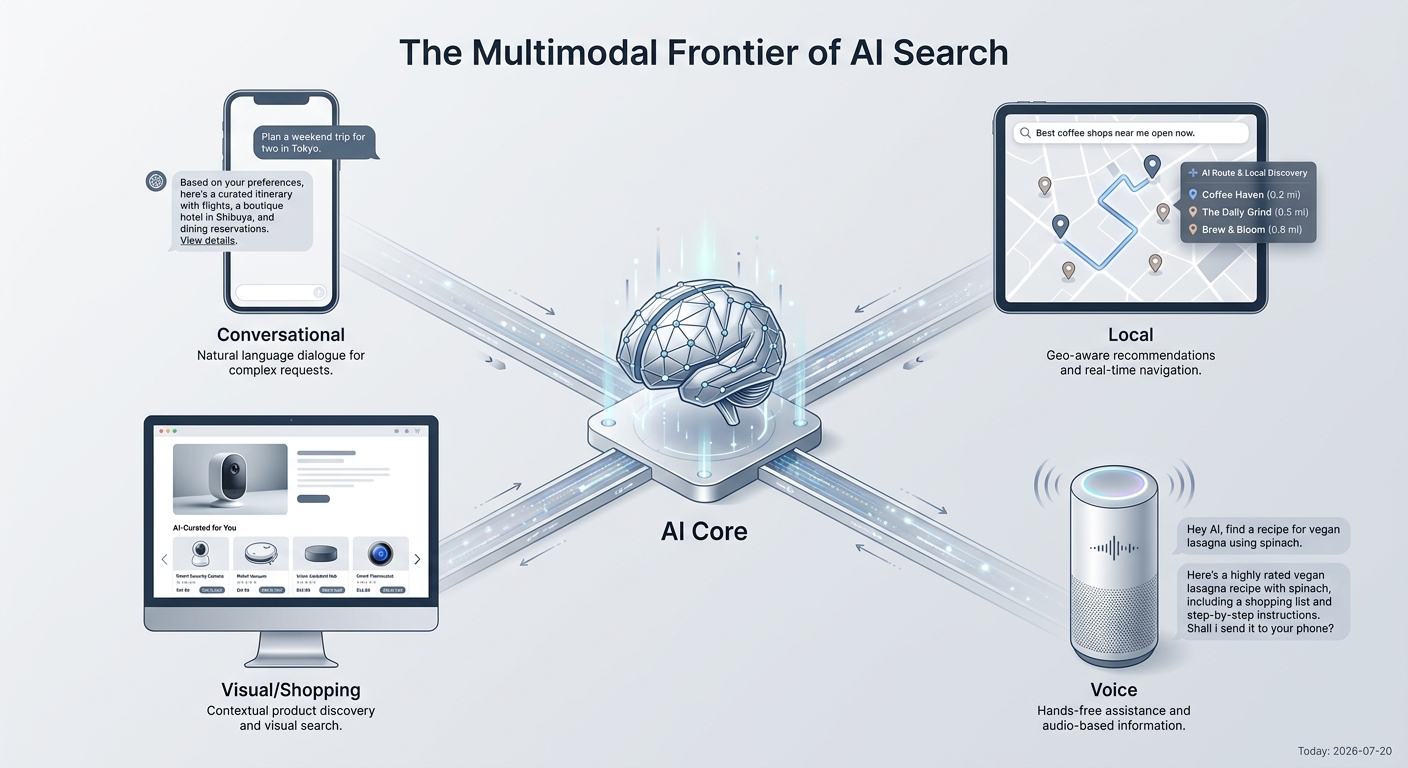
Using this framework, an agency can cut through the marketing hype and identify a true strategic partner, not just another software subscription.
Limitations, Alternatives & Professional Guidance
While advanced platforms offer powerful solutions, it’s crucial to align the tool with the client’s reality. AI Rankia is an enterprise-grade tool designed for complex, multinational data tracking and automated optimization. For a small local business with zero international presence, investing in 17+ model tracking is likely unnecessary and not cost-effective.
✅ Choose the Right Tool for the Job
Before investing, audit your client’s needs. An enterprise-grade tool with 17+ global models is vital for multinational brands but may be overkill for a small local business. Match the software’s capabilities to your client’s actual markets and goals.
In such cases, more focused and affordable trackers may be a better fit:
- ZipTie: An excellent choice for agencies or SEOs who want a dedicated, no-frills tool for monitoring Google’s AI Overviews and major answer engines [2]. It’s practical for domestic clients where Google is the primary channel.
- SE Ranking: A strong option for agencies that want to consolidate their tool stack. It offers a hybrid solution that combines its established traditional SEO features (rank tracking, site audits) with newer AI search visibility functions [3].
Marketing directors and agency leads should audit their clients’ current international traffic, strategic growth markets, and AEO goals before investing. Understanding the actual audience distribution will clarify whether you need the absolute best AI ranking software for agencies with global reach or if a more localized, hybrid rank tracker is a smarter fit.
The most significant limitation of any AI ranking software is that it is not a substitute for a strategist. A tool can provide a firehose of data and recommendations, but it requires a skilled professional to interpret the output, prioritize actions based on business impact, and execute the changes. For example, a content optimizer might identify dozens of semantic terms to add to an article. A strategist must decide which terms align with the user intent and brand voice, and which are simply noise. The tool provides the ‘what,’ but the human provides the ‘why’ and ‘how.’ The value is unlocked through human action, not the software license itself .
This human element is critical when deciding between expanding your tool stack and seeking professional guidance. If your in-house team lacks the specific expertise required for complex challenges, a new tool will not solve the root problem. A content-first approach, for instance, often lacks the technical depth needed for JavaScript-heavy or large enterprise sites . In these scenarios, partnering with a specialized agency is more effective. While a full-service agency engagement can start at $10,000 per month, this investment buys dedicated expertise that can navigate technical complexities a tool can only flag .
When evaluating alternatives, whether software or agency partners, focus on the specific problem you need to solve. A mismatch in specialization can lead to wasted resources. For example, an agency with deep local SEO expertise may not be equipped for the nuances of a national B2B SaaS campaign . For tool selection, consider the primary workflow:
- For ongoing content performance: Tools like Rankability are designed for continuous monitoring to keep content competitive over time, differing from tools focused on one-time initial optimization .
- For tracking conversational AI: Platforms such as Semrush have evolved to track brand and client citations within AI chat responses, a critical function for measuring visibility beyond traditional search engine results pages .
- For broad platform comparison: Agencies evaluating a replacement for a specific high-end tool should look at dedicated alternatives like OtterlyAI, Peec AI, or AirOps to compare features for agency workflows .
Ultimately, the right choice depends on a clear-eyed assessment of your team’s capabilities. An agency with a generalist positioning may dilute its AI SEO specialization . Therefore, whether you’re buying software or hiring experts, demand evidence of a purpose-built methodology that directly addresses your specific visibility challenges in generative AI environments.
Frequently Asked Questions (FAQ)
What should an agency look for in an AI ranking tool?
An agency should prioritize four things: 1) Global model coverage that matches their clients’ markets, 2) Actionable workflows that go beyond data reporting, 3) Multi-client management and white-label reporting features, and 4) The ability to track multimodal results like AI-powered maps and shopping carousels.
What is the number 1 AI software for GEO?
There is no single “number one” software for all use cases. For agencies managing global enterprise clients, a platform like AI Rankia is superior due to its 17+ model tracking and automated GEO action plans. For agencies focused solely on Google’s ecosystem, a tool like ZipTie may be more suitable.
What are the top 5 AI software companies for agencies?
The key players for agencies include the foundational model providers (OpenAI, Google, Anthropic, Perplexity) that create the environment, and the visibility platforms that enable optimization within it. For the latter, the top companies are those offering specialized agency features, such as AI Rankia (global GEO workflows), Profound (client management), and ZipTie (Google AI Overview focus).
How does AI ranking software impact client acquisition?
The best platforms include “pitch enablement” features. They allow an agency to run a quick AI visibility audit on a prospective client, revealing their “AI gap” (where they fail to appear in key AI-generated answers). This data-driven insight provides powerful proof of need and positions the agency as a forward-thinking strategic partner.
Who are the big 4 AI agents or models to track?
In the West, the most-used chatbots in the US are ChatGPT (OpenAI), Gemini (Google), Copilot (Microsoft) and Meta AI (Pew Research Center, 2026). Claude (Anthropic) and Perplexity, an answer engine that routes queries across several models, including its own Sonar (Perplexity), are also worth tracking. However, a truly global strategy must expand this list to include regional leaders like Baidu’s ERNIE (China) and Alibaba’s Qwen (China/Asia) to ensure comprehensive digital visibility.
Is ChatGPT enough for AI tracking?
No. Relying solely on ChatGPT for tracking is a critical mistake. It provides a narrow, single-model view and ignores the diverse ecosystem of AI assistants that consumers and business buyers use. Furthermore, a standalone chatbot offers no scalable tracking, historical data, or competitive analysis features, which are essential for professional agency services.
Conclusion: From Monitoring to Winning
The era of passive SEO monitoring is over. In the age of AI-driven answers, simply knowing where you rank is an obsolete metric. The new mandate for agencies is active Generative Engine Optimization (GEO)—the ability to influence and secure your clients’ presence within the AI-generated responses that now shape buying decisions. Success in 2026 and beyond requires a fundamental shift in both tooling and strategy.
Agencies must adopt platforms that provide a decisive advantage across three critical fronts:
- A Geographic Advantage: Tracking 17+ global models, including Baidu and Qwen, to protect and expand international market share for clients.
- An Actionability Advantage: Moving beyond data dashboards to automated workflows that analyze visibility gaps and prescribe specific content fixes.
- A Format Advantage: Parsing real user-facing UI elements like AI Shopping and Maps, not just relying on incomplete text-based API data.
The agencies that thrive will be those that equip themselves with tools built for this new reality. While AI tool adoption has surged among growing teams [5], the competitive edge will go to those who choose platforms that provide not just data, but direction. Future-proof your agency’s strategy and demonstrate undeniable value to your clients.
Access a Free Trial of AI Rankia to see your brand’s real visibility across global AI engines and experience the impact of automated GEO workflows firsthand.
References
[1] 7 Best AI Visibility Tools for Marketing Agencies [2026]
[2] 22 Best AI Search Rank Tracking & Visibility Tools for 2026
[3] 11 Best AI Rank Tracking Tools For 2026
[4] 8 Best AI Visibility Tools You Need to Know In 2026
[5] 11 Best AI Tools (2026): Ranked & Reviewed
[6] Best AI SEO Agency | How to choose an AI SEO agency? – ZipTie.dev
[7] 17 Best AI SEO Tools We Tested on Real Campaigns
[8] We Tested 15 Best AI SEO Tools. Here’s Our Favorite for 2026 | Rankability Blog
[9] Top 10 AI SEO Agencies in 2026: What They Actually Deliver and How to Evaluate Them – Onely
Published pricing
| Tool | Plan | Price | Billing | What it includes |
|---|---|---|---|---|
| Profound | Starter | on request | billed yearly | ChatGPT tracking only |
| Profound | Growth | on request | billed yearly | 3 Answer Engines tracked |
| Profound | Enterprise | on request | Tailored packages, Tailored pricing terms | Tailored packages |
| SE Ranking | Enterprise | on request | Flexible terms, Custom limits and pricing | Full API & advanced integrations |
Source: Profound · SE Ranking
How we evaluated these tools
This comparison is a documentary evaluation, not a hands-on benchmark: for each tool we reviewed its public website, its pricing page and its published feature list, and included the screenshots you see above. Prices are the ones displayed on each vendor's site when we reviewed them (annual billing where the vendor shows it that way) and can change; every table links to the source page so you can check it. We did not run paid campaigns on every tool for this article.