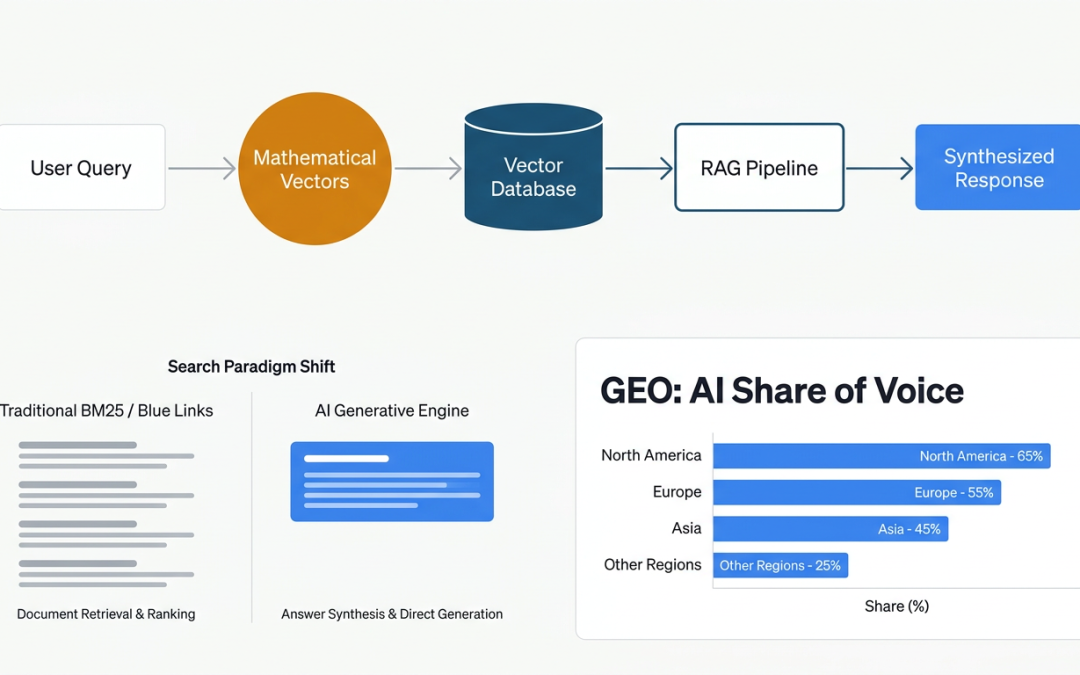
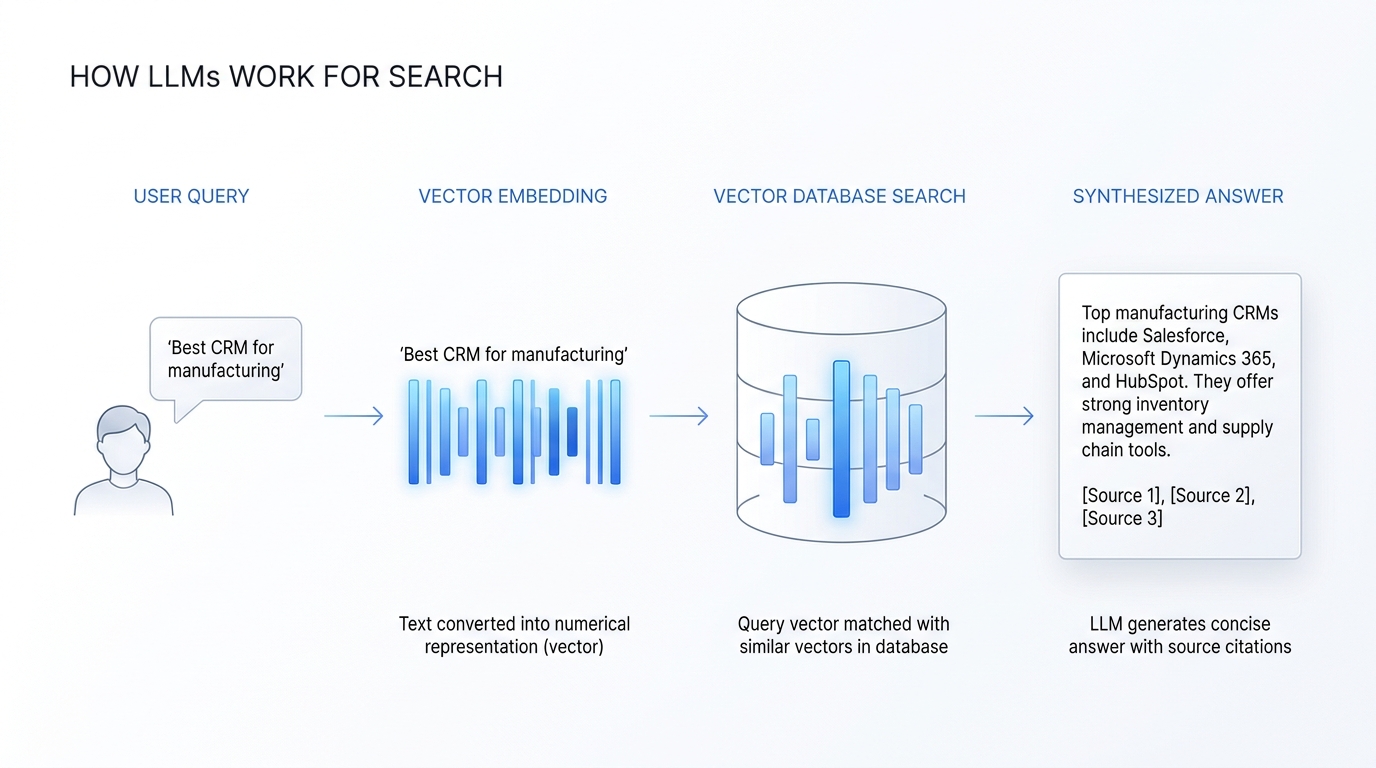
- Direct Answer: Understanding how LLMs work for search begins with the process of translating user queries into mathematical vectors, known as embeddings. The system then retrieves semantically relevant data chunks from a vector database to generate a synthesized, conversational response.
- Primary Keyword: how llms work for search
- Core Mechanism: These engines bypass traditional BM25 keyword matching in favor of Retrieval-Augmented Generation (RAG) to help ensure real-time accuracy and reduce hallucinations.
- Business Impact: US enterprises must optimize for LLM search using Generative Engine Optimization (GEO) to maintain brand visibility and secure their AI Share of Voice across fragmented platforms.
The transition from traditional blue-link search engines to AI-driven generative engines represents the most significant disruption to digital visibility in a generation. For US enterprises, the risk is no longer about dropping a few ranks on Google; it’s about becoming entirely invisible. When a user receives a direct, synthesized answer from an AI, there is no second page. Your brand is either the source of that answer or it doesn’t exist. For digital marketers, CTOs, and enterprise architects, understanding exactly how large language models perform search is now a mission-critical imperative for survival and growth.

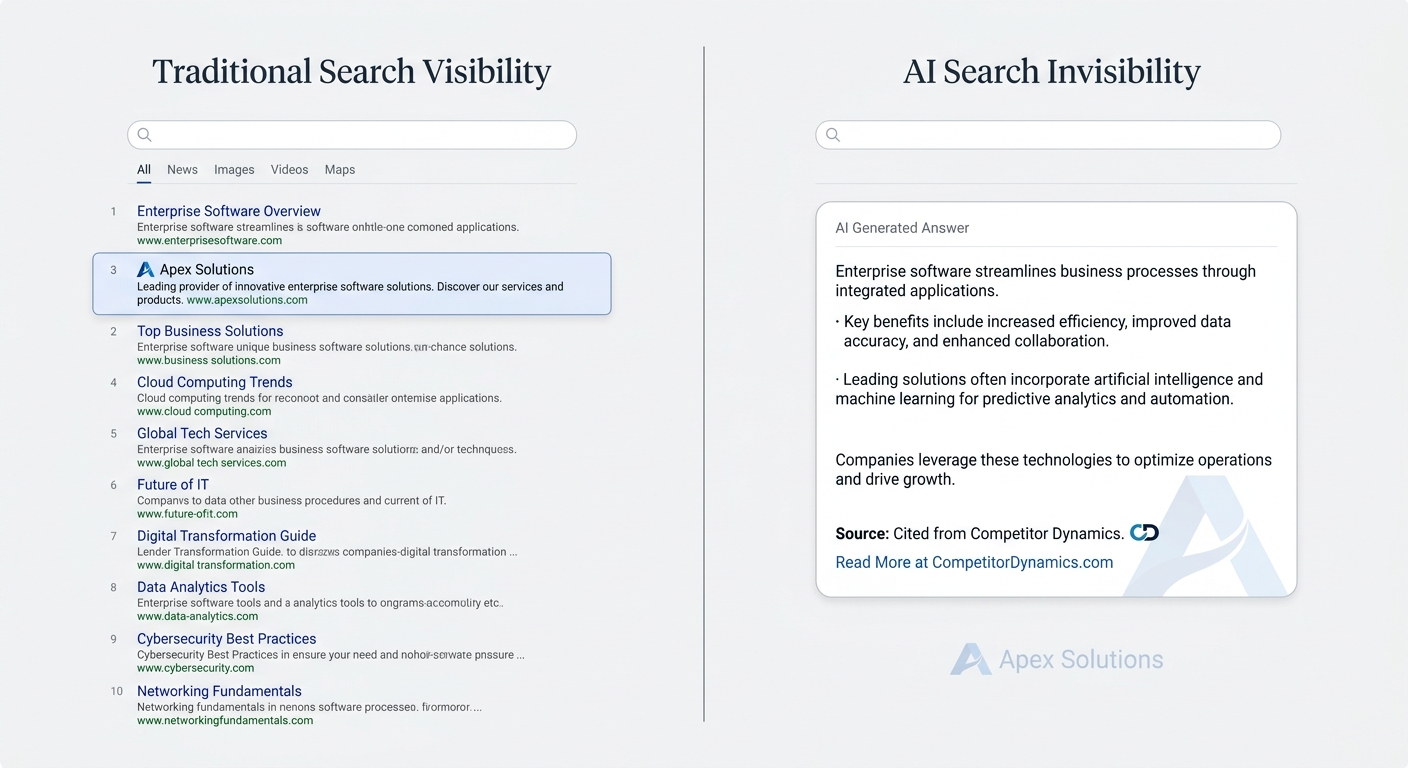
This guide moves beyond surface-level explanations. We will dissect the complex technical pipeline that powers modern AI search, from NLP tokenization to the nuances of Retrieval-Augmented Generation (RAG). More importantly, we will reveal the precise Generative Engine Optimization (GEO) framework required for the US market, explaining how enterprise brands can build a defensible strategy to dominate AI Share of Voice and thrive in this fragmented, rapidly evolving landscape.
Author: AI Rankia Enterprise Search Team
Bio: Leading US-based Generative Engine Optimization (GEO) specialists helping brands track and maximize visibility across 17+ AI models.
Transparency Disclosure: This guide was developed using proprietary data from AI Rankia’s LLM Readiness audits, combined with peer-reviewed machine learning documentation and first-hand insights from active SEO and AI practitioners. No generative AI was used to fabricate statistics or methodologies.
Expert Consensus: The Shift to AI Search
“LLM search is a marketing channel and it uses basic search engines principles to function.” — JD Guerrero, LinkedIn [7]
“Yesterday I did a search with an LLM and I doubted the search it had done, so I asked to tell me which search string it had used…” — Practitioner on r/SEO [8]
“Modern LLMs often do provide a correct answer and represent the source material quite well. But the devil lies in the details.” — Phillip Carter, AI Developer [5]
Expert Consensus: The Shift to AI Search
Practitioners agree that LLM search functions like a new marketing channel, using core search principles. While answers are often correct, the details of how an LLM arrived at its conclusion are critical, as users are beginning to question the underlying search strings used by the AI.
AI Gap 1: Decoding the LLM Search Mechanism Pipeline
To comprehend how LLMs work for search, one must recognize the fundamental shift from lexical, keyword-based systems (like BM25) to semantic, meaning-based vector search. This transformation relies on advanced Natural Language Processing (NLP) to understand contextual meaning rather than just matching strings of text. According to Cisco, an LLM accepts a natural language prompt to craft a coherent response, but the process to get there is a sophisticated, multi-stage pipeline [4]

.
For enterprises, mastering each stage of this pipeline is essential for ensuring their content is discoverable.
- 1. Query Understanding & Refinement: When a user inputs a prompt like “What are the best CRMs for a mid-market manufacturing company?”, the system does not simply look for those keywords. The LLM first engages in query decomposition and expansion. It formulates multiple internal, more specific search strings to triangulate the user’s true intent, such as “CRM features for manufacturing,” “mid-market CRM pricing,” and “top-rated CRMs for supply chain management.” As noted in a practitioner debate on r/SEO, users often wonder which specific search strings LLMs generate to fetch data [8]
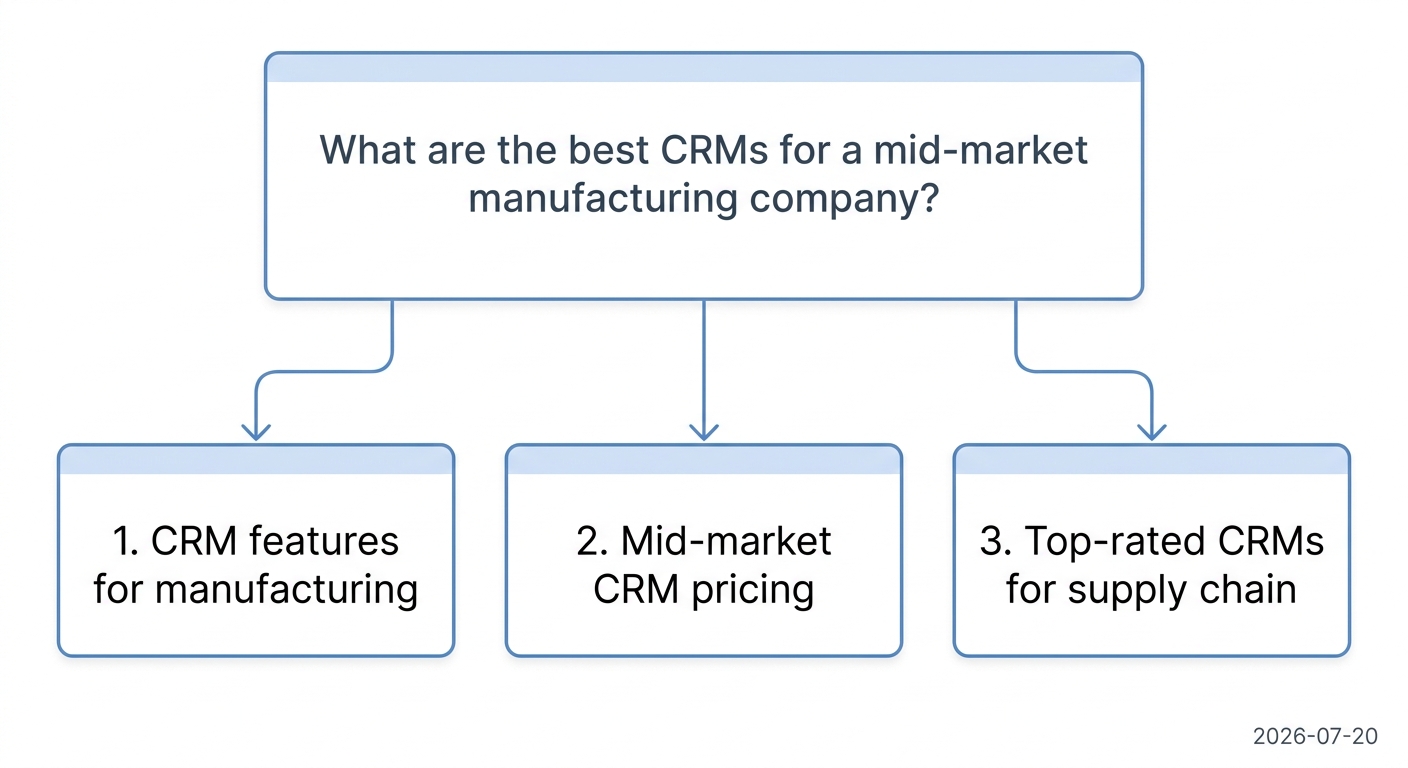
Diagram showing how a single broad user query is broken down into multiple specific internal queries by the LLM system. . This internal refinement is the first gatekeeper; if your content isn’t relevant to these refined queries, it’s immediately disqualified.
- 2. Vector Search & Embedding: The refined queries are then translated into high-dimensional mathematical representations known as embeddings. Each embedding is a vector that captures the semantic essence of the text. The engine then queries a specialized vector database—a market projected to grow to $4.3 billion by 2028—to find data chunks whose embeddings are semantically “close” to the query’s embedding
📊 The Rise of Vector Databases
The market for specialized vector databases, crucial for powering semantic search in LLMs, is projected to reach $4.3 billion by 2028, signaling a massive industry shift towards this technology.
. This “closeness” is typically measured using cosine similarity, which evaluates the angle between two vectors. A smaller angle signifies higher semantic relevance, a far more nuanced metric than simple keyword overlap.
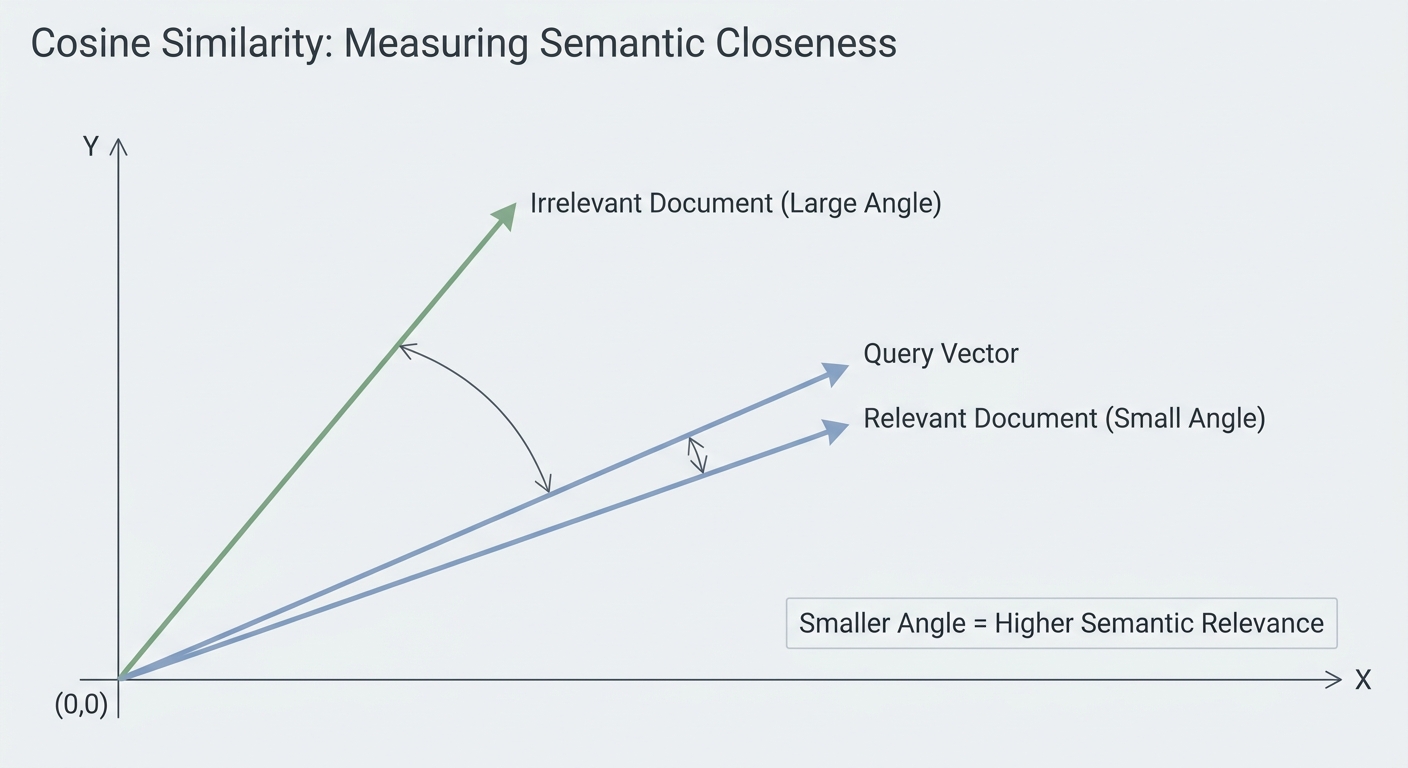
- 3. Ranking & Retrieval: Once the vector database identifies the nearest neighbors to the query embedding, it retrieves the highest-scoring vectors. This is not a simple “top 10” list. The system may pull multiple content chunks from various sources. In enterprise environments, this retrieval phase is highly optimized for speed. Retrieval speed matters, as even small delays can degrade user experience. The efficiency of this step depends on how well the source content was indexed in the first place.
- 4. Synthesis & Generation: Finally, the retrieved data chunks are collated and fed into the LLM’s context window as “grounding” material. The model is then instructed to synthesize this information, applying its advanced language capabilities to generate a final, coherent output that directly answers the user’s initial prompt. Crucially, the LLM often cites the retrieved sources, making the origin of the information transparent and verifiable.
This sophisticated pipeline highlights why traditional SEO tactics are insufficient. The process requires specific Indexing strategies that differ radically from how traditional Google bots operate. While conventional crawlers prioritize following
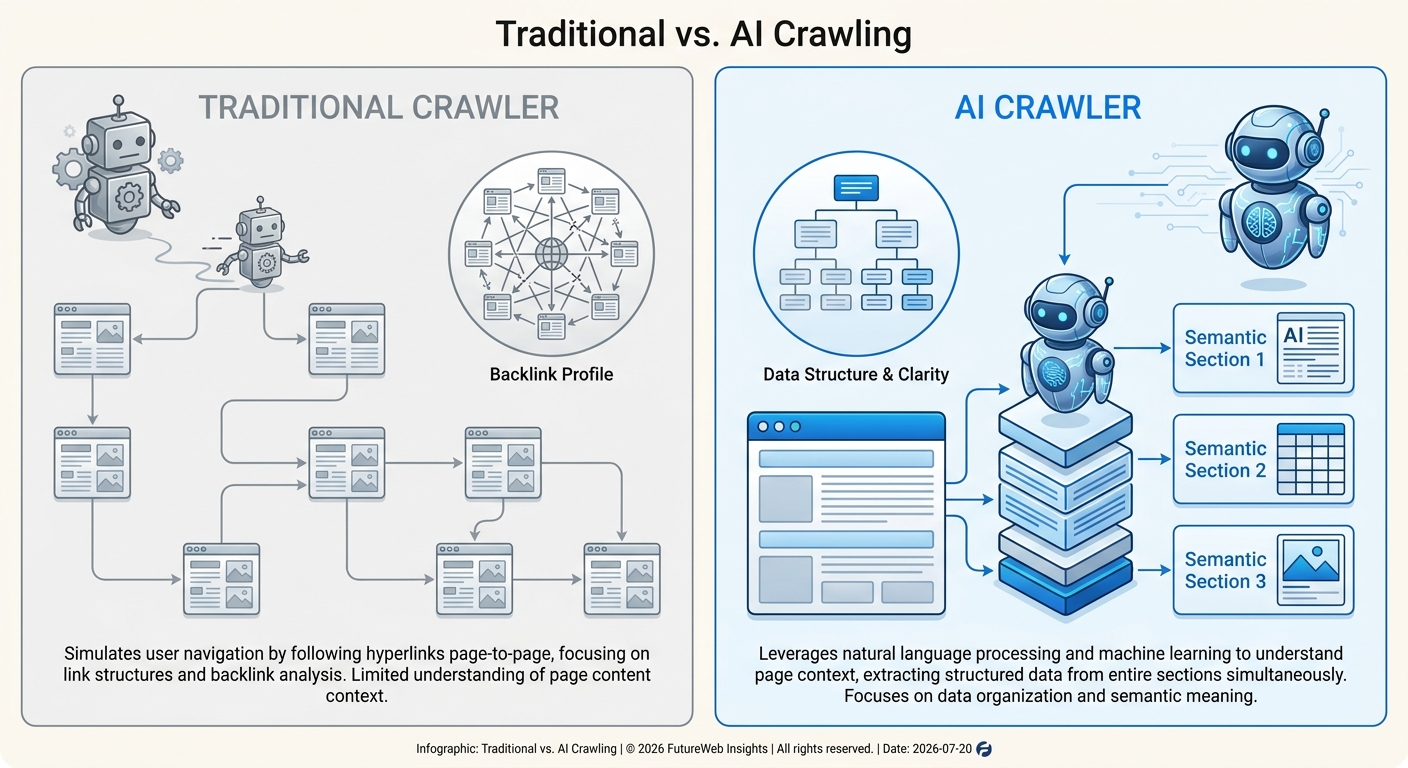
tag hyperlinks and analyzing backlink profiles, AI crawlers prioritize semantic clarity and well-structured, easily ingestible data chunks.
Proper Indexing for LLMs means ensuring your content is formatted so vector databases can accurately parse, embed, and store it. This involves breaking down monolithic pages into logical, self-contained sections. Without optimizing for this foundational step, even the highest-quality content may remain invisible to the retrieval mechanisms powering modern generative engines, leaving brands completely absent from crucial AI-generated responses.
AI Gap 2: Solving Real-Time Accuracy with RAG
Retrieval-Augmented Generation (RAG) is the critical architectural component that bridges a static, pre-trained large language model with the live, constantly updating internet. By connecting a “frozen” model to external, real-time knowledge bases, RAG ensures that generated answers are grounded in current facts rather than outdated training data, dramatically reducing the risk of “hallucinations.”
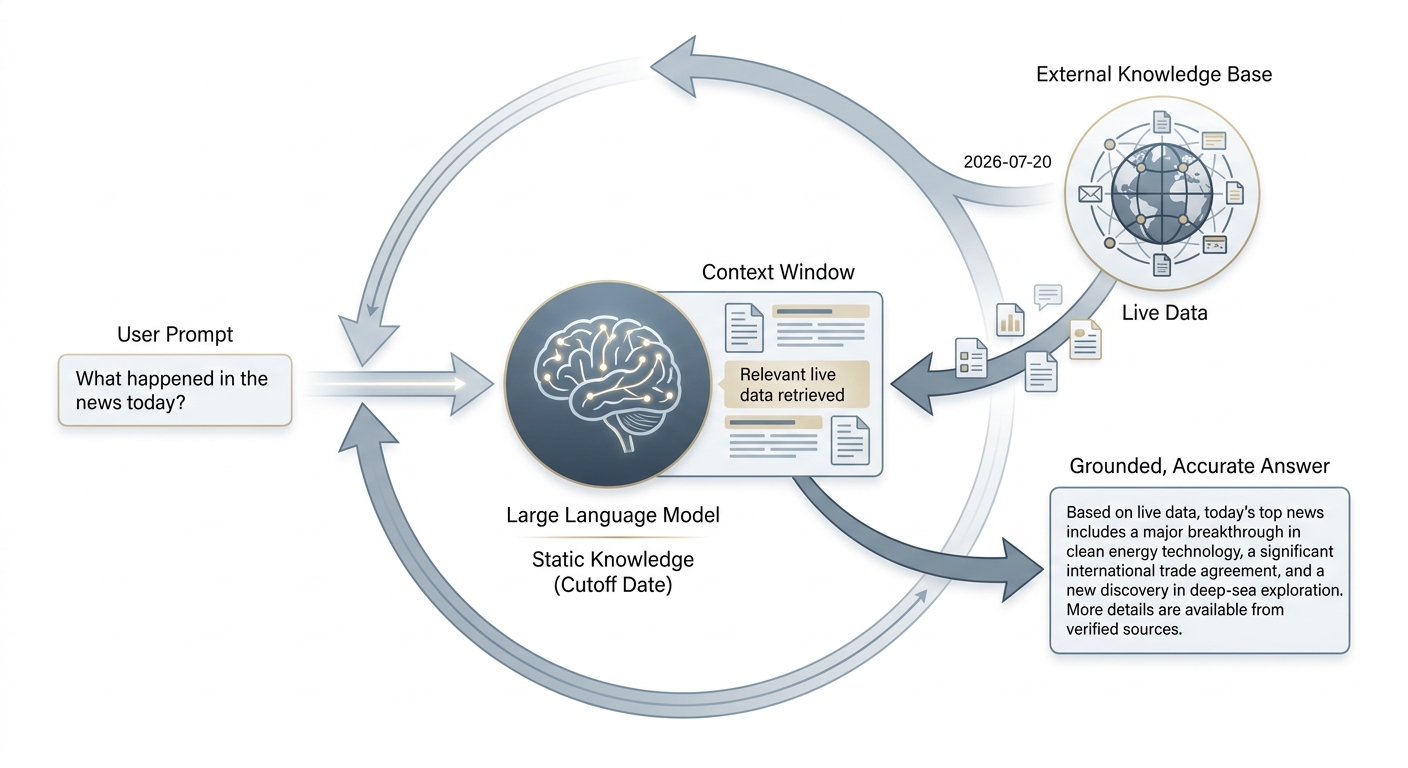
To understand how LLMs work for search in real-time, we must examine this data integration process. Live search index APIs feed real-time US news, local business data, and current events directly into the LLM’s context window at the moment of the query [3]. This is vital because base models have a strict knowledge cutoff date. As AWS notes, RAG extends the powerful capabilities of LLMs to specific domains or current events without the need for constant, costly retraining of the model [1].
By retrieving fresh information first and instructing the model to generate an answer based only on that data, accuracy improves dramatically. This process of “grounding” is paramount for enterprise use cases where factual correctness is non-negotiable. Published studies indicate that grounding answers in relevant retrieved context can substantially reduce hallucination rates, although results vary by model and task. It is no surprise that organizations are increasingly adopting AI-powered retrieval tools to improve reliability
📊 RAG’s Impact on Accuracy
Implementing Retrieval-Augmented Generation (RAG) dramatically reduces AI ‘hallucinations.’ Studies show that grounding models with real-time, retrieved data can substantially lower factual error rates, although results vary by model and task.
.
However, this real-time bridge introduces significant technical challenges. First-hand developer reports on r/MachineLearning frequently highlight the latency trade-offs when integrating vector databases [10]. A Google study found that a delay of just 400 milliseconds can cause a measurable drop in user traffic, making retrieval speed a paramount concern
. Fetching live data, computing embeddings, and ranking results adds precious milliseconds that engineers must optimize to prevent user churn.
A core practitioner challenge lies in the “chunking strategy.” This is the process of breaking down large source documents into smaller pieces for the vector database. The chosen method directly impacts retrieval quality:
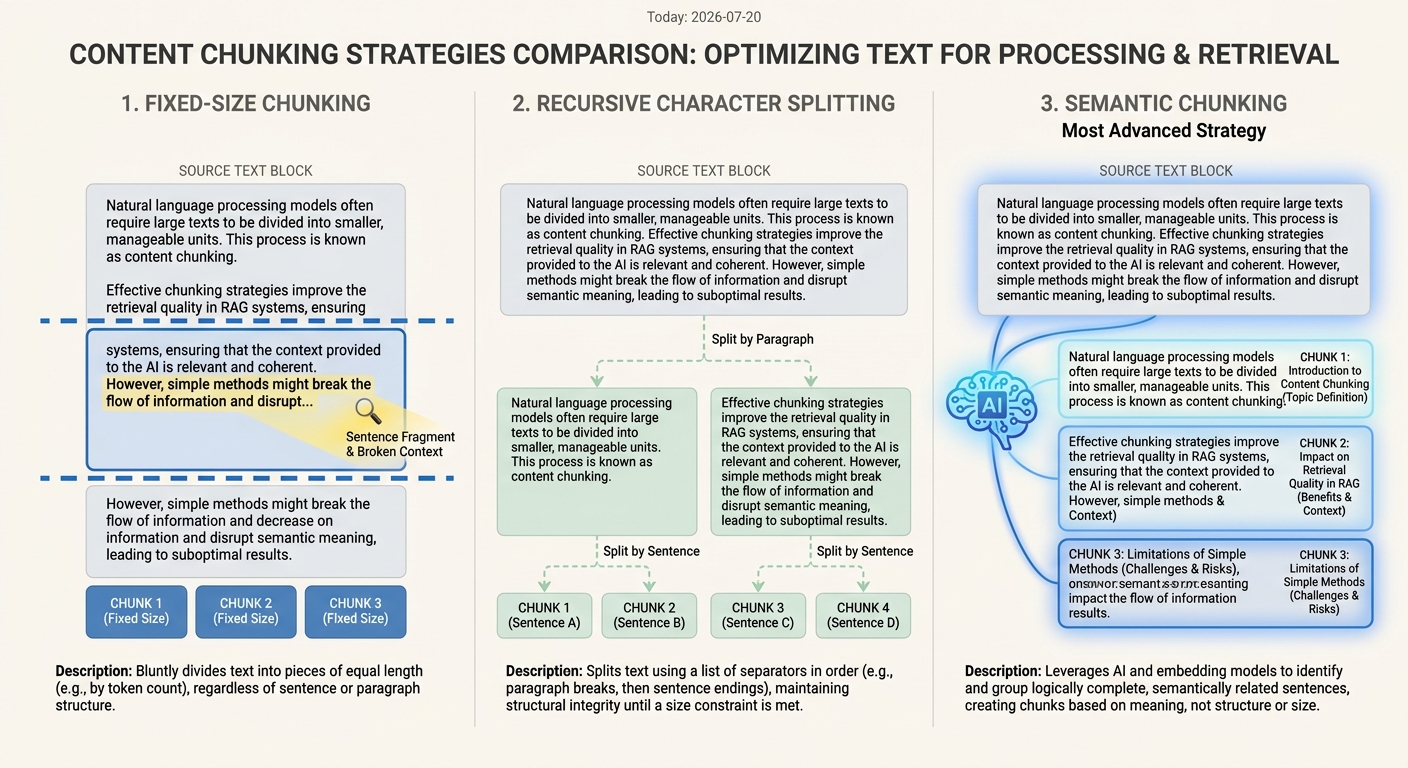
- Fixed-Size Chunking: Simple but often cuts sentences in half, destroying context.
- Recursive Character Splitting: A smarter method that tries to split on paragraphs, sentences, and then words to keep semantic units together.
- Semantic Chunking: The most advanced approach, using AI models to identify coherent sections of text based on meaning, ensuring each chunk represents a complete idea.
Poor chunking can lead to fragmented context or irrelevant data being fed to the model, undermining the entire RAG process. For an enterprise, this could mean an answer about a product’s security features is generated from an incomplete, out-of-context sentence, leading to misinformation. Ultimately, RAG is the primary reason brands must ensure their content is easily retrievable. If your enterprise data cannot be quickly indexed and retrieved, the LLM may bypass your brand entirely.
AI Gap 3: Optimizing Content for LLMs (Generative Engine Optimization)
To rank effectively in AI search engines, US brands must shift their focus from traditional keyword density to entity-based Generative Engine Optimization (GEO). Understanding how LLMs work for search reveals that these systems prioritize semantic relationships, structured information, and authoritative data. This requires a new, multi-faceted approach to digital visibility for commercial queries.
Implementing actionable GEO tactics involves several structural adjustments to how content is authored, formatted, and presented to AI crawlers.
| Tactic Category | Traditional SEO | Generative Engine Optimization (GEO) |
|---|---|---|
| Primary Focus | Keyword density and exact match phrases | Entity relationships and semantic completeness |
| Content Structure | Long-form, narrative-driven articles | Modular, self-contained content sections |
| Technical Priority | Backlink volume and anchor text | Schema markup and corporate knowledge graph |
| Success Metric | Ten blue links ranking position | AI Share of Voice and direct brand mentions |
Traditional SEO vs. Generative Engine Optimization (GEO)
| Option | Pros | Cons |
|---|---|---|
| Primary Focus | Entity relationships and semantic completeness | Keyword density and exact match phrases |
| Content Structure | Modular, self-contained content sections | Long-form, narrative-driven articles |
| Technical Priority | Schema markup and knowledge graph | Backlink volume and anchor text |
| Success Metric | AI Share of Voice and direct brand mentions | Ten blue links ranking position |
A critical component of GEO is formatting content into specific, digestible chunks. As FTA Global points out, LLM search works by retrieving indexed content chunks first, then generating an answer using only those retrieved sections [6]. Structuring text into self-contained, clearly headed sections can make content easier for LLM systems to ingest, although each model decides how it chunks content.
For a US-based SaaS company, this means breaking down a monolithic “Features” page into separate, self-contained chunks for “Integration Capabilities,” “Security Protocols,” and “Pricing Tiers,” each optimized with relevant entities and clear headings. This modularity allows the retrieval system to pull the exact answer for “What security certifications does [SaaS Product] have?” without having to parse an entire page.
Furthermore, structured data and metadata are foundational. Implementing exact schema types—such as Organization, LocalBusiness, and Product—can make content easier for machines to parse. Google notes, however, that structured data is not required to appear in its generative search features
📊 The Power of Structured Data
Structured data is a machine-readable signal that can help machines parse your content, although Google says it is not required to appear in its generative search features.
. This structured data acts as a machine-readable map, helping AI categorize and retrieve your business details, product specs, and authoritative content accurately.
A more advanced GEO concept is building and reinforcing your Corporate Knowledge Graph. This involves clearly defining your core business entities (company name, products, key executives, locations) and establishing their relationships across your digital assets and third-party sites. When an LLM can clearly understand that “John Doe” is the “CEO” of “Acme Corp,” which is the “manufacturer” of “Product X,” it can answer complex queries with confidence.
Finally, Citation Velocity heavily influences LLM trust. This metric goes beyond backlinks; it measures the rate at which your brand, data, or key personnel are referenced across high-authority, semantically related nodes like Gartner reports, academic papers, industry news articles, and government databases. When an LLM generates a response, it looks for consensus. Strong, consistent citation signals indicate your information is reliable, increasing the likelihood of inclusion and direct attribution. As JD Guerrero observes, LLM search is a marketing channel that uses basic search engine principles, but the rules of authority have evolved [7].
AI Gap 4: The Enterprise Challenges of LLM Search Integration
Enterprise Search integration goes far beyond simple API pricing. For large organizations, deploying and optimizing for these systems requires securing proprietary data, managing strict privacy compliance, and tracking heavily fragmented visibility across an ever-expanding ecosystem of AI platforms.
The primary challenge is the fragmentation problem. User queries no longer occur in a single search box; they happen across many AI platforms, such as ChatGPT, Perplexity, Gemini, Claude, and Copilot. Each platform uses different base models, retrieval algorithms, and context window sizes. For example, a search for “best enterprise cloud security solutions” might yield:
- On Perplexity: A direct answer citing Gartner and Forrester reports.
- On Gemini: A synthesized summary based on top-ranking tech blogs and product review sites.
- On ChatGPT: An answer potentially influenced by its slightly older training data, mixed with real-time Bing results.
This fragmentation makes tracking AI search visibility for localized US queries exceptionally difficult, a significant hurdle noted by community consensus [9]. A brand might dominate on one platform but be invisible on another, making it impossible to gauge true market penetration.
Furthermore, enterprises must navigate integration costs and API limitations. Enterprise AI spending is projected to exceed $100 billion by 2027, yet many projects face budget overruns due to unforeseen computational costs. Vectorizing millions of documents, storing embeddings, and running real-time retrieval operations can quickly drain budgets if not managed efficiently.
Data privacy is another critical concern, particularly when integrating sensitive corporate information with third-party LLM APIs. Depending on their size and activities, US enterprises may need to comply with regulations like the California Consumer Privacy Act (CCPA), which applies to certain for-profit businesses that operate in California, collect personal information, and meet specific thresholds. Maintaining control over what data is exposed to public models is central to effective AI Reputation Management.
To solve these challenges, enterprises must adopt proactive measures. An LLM Readiness Audit
Key Components of an LLM Readiness Audit
Content Chunking Analysis
Assess if content is properly modularized for optimal vector retrieval.
Schema & Metadata Validation
Ensure structured data is correctly implemented and consistent across assets.
Knowledge Graph Cohesion
Verify that key business entities are clearly defined and interconnected.
Citation Velocity Benchmarking
Measure brand authority signals against competitors across high-trust sources.
is a necessary first step. This audit systematically evaluates how well digital assets are structured for AI ingestion, identifying technical bottlenecks and GEO gaps. Key components include:
- Content Chunking Analysis: Assessing if content is properly modularized for optimal vector retrieval.
- Schema & Metadata Validation: Ensuring structured data is correctly implemented, discoverable, and consistent across all brand assets.
- Entity Mapping & Knowledge Graph Cohesion: Verifying that key business entities (products, people, services) are clearly defined and interconnected.
- Citation Velocity Benchmarking: Measuring brand authority signals across high-trust web sources against key competitors.
This audit provides a clear, data-driven roadmap, ensuring your brand remains visible, authoritative, and secure across all major AI interfaces.
Frequently Asked Questions
How do large language models perform search?
Large language models perform search by translating text into mathematical embeddings, retrieving relevant data from a vector database, and generating a synthesized response. Instead of matching keywords, the system uses Natural Language Processing to understand query intent. It then pulls the most semantically relevant content chunks and uses its language capabilities to formulate a conversational, accurate answer.
What is the difference between LLM search and traditional search?
The primary difference is that LLM search focuses on semantic intent and generation, while traditional search relies on BM25 keyword matching to provide a list of links. Traditional engines retrieve documents with exact phrasing. In contrast, AI search engines understand contextual meaning, retrieve data chunks, and synthesize a direct answer without requiring users to click through multiple pages.
How does retrieval-augmented generation improve AI search?
Retrieval-Augmented Generation (RAG) improves AI search by connecting frozen language models to live, real-time data sources. Base LLMs have a knowledge cutoff date and cannot answer questions about current events. RAG solves this by fetching live information from external databases first, feeding it into the model’s context window, and instructing the model to base its answer solely on that retrieved data, reducing hallucinations.
Can LLMs search the internet in real-time?
Base LLMs cannot search the internet in real-time, but RAG-enabled search engines can actively browse the live web. An LLM by itself is a static prediction engine limited to its training data. However, when integrated with search APIs and retrieval frameworks, the overarching AI search system can execute real-time web crawling to fetch the latest news, stock prices, or local business information.
How do you optimize a website for LLM search engines?
You optimize a website for LLM search engines by implementing Generative Engine Optimization (GEO), which includes content chunking, precise schema markup, and building a clear knowledge graph structure. Brands should format text into self-contained, clearly headed sections. Utilizing structured data, providing clear entity relationships, and building strong citation velocity helps ensure your content is retrieved during the vector search phase.
What are the challenges of enterprise LLM search?
The main challenges of enterprise LLM search include ensuring data privacy, managing high API costs, and tracking Share of Voice across fragmented platforms. Enterprises must securely integrate proprietary data without leaking it to public models, complying with applicable privacy laws (such as CCPA, where it applies). Because users query multiple platforms like ChatGPT, Gemini, and Perplexity, tracking brand visibility requires specialized tools and audits.
How does vector search work with LLMs?
Vector search works with LLMs by converting both the user’s query and database content into mathematical embeddings within a high-dimensional space. When a prompt is entered, the system calculates the distance (e.g., using cosine similarity) between the query’s vector and the document vectors. The closer the vectors are, the more semantically relevant the content is, allowing the engine to retrieve the most accurate information.
Why do LLMs hallucinate during search queries?
LLMs hallucinate during search queries because they lack grounded, real-time data without Retrieval-Augmented Generation (RAG). If a model is asked a question outside its training data or after its knowledge cutoff, it may predict the most statistically likely words, resulting in plausible-sounding but factually incorrect statements. Connecting the model to a live vector database via RAG significantly reduces these hallucination rates.
What is AI Share of Voice and how is it measured?
AI Share of Voice is a metric that measures a brand’s visibility within the generated answers of AI search engines. Unlike traditional Share of Voice, which tracks rankings on a search results page, AI SOV tracks how often a brand is mentioned, cited as a source, or recommended across multiple AI platforms like Perplexity, Gemini, and Copilot. It is measured using specialized tracking software that analyzes thousands of generated responses for brand presence.
Limitations, Alternatives & Professional Guidance
It is important to acknowledge that LLM search algorithms update rapidly, and many proprietary models operate as “black boxes,” making it difficult to reverse-engineer their exact ranking factors. The Generative Engine Optimization tactics effective today will evolve as models become more sophisticated and context windows expand.
⚠️ Guidance on a Moving Target
LLM algorithms are constantly evolving and often operate as ‘black boxes’. Manually tracking your brand’s visibility across dozens of fragmented AI platforms is impossible. Professional guidance and automated tracking are necessary to build a resilient strategy on this shifting landscape.
Because user queries are distributed across dozens of generative engines, manual tracking of AI citations and Share of Voice is nearly impossible for enterprise brands. Attempting to gauge performance without dedicated software leads to incomplete data and flawed strategies. Therefore, utilizing automated tracking platforms like AI Rankia represents a necessary alternative to manual audits, providing the professional guidance and comprehensive data required to navigate this fragmented landscape efficiently.
Conclusion
Understanding how LLMs work for search—from the intricacies of the vector retrieval pipeline to the grounding power of RAG—is the essential first step toward dominating the new era of digital discovery. As the landscape shifts from a list of blue links to a single, synthesized answer, the cost of inaction is total invisibility. US enterprises can no longer afford to rely on outdated keyword-centric SEO playbooks. The new imperative is to optimize for semantic retrieval, entity authority, and structured data.
By addressing the four critical AI Gaps—the technical pipeline, real-time accuracy, content optimization, and enterprise integration—you can build a resilient strategy for this new frontier. Securing your brand’s AI Share of Voice is not just a marketing goal; it’s a core business objective for protecting future market share.
To ensure your digital assets are structured for discovery and to gain a clear advantage in the generative era, Contact AI Rankia to Access a Free Trial for our comprehensive LLM Readiness Audit today.
References
[1] AWS. What is Retrieval-Augmented Generation?
[2] Databricks. (2024). Retrieval Augmented Generation (RAG)
[3] Google Cloud. Use Cases: Retrieval-Augmented Generation
[4] Cisco. (2024). What is a Large Language Model?
[5] Carter, P. (2024). LLMs as Search Engines
[6] FTA Global. (2024). How do indexing, metadata, and structure make LLM search work?
[7] Guerrero, J.D. (2026). How does LLM search work? Being cited is activity. LinkedIn
[8] r/SEO. (2026). How do LLMs perform searches? Reddit
[9] Search Liaison. (2026). Tracking AI search visibility. Twitter.
[10] r/MachineLearning. (2026). How RAG changes search. Reddit