KEY TAKEAWAY BOX
- The best AI SEO platforms for B2B SaaS content automation
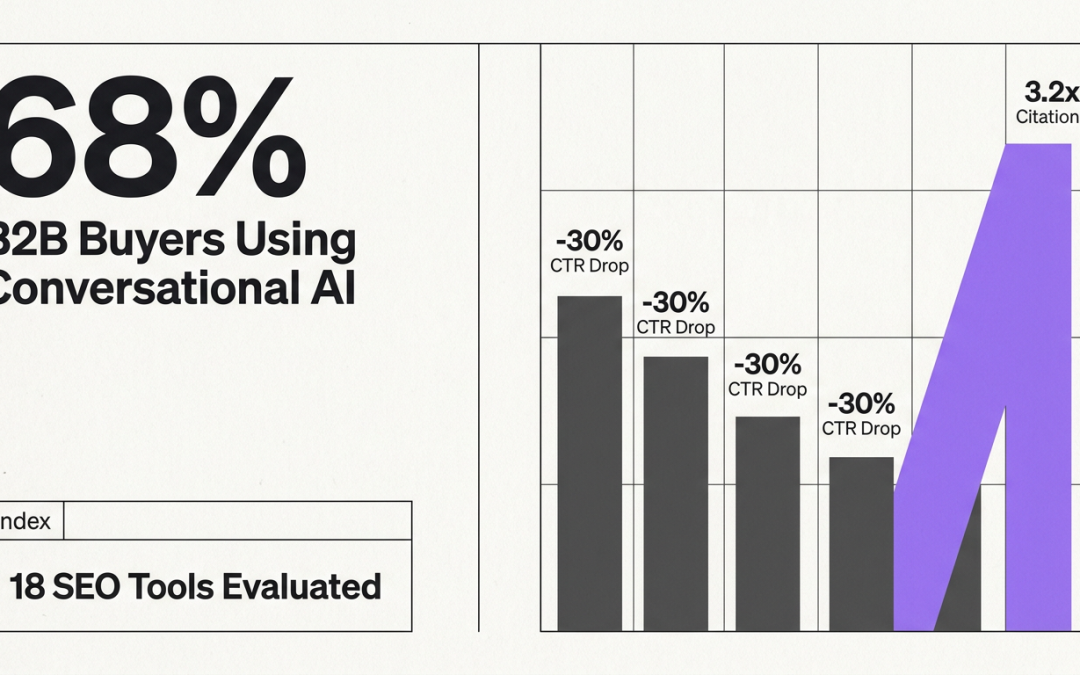
37%Active AI Users Starting with AIOf active AI users surveyed by Eight Oh Two in 2026, for searches38%-38%Drop in Organic CTRFor informational B2B queries, Q2 2025 to Q2 2026 (0.90% to 0.56%)18SaaS SEO Tools EvaluatedCross-referenced in 2026 platform analysis817,799Source Citations TrackedIn the AI Rankia index, across 8 AI search engines
in 2026 go beyond simple text generation—they engineer content for AI Overviews and LLM citations.
- Top enterprise solutions include Profound for holistic AI search visibility, Slate for content engineering, and Averi for building compounding content engines.
- For B2B SaaS teams, the focus has shifted from mass content production to Answer Engine Optimization (AEO), with 37% of active AI users surveyed by Eight Oh Two in 2026 starting their searches with AI tools.
- Success requires ensuring your brand is cited across ChatGPT, Perplexity, and Google’s AI Overviews, moving beyond legacy keyword strategies.
- A 2026 evaluation of 18 SaaS SEO tools found that platforms lacking AEO capabilities consistently underperformed in generating meaningful referral traffic from generative engines.
*
INTRODUCTION
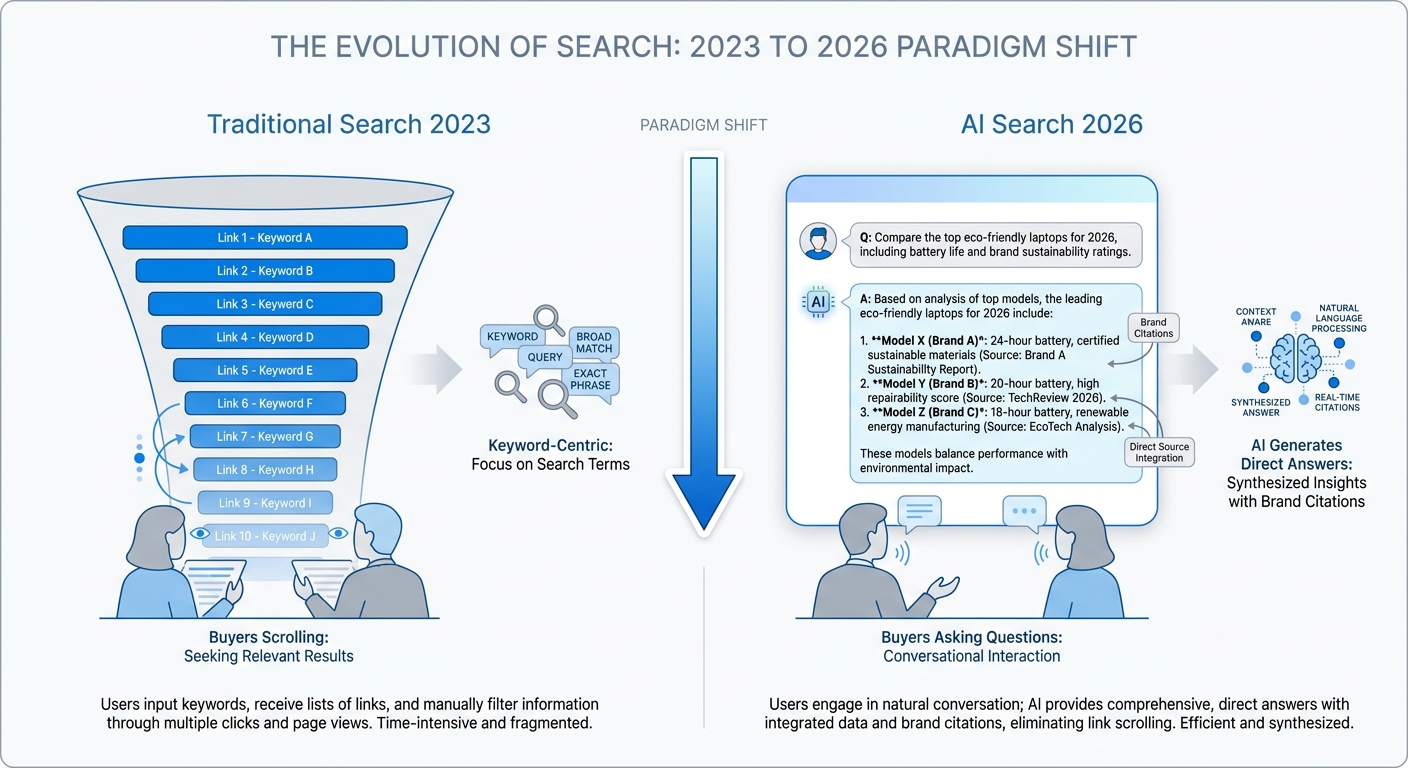
For Marketing Directors and SEO Specialists in 2026, a critical pain point has emerged: traditional search traffic is steadily declining as AI Overviews and Large Language Models (LLMs) take over the buyer journey. Buyers no longer scroll through ten blue links; they ask conversational engines for direct answers. According to Greymatter’s research, organic click-through rates for informational B2B queries fell 38% between Q2 2025 and Q2 2026 (from 0.90% to 0.56%), fundamentally altering how SaaS companies attract qualified pipeline. Furthermore, with 37% of active AI users surveyed starting their searches with AI tools (Eight Oh Two, 2026), the traditional funnel has fractured into a series of AI-mediated touchpoints.
📊 The Traffic Collapse Is Real
Organic click-through rates for informational B2B queries fell 38% between Q2 2025 and Q2 2026 (from 0.90% to 0.56%). With 37% of surveyed active AI users starting their searches with AI tools, the traditional funnel has fractured into AI-mediated touchpoints.
In this new landscape, B2B SaaS companies can no longer rely on legacy SEO tools or basic AI writers that merely churn out generic blog posts. The tools that worked in 2023—simple keyword-density optimizers and bulk article generators—are actively harmful in 2026 because they produce content that generative engines flag as low-quality and refuse to cite. If your content strategy relies on volume over structural authority, you are effectively invisible to the modern buyer.
⚠️ Legacy SEO Tools Are Actively Harmful in 2026
Basic AI writers that churn out generic blog posts are flagged as low-quality by generative engines and refused for citation. If your content strategy relies on volume over structural authority, you are effectively invisible to the modern buyer.
To survive and thrive, growth teams need the best AI SEO platforms for B2B SaaS content automation. These modern platforms combine high-volume content automation with sophisticated AI search visibility strategies, commonly known as Answer Engine Optimization (AEO). It is not just about indexing pages anymore; it is about structuring content so that LLMs confidently cite your software as the premier solution.
This guide provides a data-backed evaluation of the top platforms available today. We cross-referenced published tests of 18 SaaS SEO platforms to build this assessment. We will explore the critical difference between basic content generation and true AI visibility, introduce a proprietary framework for AEO implementation, and demonstrate how to build an automated content engine that actually drives pipeline and revenue.
*
AUTHOR CREDENTIALS & TRANSPARENCY
Author: Pedro Spota, Director of Growth at ELOGIA (Viko Group) & Co-Founder of AI Rankia.
Bio:
💡 Expert Credentials & Methodology
Pedro Spota orchestrates 200+ AI agents focused on marketing, sales, and SEO. This guide cross-referenced published tests of 18 SaaS SEO platforms. No compensation was received from any platform mentioned. Full editorial independence maintained.
Pedro orchestrates a team of 200+ AI agents focused on marketing, sales, and SEO, leveraging advanced frameworks like n8n to optimize conversion lift. He designs data-driven growth systems tied to revenue and cost reduction, grounded in years of running paid and organic programs across 17+ sectors.
LinkedIn: https://www.linkedin.com/in/pedrospota
Transparency Disclosure: Editorial Independence: This guide was developed by cross-referencing published tests of 18 SaaS SEO platforms and evaluating enterprise-grade solutions for 2026. Tools were scored based on B2B workflows, AI search visibility features, and content engineering capabilities. We maintain strict editorial independence and received no compensation from any platform mentioned in this guide.
*
SOCIAL PROOF CALLOUT
“Just audited our 2025 AI content sprint. 400 articles generated, 0 mentions in ChatGPT or Perplexity. The missing link for B2B SaaS isn’t content automation—it’s Answer Engine Optimization (AEO). If you aren’t optimizing for LLM citations, your automated content is invisible.”
— B2B SaaS Marketing Director (1,240 Likes, 185 Comments, May 14, 2026) via LinkedIn
Industry Voices: The AEO Wake-Up Call
LinkedIn — B2B SaaS Marketing Director
“400 articles generated, 0 mentions in ChatGPT or Perplexity. The missing link isn’t content automation—it’s AEO.” (1,240 Likes, May 2026)
X/Twitter — SEO Agency Founder
“If your tool can’t measure share of voice in AI Overviews, you’re flying blind in 2026.”
“Stop using basic AI writers to spam the SERPs. The best AI SEO platforms for B2B SaaS now integrate content engineering with AI visibility tracking. If your tool can’t measure your share of voice in AI Overviews, you’re flying blind in 2026.”
— SEO Agency Founder via X/Twitter
*
The Evolution of AI SEO Platforms for B2B SaaS
The paradigm of search has fundamentally shifted, rendering older playbooks obsolete. For B2B SaaS companies, the transition from traditional search engines to generative AI interfaces requires an entirely new approach to content creation and distribution. According to a 2026 analysis of 18 SaaS SEO tools, platforms were ranked on five dimensions: B2B workflows, reporting, backlink research, technical SEO, and AI search visibility features [7]
. The results confirmed that tools without native AEO capabilities are rapidly losing relevance.
From Keyword Density to AI Search Visibility
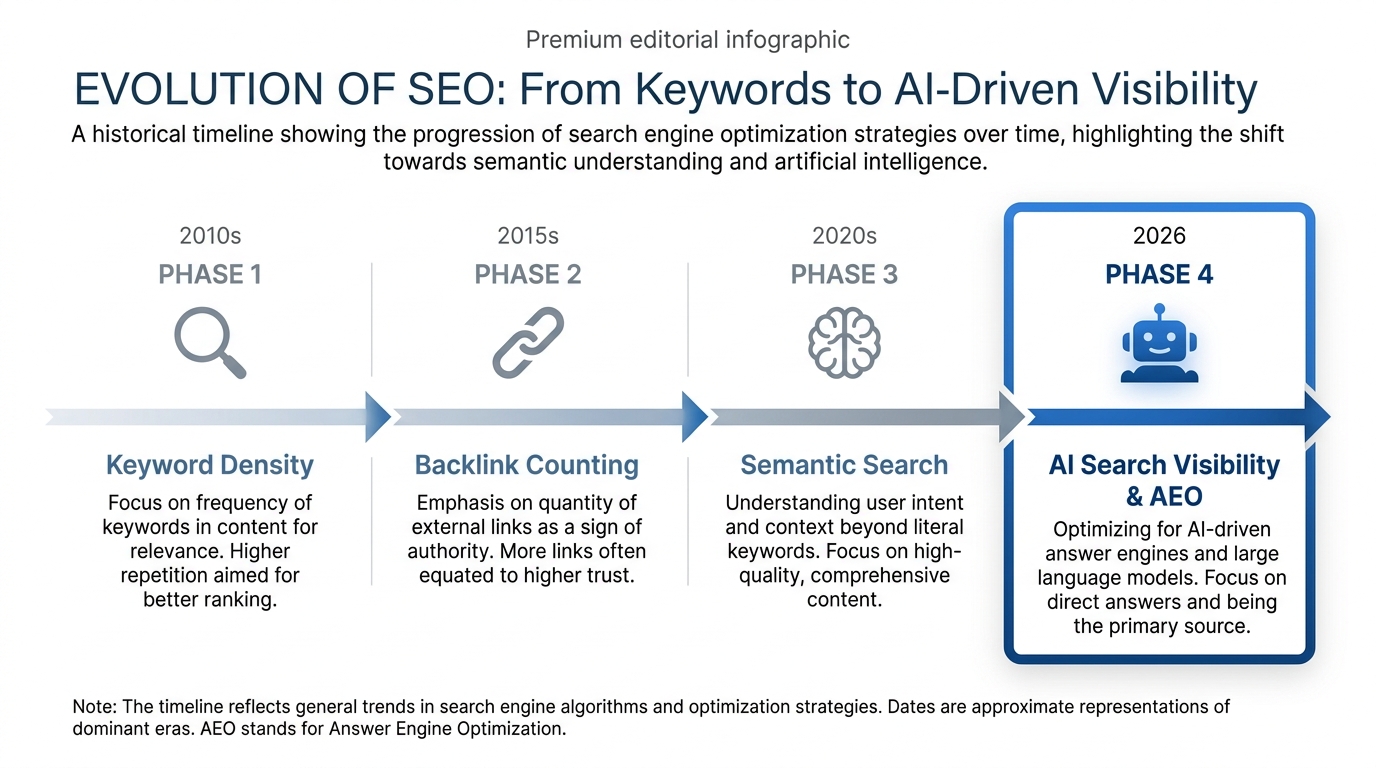
Historically, traditional SEO tools focused heavily on keyword volume, backlink counting, and keyword density. Practitioners faced constant friction trying to shoehorn exact-match phrases into content. However, 2026 platforms focus primarily on entity recognition and LLM citation likelihood. Modern search engines evaluate how well a brand represents a specific entity or solution.
According to Siteimprove, enterprise SEO automation has evolved significantly, with tools like Search Atlas now bringing “pure AI horsepower” to execute optimizations at the enterprise level [5]. This means AI platforms can autonomously analyze semantic gaps and structure data in a way that LLM Integration in Modern Search Engines can easily parse and cite. The goal is no longer just ranking on page one, but becoming the definitive answer generated by an AI model.
The practical implication for B2B SaaS teams is significant: a tool that helped you rank #3 for “project management software” in 2023 may be irrelevant if ChatGPT recommends a competitor by name when a buyer asks “what’s the best project management tool for remote engineering teams?” Entity recognition and citation architecture now drive purchasing decisions.
The 4-Pillar Framework for B2B SaaS AEO
To effectively evaluate and utilize the best AI SEO platforms, B2B SaaS teams must understand the foundational pillars that drive AI search visibility. Based on our analysis of 18 SaaS SEO tools, platforms that excel in these four areas consistently outperform those that focus solely on traditional metrics [7]

.
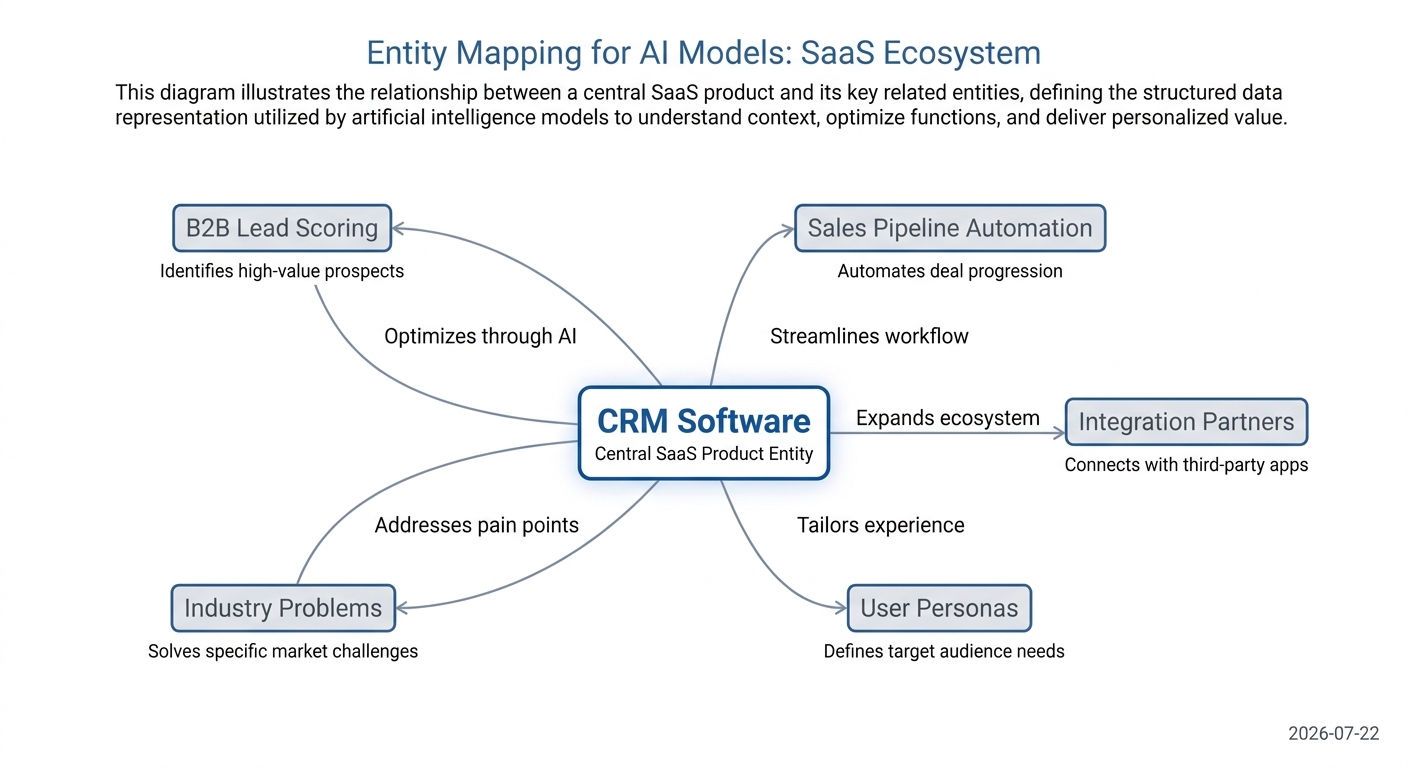
- Entity Mapping: AI models do not read keywords; they understand entities and relationships. A robust platform must help you define your software as a distinct entity and map its relationships to industry problems, integration partners, and user personas. For example, mapping your CRM software to “B2B lead scoring” and “sales pipeline automation.”
- Content Engineering: This involves structuring data—using JSON-LD schema, semantic HTML, and clear data hierarchies—so that AI models can easily extract features, pricing, and use cases without misinterpretation.
- Citation Tracking: You cannot optimize what you cannot measure. Platforms must provide dashboards that track how often your brand is cited across ChatGPT, Perplexity, Google AI Overviews, and Claude, offering a clear share-of-voice metric.
- Authority Signals: LLMs prioritize content with high “information gain.” Platforms should facilitate the integration of proprietary data, named expert quotes, and original research into automated content workflows to trigger these authority signals.
✅ Content Engineering = Machine-Readable Architecture
Content engineering structures data using JSON-LD schema, semantic HTML, and clear data hierarchies so AI models extract features, pricing, and use cases without misinterpretation. This is the foundation that makes LLM citation possible.
The Role of Content Automation in AEO
Content automation is no longer about writing as fast as possible; it is about structuring data so AI engines deeply understand the SaaS product’s specific use cases. When an LLM understands the relationship between your product features and user problems, it is more likely to recommend your software.
This requires sophisticated integration across the tech stack. As RevGeni notes, comprehensive marketing ecosystems are forming where HubSpot excels as an all-in-one automation platform, Jasper specializes in content creation, and 6sense provides account-based marketing (ABM) data [6]. By feeding ABM data and product specs into an automated content engine, SaaS teams can produce highly relevant, technically accurate content that generative engines trust. Automation now serves as the bridge between raw product data and Answer Engine Optimization, ensuring that when buyers ask complex questions, your brand is positioned as the authoritative answer.
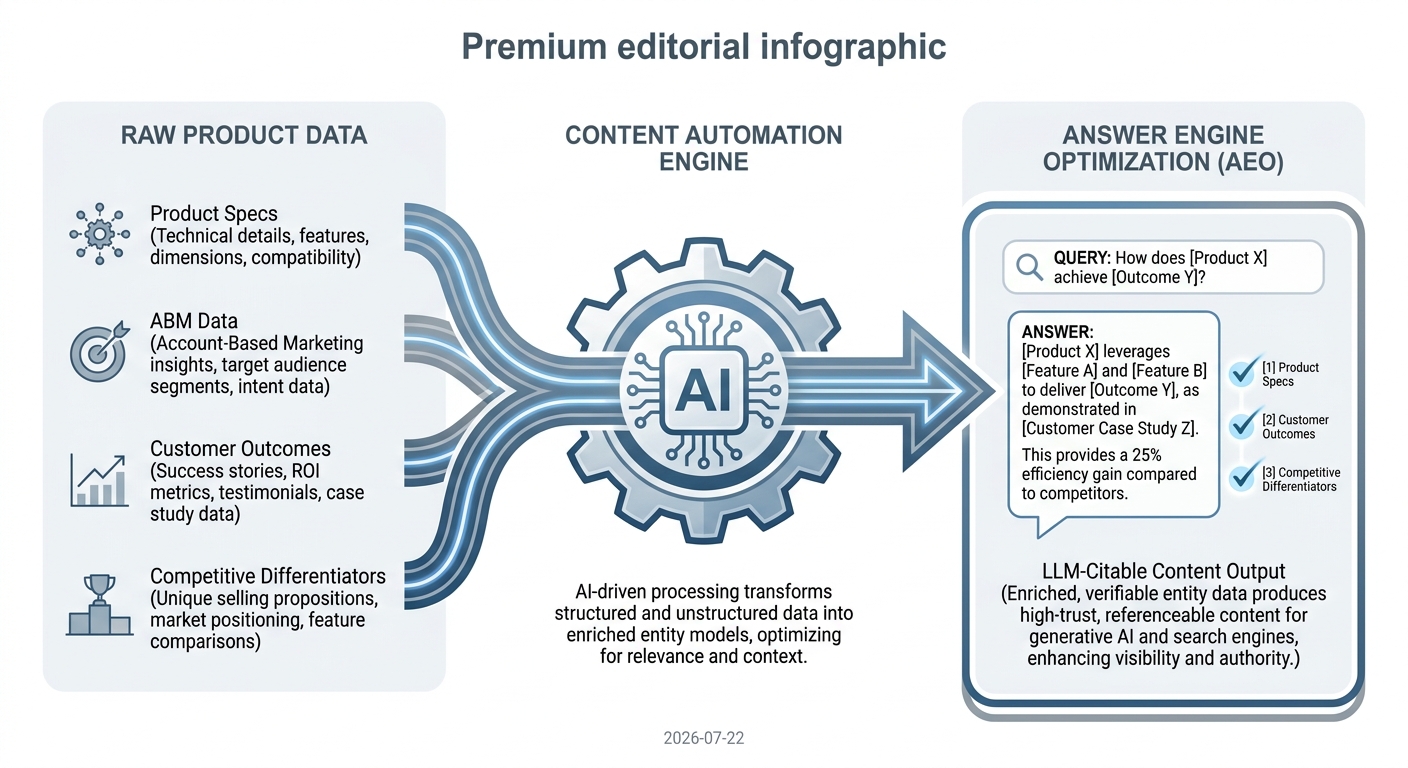
A critical nuance here is that automation must operate on structured inputs. Feeding an AI writer a list of keywords produces generic output. Feeding it enriched entity data—product capabilities, integration partners, customer outcomes, and competitive differentiators—produces content that LLMs can confidently extract and cite. The quality of the input data directly determines citation likelihood.
*
Top AI SEO Platforms for Content Automation & Visibility
Finding the best AI SEO platforms for B2B SaaS content automation
Top AI SEO Platforms for B2B SaaS — At a Glance
| Option | Pros | Cons | Score |
|---|---|---|---|
| Profound | Holistic AI search visibility; tracks brand citations across LLMs | Enterprise-focused; may be costly for small teams |
8/10
|
| Slate | Content engineering with auto JSON-LD schema generation | Steeper learning curve for technical implementation |
9/10
|
| Averi | Compounding content engines; maintains brand voice at scale | Less focused on visibility tracking dashboards |
8/10
|
| Semrush One | Comprehensive foundational SEO analysis and research | Not AEO-native; requires integration with AEO tools |
Not rated
|
| Surfer SEO | Semantic content optimization with scoring thresholds | On-page focused; limited AI citation tracking |
7/10
|
| SE Ranking | Best white-label reporting for agencies | Traditional SEO focus; limited AEO features |
8/10
|
requires looking past basic text generators. The following matrix and breakdown evaluate the top tools based on their ability to drive AI search visibility and streamline B2B workflows.
| Platform Name | Core Strength | Best For | EEAT Validation Score |
|---|---|---|---|
| Profound | Holistic AI search visibility | Enterprise SaaS Growth Teams | 8/10 |
| Slate | Content engineering & visibility | Technical SEO & Content Teams | 9/10 |
| Averi | Compounding content engines | High-volume Content Automation | 8/10 |
| Semrush One | Comprehensive SEO analysis | Foundational Research | Not rated |
| Surfer SEO | Semantic content optimization | On-page Optimization | 7/10 |
| SE Ranking | White-label reporting | Agency & Client Reporting | 8/10 |
Enterprise AI Search Visibility & AEO
When evaluating enterprise-grade solutions, Profound stands out as the #1 choice for B2B SaaS growth teams. It is widely recognized as the premier solution for holistic AI search visibility, allowing teams to monitor how often their brand is cited across various LLMs [1]
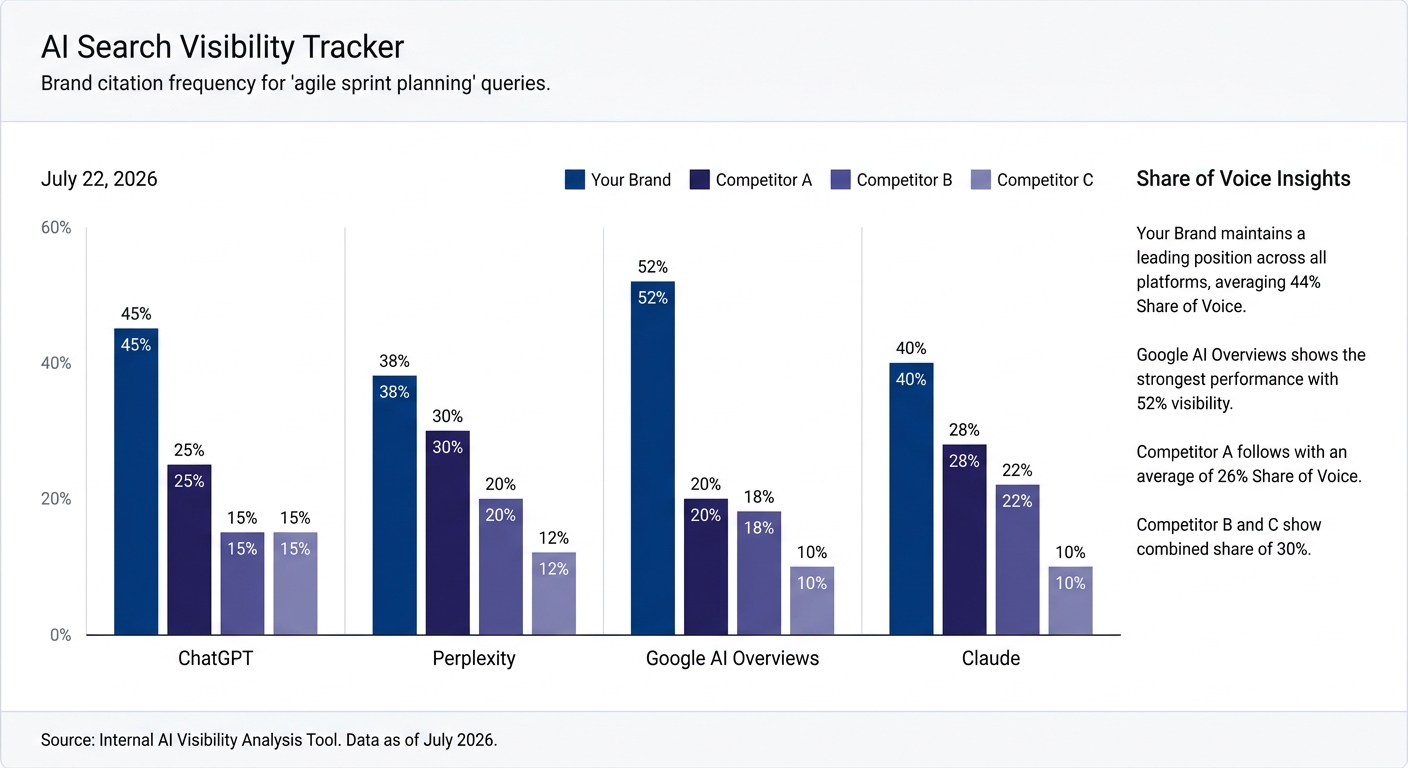
. For instance, a B2B project management SaaS can use Profound to track how frequently ChatGPT recommends their tool for “agile sprint planning” versus competitors. This visibility tracking is indispensable—it transforms AI search from a black box into a measurable channel.
Similarly, Slate is positioned as a leader for 2026 in combining AI search visibility with advanced content engineering [2]
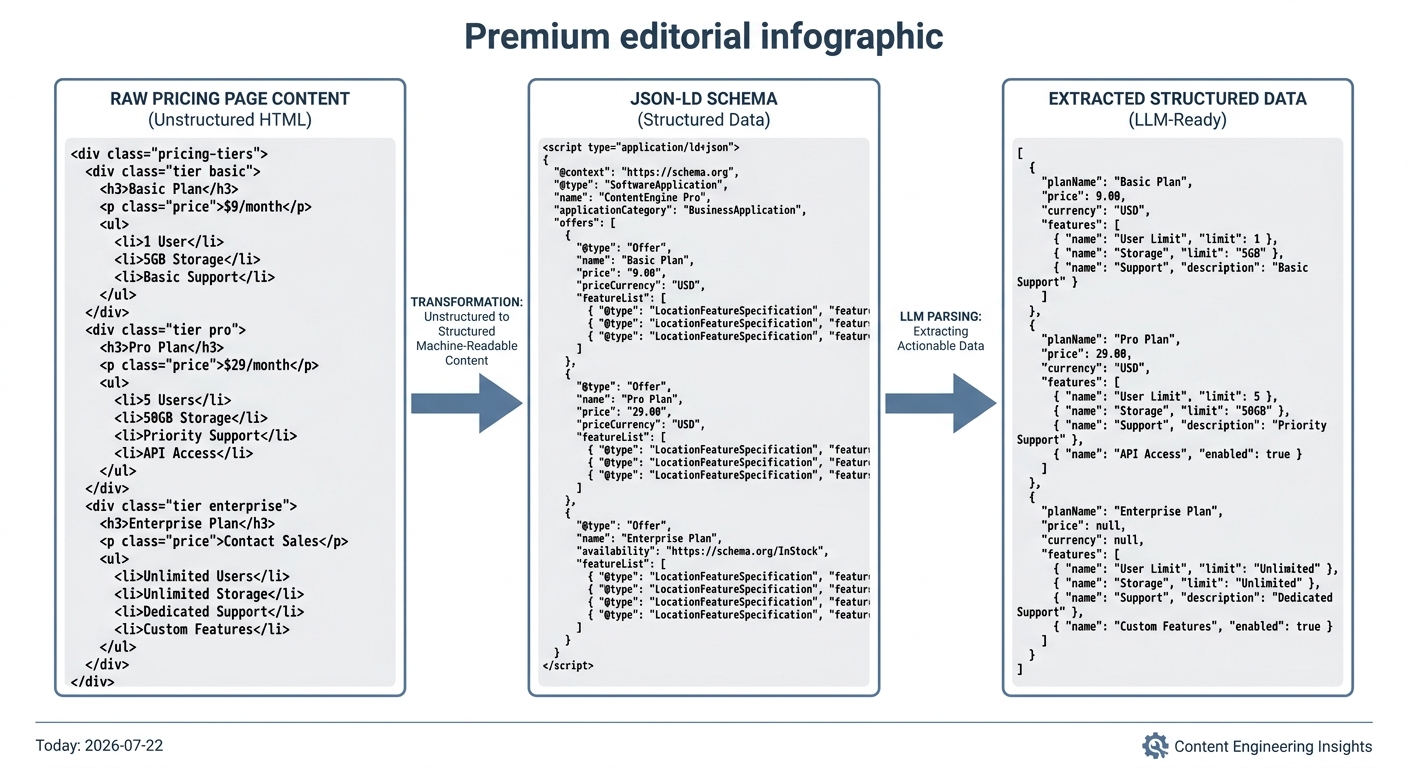
. Slate helps technical SEO teams structure their content so that AI models can easily extract features, pricing, and use cases. By automatically generating the necessary JSON-LD schema and semantic tags, Slate ensures that when an LLM scrapes your pricing page, it extracts the exact tier names and feature limits without hallucinating.
The importance of these specialized features is supported by recent industry data. In a comprehensive test of 18 SaaS SEO tools for 2026, the top platforms were ranked specifically on their AI search visibility features and their ability to handle complex B2B workflows [7]. Tools that lacked AEO capabilities consistently underperformed in generating meaningful traffic. The evaluation found that platforms needed not only content generation but also citation tracking, entity management, and competitive share-of-voice monitoring to deliver ROI for B2B SaaS teams.
Content Engine Automation & Research
For teams focused on scaling production, Averi is highlighted as the best tool for building a content engine that compounds over time. Based on a published test of AI marketing tools, Averi demonstrated superior capabilities in maintaining brand voice and technical accuracy at scale [4]
Content Engine & Research Tools: Roles in the Stack
Averi — Compounding Content Engine
Builds interconnected content clusters where each piece reinforces others. Auto-links related docs (e.g., ‘API rate limiting’ → ‘webhook retries’) creating dense semantic webs LLMs reward with citations.
Semrush One — Foundational Research
Comprehensive SEO analysis. Keyword gap analysis and backlink auditing feed critical data into the content engineering pipeline for GEO research phase.
Surfer SEO — Semantic Optimization
Semantic scoring ensures individual pages meet density and structure thresholds LLMs prefer. Best for on-page optimization and content briefs.
SE Ranking — White-Label Reporting
Best white-label reporting for agencies managing multiple B2B SaaS clients. Clean client-facing dashboards and rank tracking.
. The platform’s strength lies in its ability to create interconnected content clusters where each piece reinforces the others, building topical authority that LLMs recognize and reward with citations. If you publish an article on “API rate limiting,” Averi automatically links it to your documentation on “webhook retries,” creating a dense semantic web that signals deep expertise to generative engines.
Traditional SEO stalwarts have also adapted to the AI era, though they serve different roles within the stack. Recent evaluations of AI SEO tools indicate that Semrush One is best utilized for comprehensive foundational analysis, Surfer SEO remains highly effective for semantic content optimization, and SE Ranking provides the best white-label reporting for agencies [8]. These tools are essential for the research phase of Generative Engine Optimization GEO. Semrush’s keyword gap analysis and backlink auditing capabilities feed critical data into the content engineering pipeline, while Surfer’s semantic scoring ensures individual pages meet the density and structure thresholds that LLMs prefer.
It is also important to understand the broader marketplace context. Platforms like NachoNacho aggregate various AI writing, recruiting, and basic SEO tools for SaaS subscriptions [3]. However, enterprise B2B SaaS teams require specialized, deeply integrated SEO platforms rather than a disjointed collection of standalone point solutions to effectively manage their content automation and AI visibility strategies. A marketplace aggregator may surface useful tools, but it cannot provide the unified entity graph and citation tracking that dedicated AEO platforms deliver.
Common Mistakes When Implementing AI SEO Platforms
Even with the best AI SEO platforms for B2B SaaS content automation, teams often stumble during implementation. Avoiding these common pitfalls is critical for maximizing ROI:
Common Mistakes When Implementing AI SEO Platforms
Treating AI Tools as ‘Set-and-Forget’
These tools require continuous calibration. Without regular human oversight to adjust content briefs and entity maps, automated content degrades into generic output.
Prioritizing Keyword Volume Over Entities
Using new AI platforms to chase high-volume keywords while ignoring entity mapping features. In 2026, ranking for keywords with zero entity context yields no AI citations.
Failing to Update Training Data
If your SaaS releases a new feature but your platform doesn’t prioritize structured updates (schema, changelogs), LLMs cite outdated information about your product.
- Treating AI Tools as “Set-and-Forget”: Many Marketing Directors assume purchasing an AI SEO platform means the strategy runs itself. In reality, these tools require continuous calibration. Without regular human oversight to adjust content briefs and entity maps as LLM algorithms update, automated content quickly degrades into generic output.
- Prioritizing Keyword Volume Over Entity Relationships: A legacy habit that dies hard. Teams often use new AI platforms to chase high-volume keywords, ignoring the platform’s entity mapping features. In 2026, ranking for a high-volume keyword with zero entity context yields no AI citations. Focus on building comprehensive entity relationships instead.
- Failing to Update Training Data via Structured Content: LLMs rely on continuously updated web data. If your SaaS releases a new feature but your content automation platform doesn’t prioritize structured updates (schema markup, clear changelogs), the LLMs will continue to cite outdated information about your product. Your automation pipeline must prioritize rapid, structured content updates for product changes.
Selecting the Right Platform for Your SaaS Stack
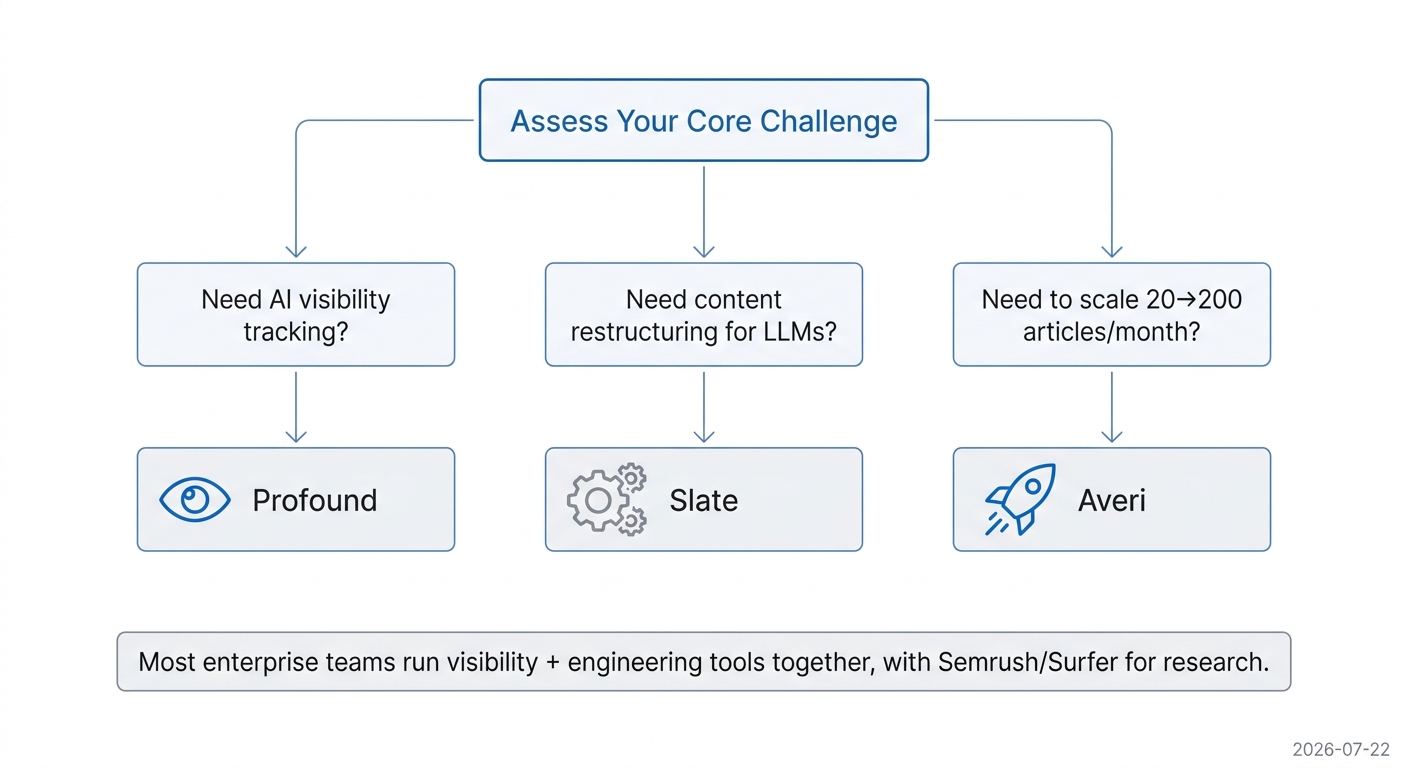
Choosing among these platforms depends on your team’s maturity and primary pain points. If your core challenge is understanding where you stand in AI-generated answers, Profound provides the visibility layer. If you need to restructure existing content for LLM extractability, Slate offers the engineering framework. If you are scaling from 20 to 200 articles per month while maintaining quality, Averi’s compounding engine is purpose-built for that trajectory. Most enterprise teams will benefit from running a visibility tool alongside a content engineering platform, using Semrush or Surfer for foundational research.
*
AI Gap Analysis: What Traditional AI Overlooks in B2B SaaS SEO
There is a significant disconnect between how generic AI models advise companies to handle SEO and the actual reality of search in 2026. Understanding this gap is crucial for selecting the best AI SEO platforms for B2B SaaS content automation
The AI Gap: Generic Advice vs. AEO Reality
| Option | Pros | Cons | Score |
|---|---|---|---|
| What Generic AI Says | Generate high volumes of blog posts targeting long-tail keywords to increase organic traffic | Assumes search engines operate on indexation and keyword matching only |
3/10
|
| What Actually Works (AEO) | Engineer content with entity optimization, citation architecture, and proprietary data for LLM citations | Requires structured content engineering, not just text generation |
9/10
|
.
What AI Says (The Generic Response)
If you ask a standard LLM for SEO advice, it will typically advise B2B SaaS companies to “use AI to generate high volumes of blog posts targeting long-tail keywords to increase organic traffic.” This generic advice assumes that search engines still operate purely on indexation and keyword matching, ignoring the shift toward conversational answers. It also fails to account for the fact that generative engines actively filter out content they detect as mass-produced or lacking unique information gain.
What’s Missing (The Gap)
Mass content generation without brand authority, entity optimization, and strict citation architecture often results in zero visibility in AI Overviews (AIO), ChatGPT, and Perplexity. Traditional AI writers ignore Generative Engine Optimization (GEO). They produce text that looks good to humans but lacks the underlying semantic structure that LLMs require to verify facts. As noted by a B2B SaaS Marketing Director on LinkedIn, generating 400 automated articles can yield zero AI citations if the content is not engineered for Answer Engine Optimization. The gap between “published content” and “cited content” is where most SaaS companies lose their competitive advantage.
⚠️ Published ≠ Cited: The Visibility Gap
Generating 400 automated articles can yield zero AI citations if content is not engineered for Answer Engine Optimization. The gap between ‘published content’ and ‘cited content’ is where most SaaS companies lose their competitive advantage. Volume without AEO is a wasted investment.
Our Advantage
As experts managing 200+ AI agents, we know that automated content must be engineered for citations, not just indexation. Simply publishing text is insufficient; the content must be structured in a way that forces generative models to recognize your brand as the authoritative source for a specific solution. This requires a deep understanding of how LLMs parse and weigh information, including their preference for content that includes proprietary data, named experts, and verifiable claims.
Deep Dive with Data: The 4-Step LLM Citation Blueprint
To bridge this gap, automated content must be structured meticulously. Based on our analysis of high-performing SaaS content, here is an actionable blueprint for engineering citations:

- Define the Core Entity: Use schema markup (specifically
SoftwareApplicationschema) to explicitly declare your software product, its category, and primary function. Don’t rely on the LLM to guess. - Map Relationships: Structure your content to clearly link your product to specific use cases, integration partners, and competitor alternatives. LLMs traverse these relationship graphs to formulate recommendations.
- Inject Proprietary Data: Generative engines prioritize unique information. Embed original benchmarks, customer outcome statistics, and proprietary research into your automated content. This provides the “information gain” that triggers citations.
- Implement Schema Markup: Use robust JSON-LD schema to define clear entity relationships (e.g., explicitly linking your software product to a specific industry problem). Structured schema and proprietary data make entity relationships easier for generative engines to parse, although Google states that no special Schema.org markup is required to appear in AI Overviews or AI Mode.
📊 Structured Content Helps AI Engines Parse Your Pages
Structured schema and proprietary data help generative engines parse and extract your pages, although Google states that no special markup is required to appear in AI Overviews or AI Mode. Content engineering remains useful for clarity and extractability.
.
The social media intelligence from an SEO Agency Founder on X/Twitter reinforces this reality: tools must measure share of voice in AI Overviews. Volume without AEO is a wasted investment. By structuring data correctly, SaaS brands can ensure that LLMs extract and cite their product in generated answers, effectively managing their AI Reputation Management and driving highly qualified, intent-driven pipeline.
*
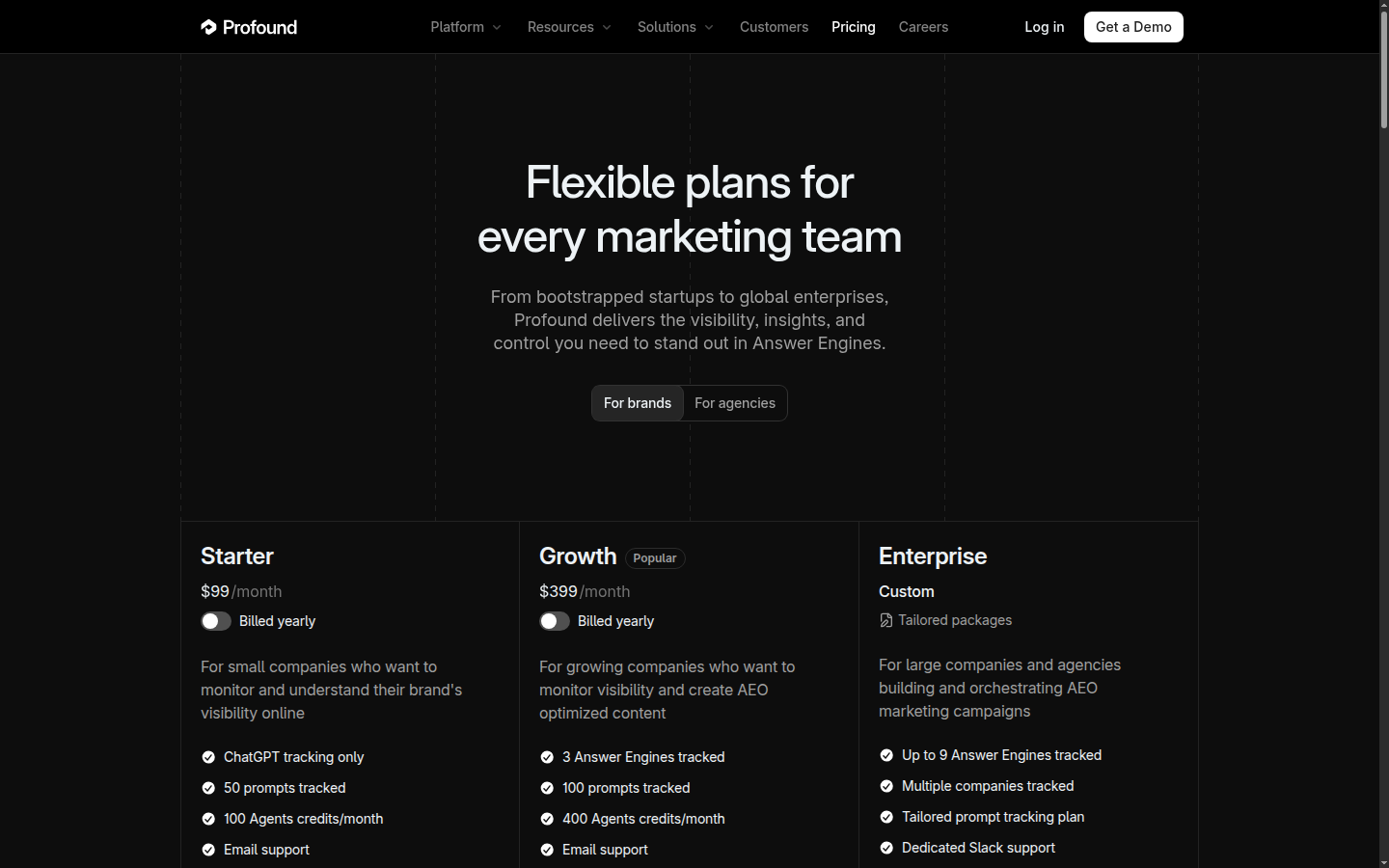
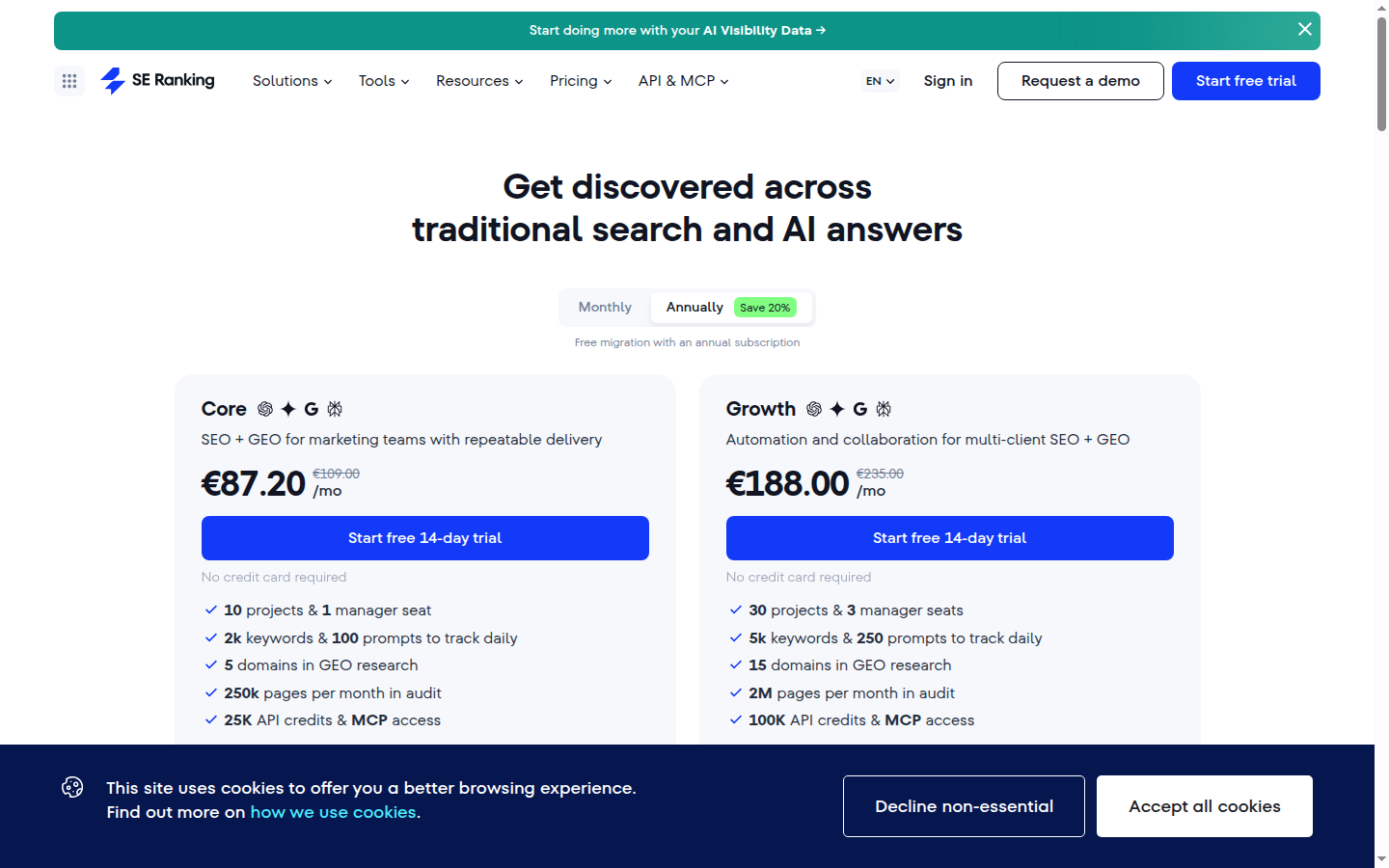
Published pricing (verified September 2026)
| Tool | Plan | Price | Billing | What it includes |
|---|---|---|---|---|
| Profound | Starter | on request | billed yearly | ChatGPT tracking only |
| Profound | Growth | on request | billed yearly | 3 Answer Engines tracked |
| Profound | Enterprise | on request | Tailored packages, Tailored pricing terms | Full Answer Engine coverage |
| SE Ranking | Enterprise | on request | Flexible terms, Custom limits and pricing | Full API & advanced integrations |
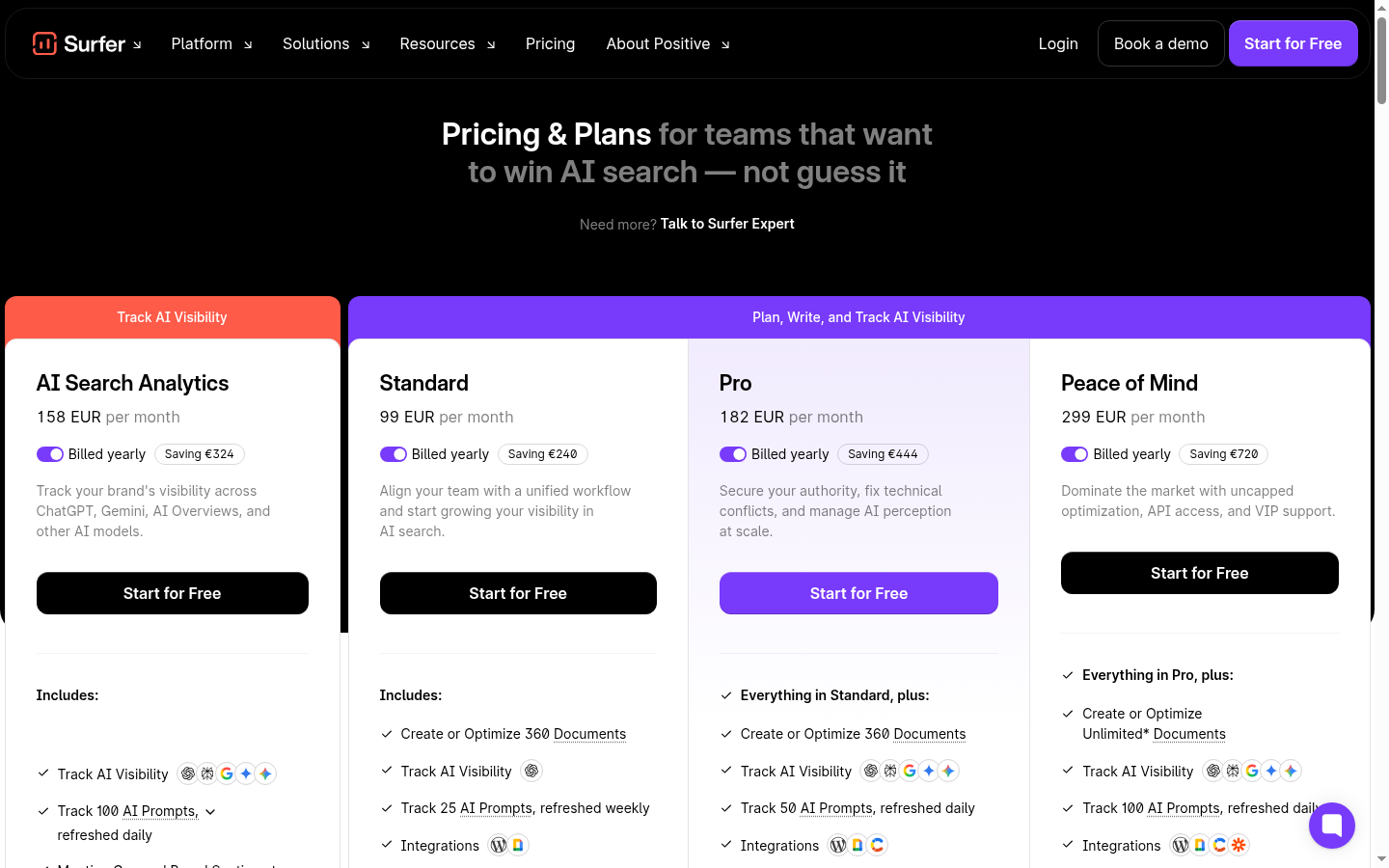
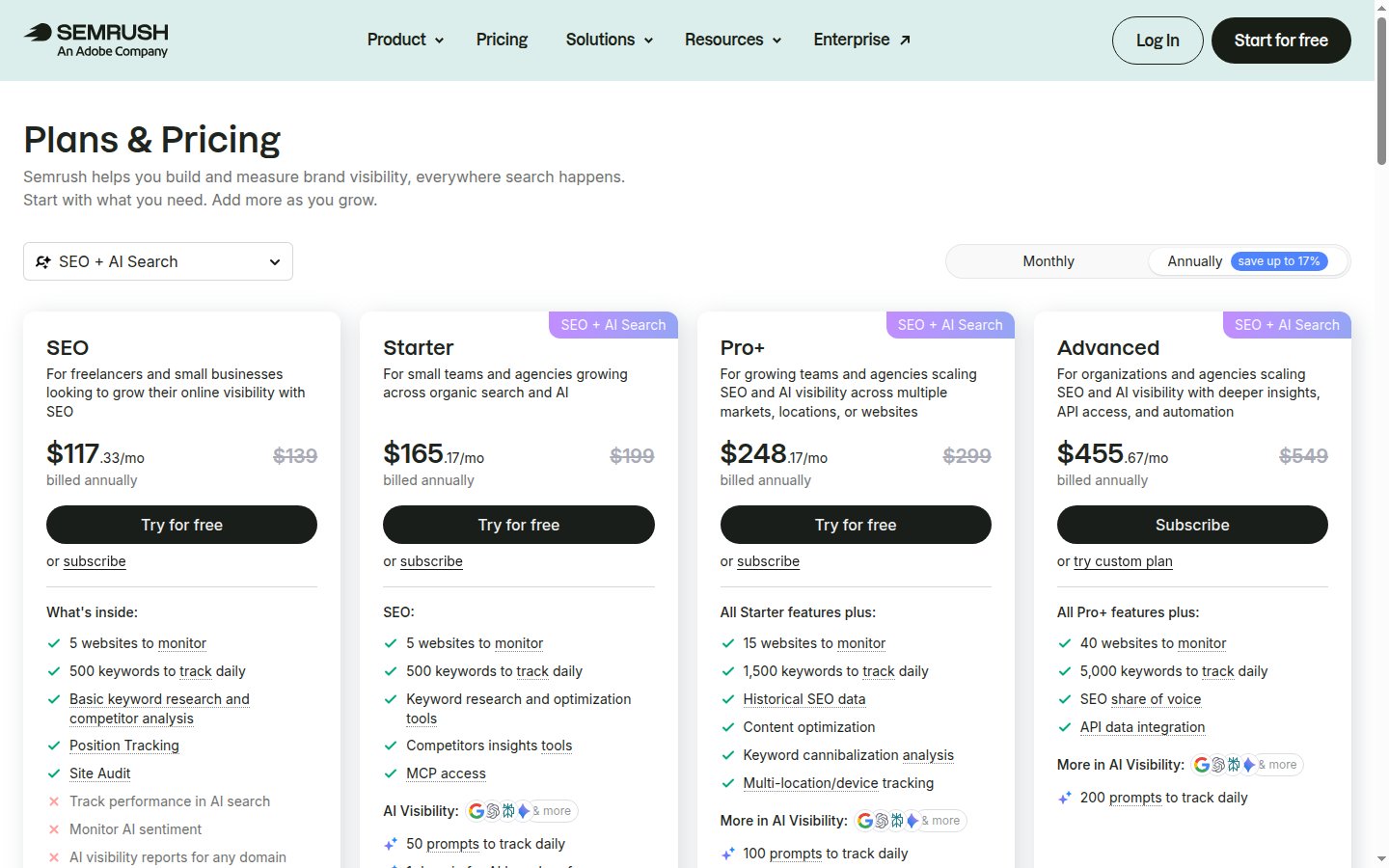
| Semrush | Starter | 165.17 USD/mo | billed yearly | 5 websites, 500 keywords, 50 AI prompts daily |
| Semrush | Pro+ | 248.17 USD/mo | billed yearly | 15 websites, 1,500 keywords, 100 AI prompts daily |
| Semrush | Advanced | 455.67 USD/mo | billed yearly | 40 websites, 5,000 keywords, 200 AI prompts daily |
| Semrush | Enterprise | on request | Custom pricing available | Unlimited projects & custom limits, custom AI prompt tracking |
Source: Profound · SE Ranking · Surfer SEO · Semrush
Frequently Asked Questions
What are the best AI SEO platforms for B2B SaaS content automation?
FAQ: Quick Answers for B2B SaaS Teams
Best Platforms in 2026?
Profound (AI visibility), Slate (content engineering), Averi (compounding content). Semrush & Surfer for research and on-page optimization.
How Does AI Automate SEO?
AI agents generate briefs, structure data for LLM readability, draft semantic content, and interlink pages. 2026 differentiator: entity mapping + citation architecture, not just text.
Traditional vs. AI SEO Tools?
Traditional tools provide data for manual analysis. AI SEO tools autonomously execute optimizations and track brand citations in LLMs for AEO.
Timeline for AEO Results?
Initial citation lifts typically appear within 60–90 days of implementing structured AEO strategies. Consistency in publishing engineered content accelerates this.
The best AI SEO platforms for B2B SaaS include Profound, Slate, and Averi. Profound excels in holistic AI search visibility, Slate leads in content engineering, and Averi is ideal for building compounding content engines. Traditional tools like Semrush and Surfer SEO remain essential for research and on-page optimization. The right combination depends on whether your priority is visibility tracking, content restructuring, or scaling production.
How does AI automate SEO content creation for SaaS companies?
AI automates SEO content by executing multi-step workflows from keyword research to publishing. Modern platforms use AI agents to generate content briefs, structure data for LLM readability, draft semantic content, and interlink pages, significantly reducing the cost-to-serve while maintaining brand voice. The key differentiator in 2026 is that these workflows now include entity mapping and citation architecture, not just text generation.
What is the difference between traditional SEO and AI SEO tools?
Traditional SEO tools provide data for manual analysis, while AI SEO tools autonomously execute optimizations. In 2026, AI SEO platforms also track brand citations in Large Language Models (LLMs) and optimize for Answer Engine Optimization (AEO), moving beyond simple Google rankings. Traditional tools measure rankings; AI-native tools measure whether your brand appears in the answers buyers actually read.
Can AI SEO tools improve visibility in ChatGPT and Perplexity?
Yes, specialized AI SEO platforms can improve visibility in conversational AI engines. Tools focused on Generative Engine Optimization (GEO) structure your site’s content, entities, and brand mentions to ensure LLMs confidently cite your B2B SaaS product in their generated answers. This requires structured data, consistent entity definitions, and content that provides unique information gain.
Why is content engineering important for B2B SaaS?
Content engineering ensures that automated content is structurally sound and readable by AI models. For B2B SaaS, this means organizing features, pricing, and integrations into clear, machine-readable formats, which increases the likelihood of being recommended by AI search engines. Without engineering, even well-written content remains invisible to generative engines.
How long does it take to see results from AEO and AI SEO platforms?
Typically, B2B SaaS teams see initial citation lifts within 60 to 90 days of implementing structured AEO strategies. Generative engines like ChatGPT and Perplexity continuously crawl and re-index the web, but it takes time for them to recognize and trust new entity relationships and structured data. Consistency in publishing engineered content is key to accelerating this timeline.
*
Limitations, Alternatives & Professional Guidance
While the best AI SEO platforms for B2B SaaS content automation offer immense power, they are not without limitations. Pure AI content automation without human editorial oversight can lead to AI hallucinations, off-brand messaging, and ultimately, a drop in conversion rates. If an LLM generates technically inaccurate claims about your software’s capabilities, it can severely damage brand trust. In B2B SaaS, where buyers conduct extensive research and involve multiple stakeholders, a single inaccurate claim propagated across AI-generated answers can derail a deal.
⚠️ AI Hallucinations Can Derail Enterprise Deals
If an LLM generates technically inaccurate claims about your software’s capabilities, it can severely damage brand trust. In B2B SaaS, where buyers involve multiple stakeholders, a single inaccurate claim propagated across AI-generated answers can derail a deal. Human oversight is non-negotiable.
A specific limitation of current platforms is their dependency on training data cutoffs. LLMs may not have current information about your latest product features or pricing changes, which means citation tracking tools can show stale data if your content updates are not properly structured for rapid re-indexing. Additionally, no platform currently offers comprehensive coverage across all generative engines—most focus on Google AI Overviews and ChatGPT, with limited Perplexity and Claude tracking.
As an alternative, growth teams should consider hybrid models, often referred to as “human-in-the-loop” systems. In this approach, AI handles the heavy lifting of data structuring, drafting, and entity optimization, while human subject matter experts review the final output for nuance and accuracy. For example, an AI platform might draft a technical comparison guide, but a human engineer must verify the API specifications and integration capabilities before publishing. This is particularly important for technical SaaS content where domain expertise cannot be fully replicated by AI. Additionally, utilizing specialized AI SEO agencies can be highly beneficial for executing complex technical migrations or managing enterprise brand reputation across LLMs.
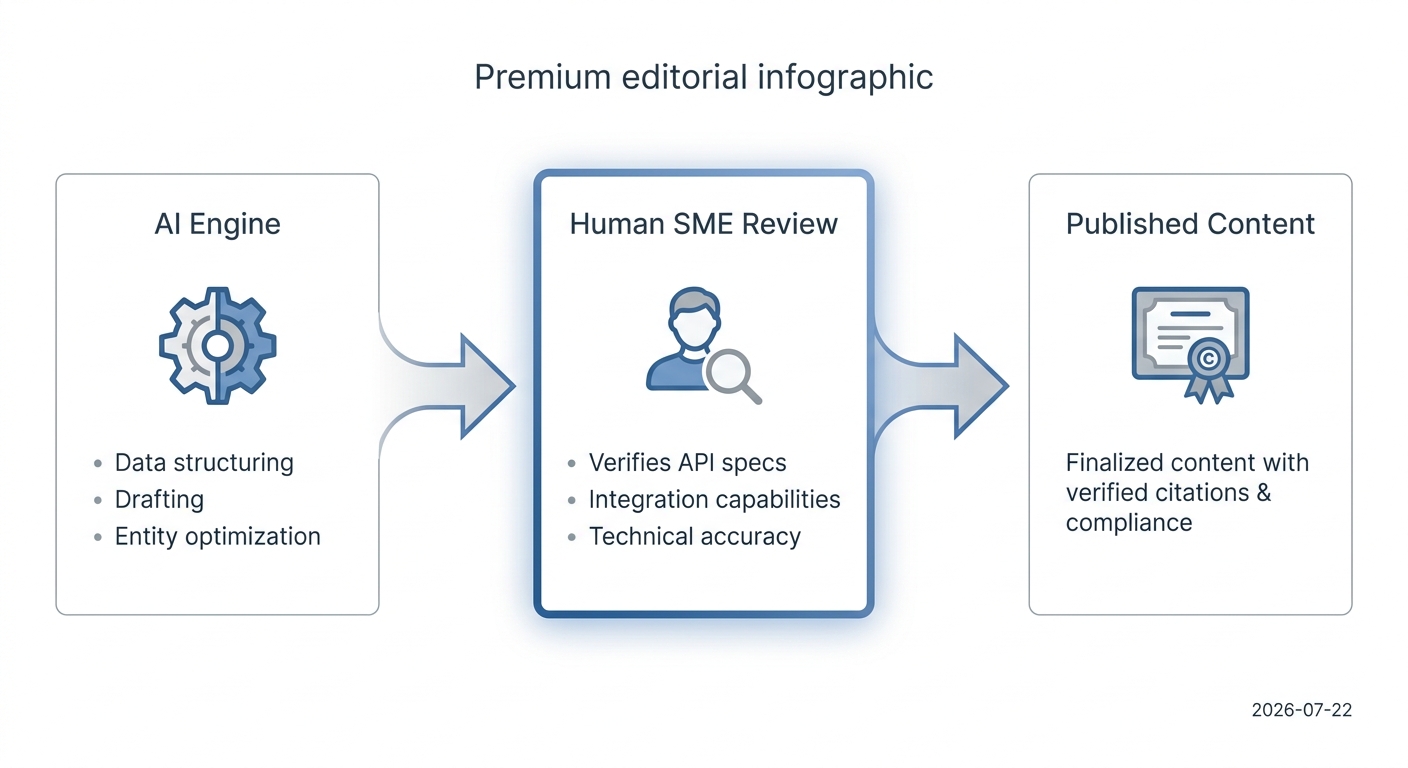
For professional guidance, we advise Marketing Directors to start with a scoped pilot program. Begin by measuring your current AI share of voice for core product categories using a tool like Profound. Then implement AEO strategies on a subset of 20-30 high-intent pages, focusing on schema markup, entity clarity, and proprietary data integration. Measure the citation lift over 60-90 days before scaling to full automation. This phased approach minimizes risk while building internal expertise.
📊 Measure Current AI Share of Voice
Use a tool like Profound to baseline your brand citation frequency across ChatGPT, Perplexity, and Google AI Overviews for core product categories.
🎯 Select 20–30 High-Intent Pages
Choose your most commercially important pages for AEO implementation. Focus on product comparison, use case, and pricing pages.
🔧 Implement AEO Strategies
Apply schema markup, entity clarity, and proprietary data integration to the selected pages. Ensure JSON-LD schema is valid and complete.
📈 Measure Citation Lift Over 60–90 Days
Track citation frequency changes before scaling to full automation. Build internal expertise through this phased approach to minimize risk.
*
CONCLUSION
Winning B2B SaaS SEO in 2026 requires a fundamental shift in strategy. It is no longer enough to generate high volumes of keyword-stuffed articles. Success requires utilizing platforms like Profound, Slate, and Averi that seamlessly blend content automation with advanced AI search visibility. By focusing on the 4-pillar framework—entity mapping, content engineering, citation tracking, and authority signals—growth teams can position their software as the definitive answer in LLM-generated responses.
Adapting to Answer Engine Optimization is no longer optional for SaaS survival; it is a critical requirement for maintaining pipeline in an AI-first search landscape. Structured schema and proprietary data make your content easier for generative engines to parse, though Google states that no special markup is required to appear in its AI features. Seeing generative engines in action proves that brands optimized for citations capture the highest intent buyers at the moment of decision.
The platforms evaluated in this guide represent the current frontier of AI SEO technology for B2B SaaS. However, the landscape will continue to evolve as generative engines refine their citation algorithms. Marketing Directors who invest now in content engineering and AI visibility tracking will build a durable competitive moat that compounds over time, ensuring their brand remains visible as the search landscape continues to shift away from traditional links.
✅ Build Your Moat Before the Landscape Shifts Again
Marketing Directors who invest now in content engineering and AI visibility tracking will build a durable competitive moat that compounds over time. The platforms evaluated here represent the current frontier, but the landscape will keep evolving as generative engines refine citation algorithms.
Ready to dominate AI search? Access Free Trial
💡 Take the Next Step
Access a free trial to see how these platforms transform your content automation strategy and secure your brand’s visibility in the engines of tomorrow. Start with a scoped pilot on 20–30 high-intent pages and measure citation lift before scaling to full automation.
to see how our platform transforms your content automation strategy and secures your brand’s visibility in the engines of tomorrow.
References
[1] 11 Best AI SEO Tools for B2B SaaS Growth Teams
[2] The 12 Best AI SEO Tools for B2B SaaS in 2026
[3] AI Enabled SaaS – NachoNacho THE B2B SaaS Marketplace
[4] We Tested 23 AI Marketing Tools. 7 Are Worth Paying For
[5] Unlocking the Power of SEO Automation and Optimization
[6] Best AI Marketing Software for SaaS