Key Takeaways
- Shift Beyond Google: In 2025, AI search features from Google, ChatGPT Search and Perplexity offer new discovery paths, so it is worth looking beyond Google-only indexing and tracking visibility across several AI engines.
- Avoid Risky Shortcuts: The Google Indexing API is not for general content, and using it improperly risks losing API access [2]. Third-party “instant indexer” tools often use spammy tactics that lead to de-indexing.
- Embrace GEO: The most effective strategy is Generative Engine Optimization (GEO). This involves using AI-driven platforms like AI Rankia to orchestrate brand citations, manage crawl budget, and diagnose indexing issues at their root cause.
- Prioritize Quality: Fast-track indexing is a result of technical health and high-quality content. Focus on server speed, internal linking, and creating content that meets Google’s E-E-A-T standards.
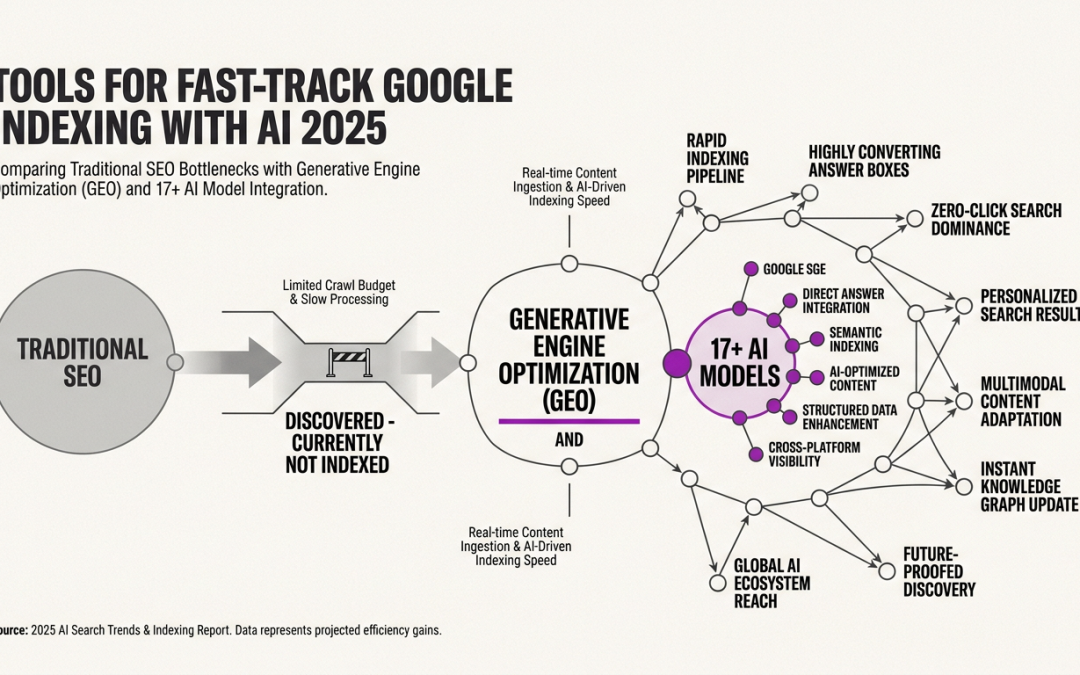
A rising tide of frustration is sweeping across marketing departments and SEO agencies. The dreaded “Discovered – currently not indexed” status in Google Search Console has evolved from a minor annoyance into a critical business bottleneck. Traditional methods for securing search visibility are failing as Google’s crawl budget strains under an influx of low-quality AI-generated content, making it harder for legitimate, high-value pages to get noticed.
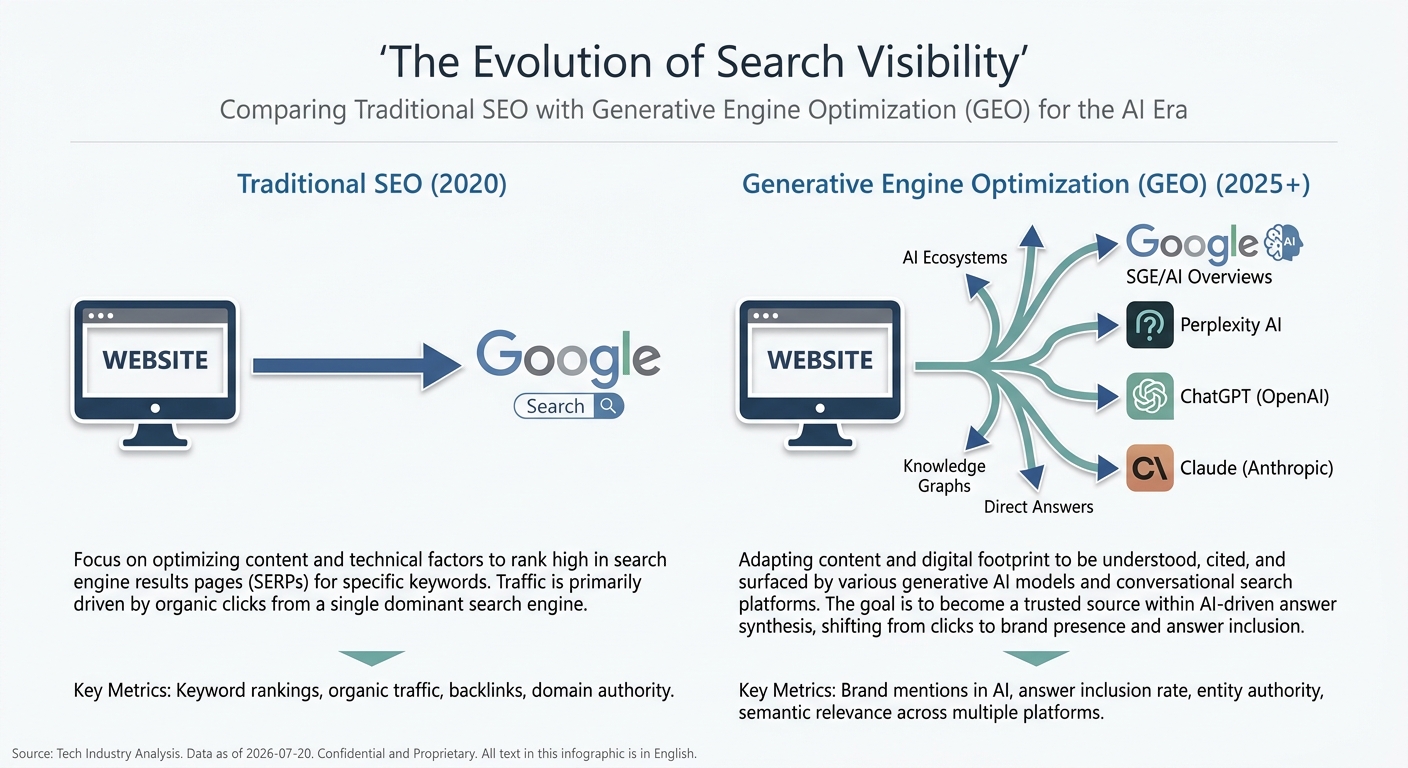
To overcome this, forward-thinking teams are transitioning from traditional SEO to Generative Engine Optimization (GEO). This guide provides a strategic framework for this shift, offering a data-backed analysis of why “instant indexing” is a myth, how to manage indexing for large-scale programmatic sites, and which tools for fast-track Google indexing with AI in 2025 are essential for tracking visibility across the entire AI search landscape. We will explore the automated action plans and multi-model strategies that secure lasting indexation in an increasingly complex digital world.
About the Author
Name: Pedro Spota Role: Director of Growth at ELOGIA (Viko Group) & Co-Founder of AI Rankia Bio: Pedro designs data-driven growth systems tied to revenue. With over six years of experience, he builds AI agents focused on marketing, sales, and SEO, leveraging advanced frameworks like n8n to optimize conversion lift and lower cost-to-serve. LinkedIn:
- Transparency Note: This guide is authored by the Co-Founder of AI Rankia. While it discusses AI Rankia’s proprietary 17-model tracking ecosystem, it relies on official Google documentation, independent industry research, and verified community data to evaluate all indexing methodologies objectively.
*
The New Imperative: Why Google-Only Indexing Is Obsolete
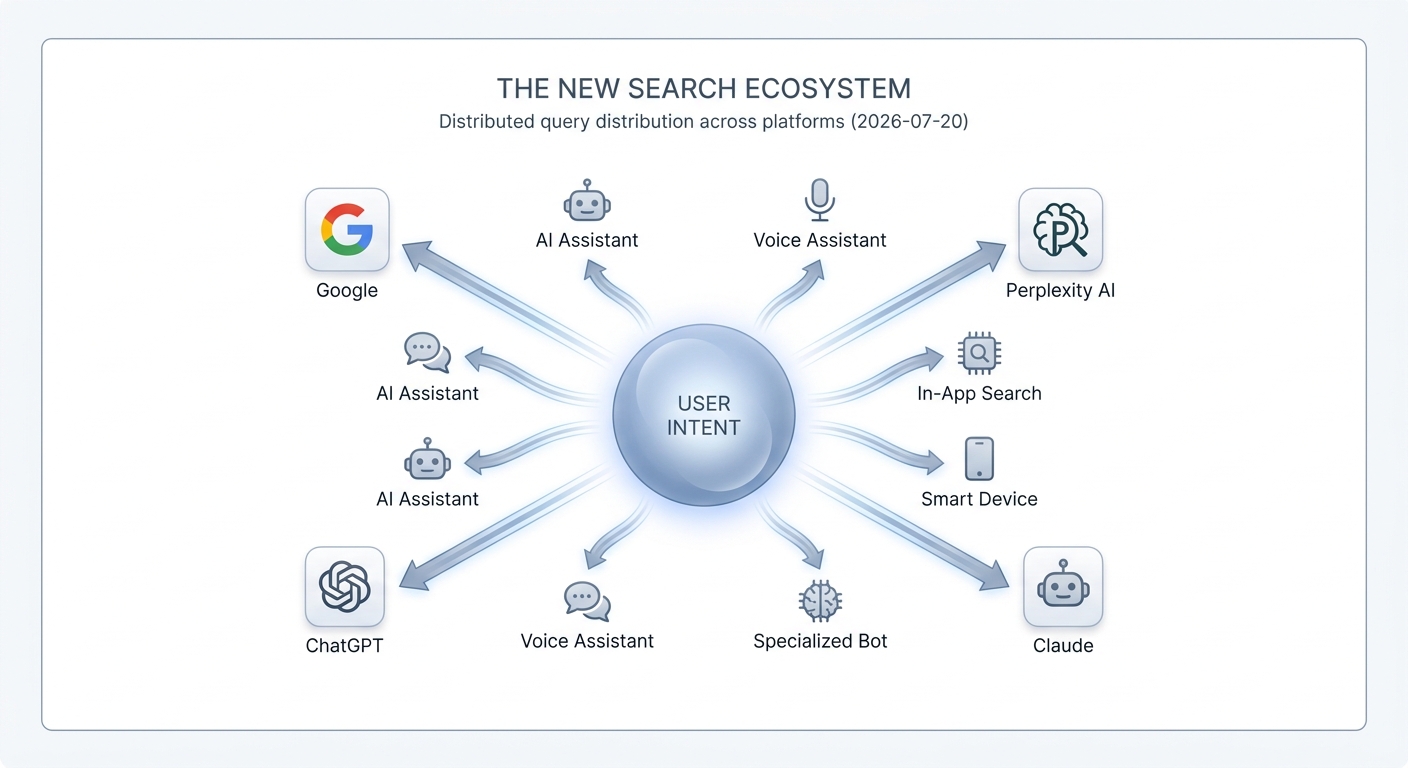
The primary gap in most 2025 indexing strategies is an exclusive focus on Google, ignoring the rapid rise of AI-native search. While standard advice points to Google Search Console’s URL Inspection tool and XML sitemaps, this guidance is dangerously incomplete. With AI platforms like Perplexity gaining traction, B2B decision-makers are increasingly using these tools for initial product research, making visibility beyond Google essential for survival.
📊 The Rise of AI Search
AI platforms like Perplexity are rapidly gaining traction. Ignoring these channels means missing out on a significant and growing audience for product research.
Relying solely on Google’s tools limits your reach. According to official guidelines, site owners can use the URL Inspection tool to request indexing for individual pages and monitor crawl status, but this manual process is unscalable and completely blind to your brand’s presence in alternative generative engines [3]. This is where a Generative Engine Optimization (GEO) ecosystem provides a distinct advantage. According to airankia.com, AI Rankia monitors 17+ AI engines, not just Google.
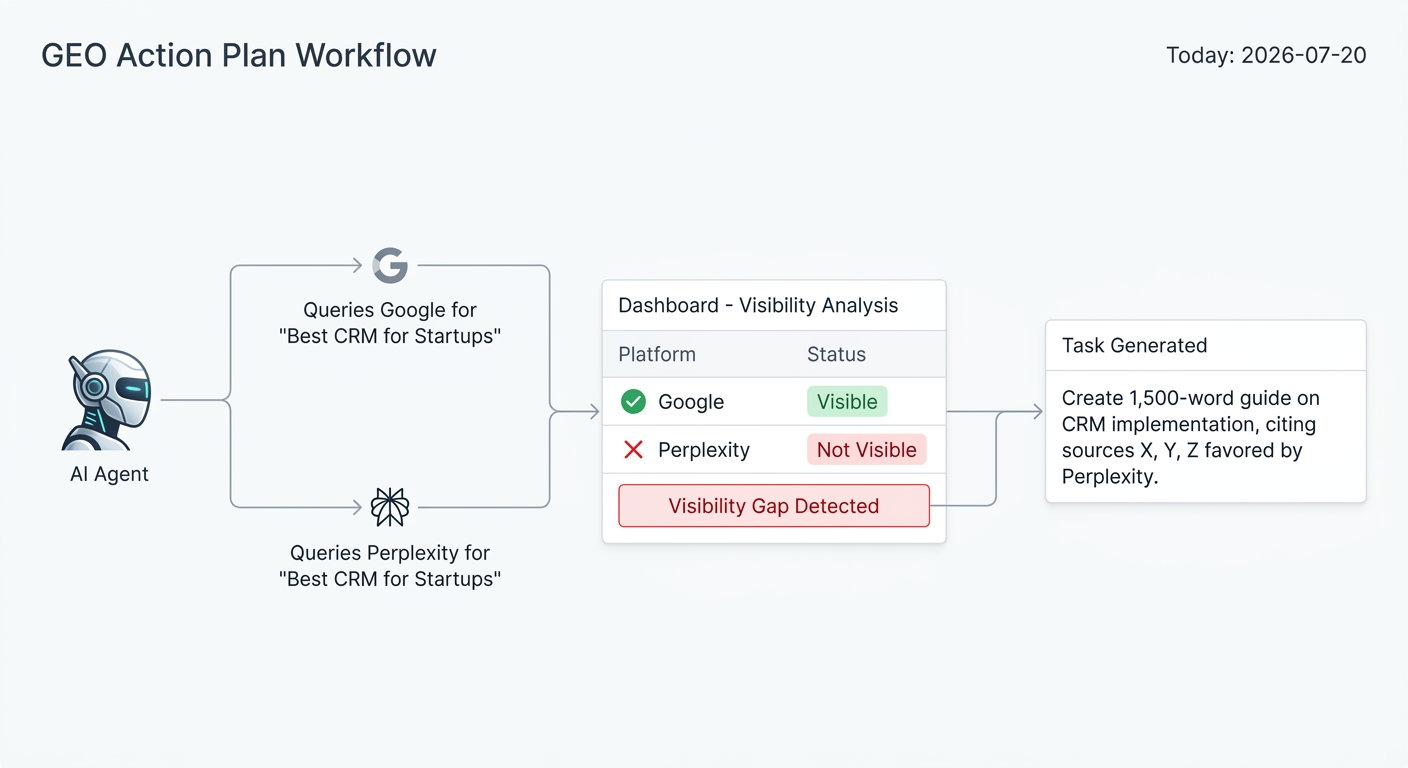
By deploying automated AI agents, teams can track traditional Google indexation alongside these AI models. This provides automated action plans that standard SEO platforms cannot replicate. For example, an action plan might identify that your brand is cited for “best CRM for startups” on Google but is absent in Perplexity’s answer. The system would then flag this gap and suggest a task to create content that addresses it. This dual-presence approach establishes a more resilient digital footprint, insulating your brand from singular algorithm shifts.
The High-Risk Myth of ‘Instant Indexing’ APIs
A pervasive and dangerous myth promoted by many third-party tools is the use of Google’s Indexing API for instant indexing of any content. This advice is fundamentally flawed and puts API access at risk. The official Google documentation explicitly states the Indexing API is only supported for JobPosting
⚠️ Google Indexing API Misuse
The Google Indexing API is ONLY for `JobPosting` and `BroadcastEvent` content. Using it for standard blog posts or landing pages is outside the documented use of the API, and abuse can lead to revoked access.
and BroadcastEvent structured data [2]. Using it for standard blog posts or landing pages falls outside the API’s documented use, and abuse can lead to revoked access.
The mechanism behind search discovery is a methodical process, not an on-demand service. Googlebot is the crawler that visits web pages to include them in the Google Search index, and its priorities are governed by a site’s overall authority and technical health [1]
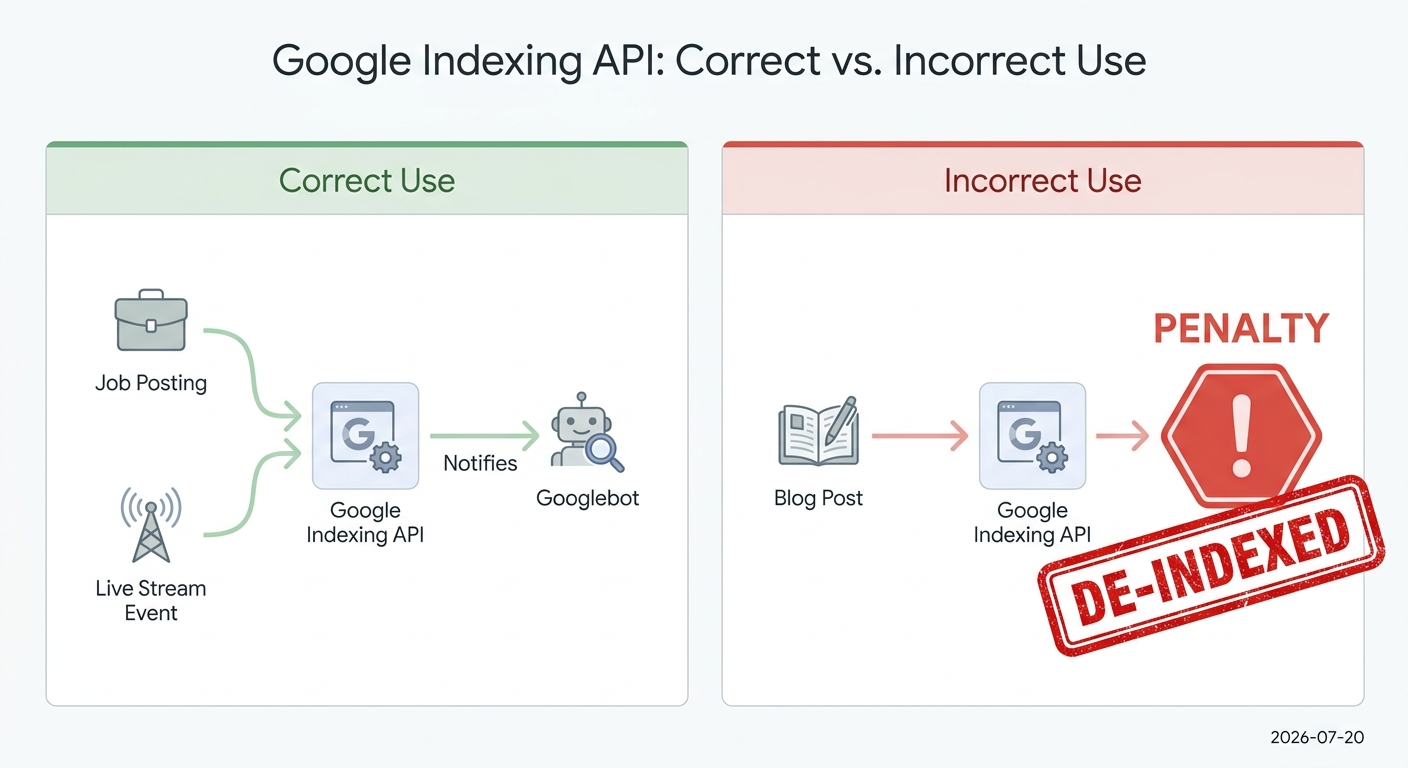
. While the API can notify Google of a change, the final decision to crawl and index rests with Google’s systems, which depend on many different factors [2].
Community experience on platforms like Reddit’s /r/SEO corroborates the risk. Numerous threads detail experiences where sites using API-based indexers saw a temporary boost followed by a complete disappearance from search results. Rather than risking domain health, practitioners should focus on natural crawl budget acceleration. This includes ensuring fast server response times, maintaining a logical internal linking structure, and building genuine topical authority—proven methods that support consistent discovery without violating webmaster guidelines.
Solving the Indexing Challenge for Programmatic & Large-Scale SEO
Standard indexing advice is insufficient for large-scale operations like educational platforms or SaaS companies managing thousands of programmatic pages. When a business generates pages for every city, feature variation, or template, manual submission through Google Search Console is impossible. This is where automated, AI-assisted infrastructure becomes non-negotiable for managing indexation at scale.
Consider an Ed-Tech platform rolling out thousands of localized pages for a high-volume term like “canva for educators.” They cannot rely on a single, static sitemap. They require a dynamic system that uses AI agents to tier sitemaps—for example, submitting a sitemap with the most important URLs first, then monitoring crawl rates in GSC before submitting the next batch. This metered approach prevents overwhelming Googlebot and respects your site’s crawl budget.
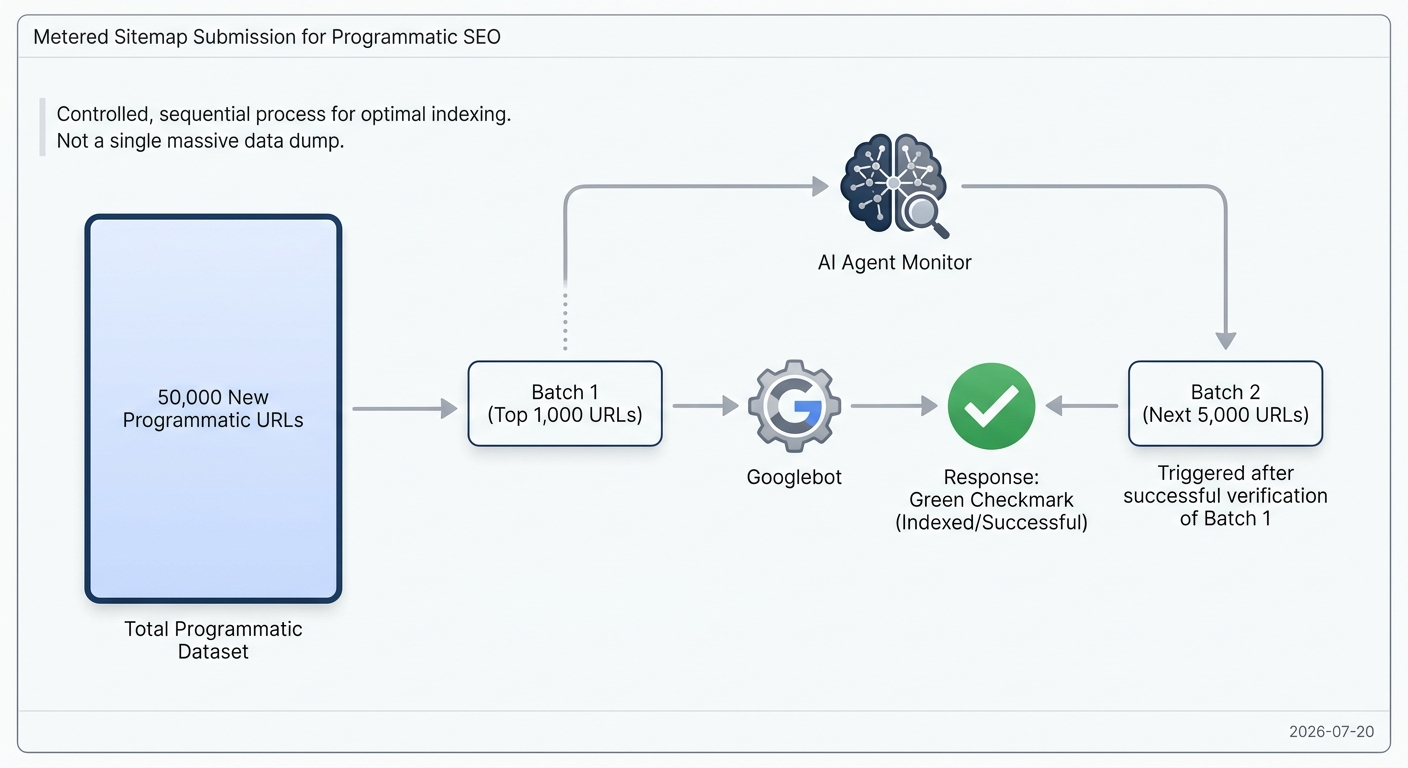
Effective crawl budget management is critical. As research from industry leaders suggests, indexing is not a race but a reflection of site quality and technical efficiency [5]. Pacing submissions in batches and monitoring crawl stats in Google Search Console helps sustain a steady discovery rate; Google itself automatically adjusts its crawl rate based on site health (Google crawl budget documentation). This includes active validation, where AI agents automatically check that a newly generated page is correctly linked from a main hub page, reinforcing its place within the site’s entity structure.
| Feature | Traditional Crawling | Automated AI-Assisted Indexing |
|---|---|---|
| Submission Method | Manual GSC entry & static XML sitemaps | Dynamic, tiered sitemap pinging via AI agents |
| Pacing | Uncontrolled, reliant on crawler schedule | Metered release to protect crawl budget |
| Scale Capacity | Low | High (programmatic pages) |
| Quality Signaling | Passive | Active cross-referencing and entity validation |
Indexing Strategy: Traditional vs. AI-Assisted
| Option | Pros | Cons | Score |
|---|---|---|---|
| Traditional Crawling | Simple for small sites; uses standard tools like GSC and static sitemaps. | Unscalable for very large sites; uncontrolled pacing can strain crawl budget and signal low quality. |
—
|
| AI-Assisted Indexing | Handles massive scale with dynamic, tiered sitemaps and metered release to protect crawl budget. | Requires specialized platforms and a more sophisticated technical SEO setup. |
—
|
By structuring rollouts that align with crawler capabilities, technical SEOs can ensure that massive programmatic initiatives are processed efficiently, leading to higher indexation rates without triggering spam filters.
The Hidden Dangers of Third-Party ‘Rapid Indexer’ Tools
Many SEOs, desperate for a quick solution, turn to third-party “rapid indexer” tools. However, a breakdown of their mechanics reveals significant risks. As SEO expert James Dooley warns, “Getting your backlinks indexed can make or break your SEO campaigns, but relying on outdated ping tools is a losing game in 2025.”
Most of these services are simply mass pinging platforms that blast a URL to thousands of low-quality web directories, stats sites, and obscure networks. This outdated technique is a holdover from a decade ago and has almost no positive impact on Google’s modern crawling priorities [4]
⚠️ The Danger of ‘Rapid Indexer’ Tools
Many third-party indexer tools use outdated and spammy tactics, like pinging a URL to thousands of low-quality sites. This generates worthless signals that can associate your domain with manipulative practices and lead to penalties.
. The core issue is that these tools generate low-value, temporary signals. While a sudden blast of links might trigger an initial crawl, it fails to provide the E-E-A-T (Experience, Expertise, Authoritativeness, Trust) signals required for long-term indexing.
Practitioners frequently report a “48-hour purge” phenomenon. As one community pulse noted, “The community consensus is clear: forcing indexation without quality content leads to rapid de-indexing within 48 hours.”
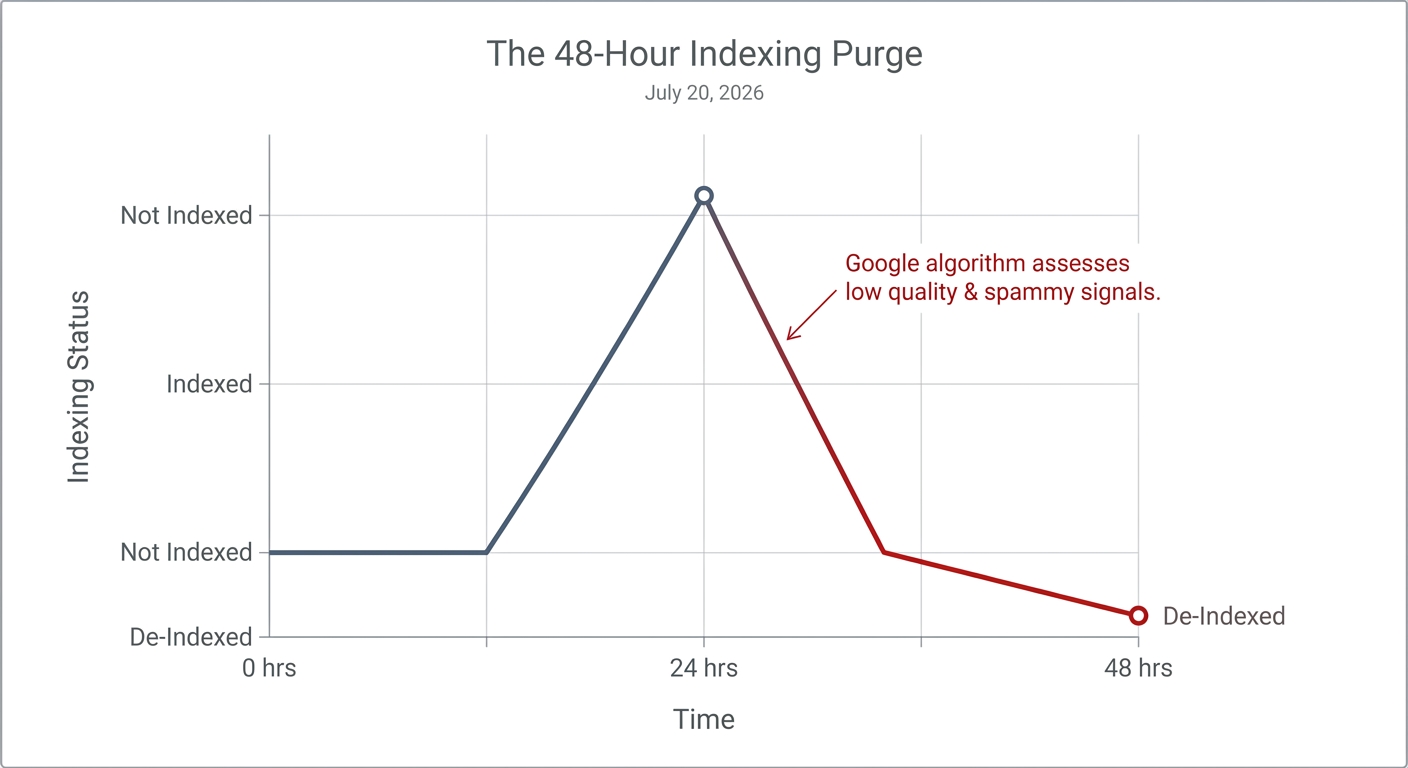
A URL might appear in the index for a day or two, only to be removed once Google’s algorithms assess its lack of quality and spammy backlink profile. This cycle wastes time and money and can associate your domain with manipulative tactics. A far safer alternative is a holistic GEO strategy that focuses on building sustainable authority signals.
A Strategic Framework: Evaluating AI Indexing Tools in 2025
Instead of chasing “instant” results, savvy marketing directors should evaluate potential tools using a strategic framework. This ensures any solution supports long-term growth rather than creating short-term risk.
1. Scope: Multi-Model Tracking vs. Google-Only
A modern tool must look beyond Google. Does it track your brand’s citations and visibility in generative AI engines like Perplexity, ChatGPT, and Claude? A Google-only focus is a recipe for obsolescence. The best platforms provide a unified dashboard showing where your brand appears (and where it doesn’t) across the entire AI search landscape.
2. Method: Diagnostic Capabilities vs. Brute-Force Submission
Avoid tools that just “submit” URLs. A valuable tool diagnoses why a page isn’t indexed. Does it integrate with GSC to analyze crawl budget issues? Does it flag low-quality content or orphan pages? A diagnostic approach fixes the root cause, while brute-force submission is like trying to fill a leaky bucket.
3. Safety: Guideline Compliance vs. Risky Loopholes
This is non-negotiable. Ask directly: “Does your tool use the Google Indexing API for content types other than JobPosting or BroadcastEvent?” If the answer is yes, or if they are evasive, walk away. Likewise, if their method involves “pinging” thousands of sites, it’s a clear red flag for spammy tactics that can earn a penalty.
4. Scalability: Intelligent Automation vs. Manual Input
For B2B SaaS and programmatic sites, scalability is key. Can the tool handle tens of thousands of URLs without manual intervention? Look for features like AI agent-driven sitemap tiering, which intelligently paces submissions based on real-time crawl data to avoid overwhelming search engine crawlers.
By applying this framework, you can easily filter out low-value, high-risk tools and identify strategic partners that align with a modern, multi-model visibility strategy.
*
Frequently Asked Questions (FAQ)
How can I get Google to index my site faster in 2025?
To get Google to index your site faster, you must optimize your crawl budget and utilize Generative Engine Optimization (GEO). Instead of relying on spammy ping tools, ensure your XML sitemaps are clean and submitted via Google Search Console, your internal linking is robust (no orphan pages), and use platforms like AI Rankia to signal authority to Googlebot and AI models simultaneously.
Does the Google Indexing API work for regular blogs?
No, the Google Indexing API is officially restricted to JobPosting and BroadcastEvent structured data [2]. While some third-party tools use it for regular blogs, Google warns that abuse of the API can lead to revoked access.
Why are my URLs discovered but currently not indexed?
💡 Solving ‘Discovered – Currently Not Indexed’
This status typically points to three core issues: 1) **Strained Crawl Budget:** Your server is too slow or the site has too many low-value pages. 2) **Low Content Quality:** The content is not unique or doesn’t meet E-E-A-T standards. 3) **Poor Internal Linking:** The page is an ‘orphan’ with no links from important, already-indexed pages.
The “Discovered – currently not indexed” status means Googlebot found your URL but decided not to crawl it yet. Common reasons include a strained crawl budget (your server is too slow or the site has too many low-value pages), perceived low content quality, or poor internal linking. To resolve this, improve server response time, enhance content uniqueness, and ensure the page has links from important, already-indexed pages on your site.
Can AI-generated content get indexed quickly?
AI-generated content can be indexed quickly only if it meets Google’s strict E-E-A-T quality thresholds. Raw, unedited AI output often gets trapped in the “Crawled – currently not indexed” category. To achieve fast-track indexing, you must add unique expert insights, proprietary data, author bylines with credentials, and a thorough human review process.
How do I track my brand visibility in AI search engines?
You can track brand visibility across AI search engines using specialized GEO platforms like AI Rankia. These tools deploy AI agents to query 17+ different models (including ChatGPT and Perplexity) at scale, providing automated action plans to improve your citation rate and identify content gaps beyond what traditional Google Search Console metrics can show.
*
Limitations, Alternatives & Professional Guidance
While automated tools for fast-track indexing offer significant advantages, they are not a silver bullet. These systems cannot fix fundamentally poor content, a broken technical SEO foundation, or a lack of genuine domain authority. Relying solely on forced indexing without a quality-first mindset will result in URLs dropping out of the index.
As a safer alternative to risky third-party pingers, B2B SaaS companies should focus on holistic Generative Engine Optimization (GEO). Key actions include:
🔎 Conduct a Crawl Budget Audit
Use server logs and GSC’s Crawl Stats report to find and fix redirect chains, 404s, and parameter URLs that waste crawler time.
🔗 Implement Tiered Internal Linking
Ensure your most important new content receives internal links from high-authority ‘hub’ pages to signal its importance to crawlers.
🏆 Build Linkable Assets
Create original research, free tools, or data-rich reports that naturally attract backlinks—the strongest signal for encouraging indexation.
- Conducting a Crawl Budget Audit: Use server log files and Google Search Console’s Crawl Stats report to identify and fix parameter URLs, redirect chains, and 404 errors that waste crawler time.
- Implementing Tiered Internal Linking: Ensure your most important new content receives internal links from high-authority “hub” pages to pass equity and signal importance to crawlers.
- Building Linkable Assets: Create original research, free tools, or data-rich reports that naturally attract backlinks from authoritative sites—the single strongest signal for encouraging indexation.
For professional guidance on deploying safe, multi-model AI tracking, consult with technical SEO experts who prioritize long-term revenue growth over temporary crawl spikes.
Conclusion
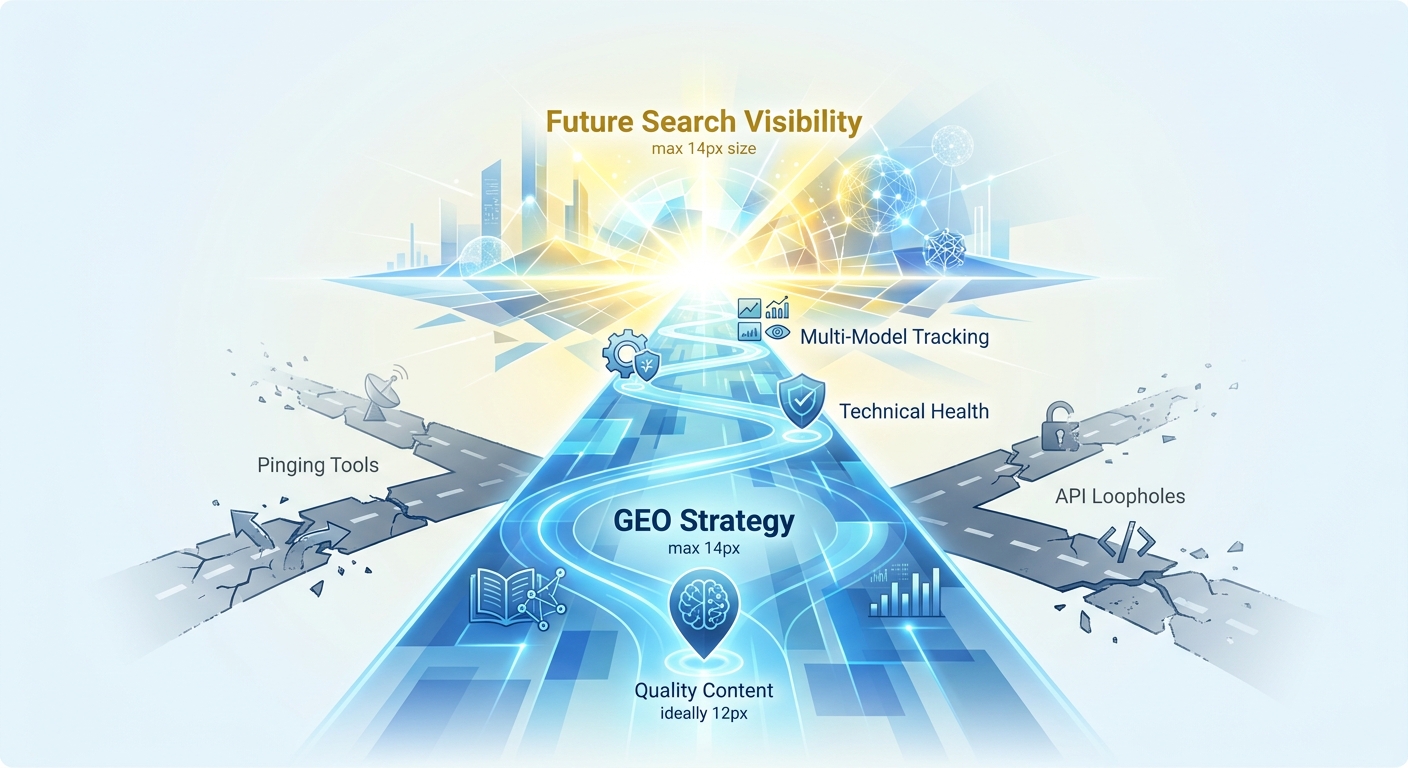
Securing fast and reliable indexing in 2025 requires a fundamental shift in strategy. It’s no longer about submitting a sitemap or exploiting an API. As Googlebot becomes more discerning and AI Overviews dominate search, the focus must expand from simple Google indexing to comprehensive, multi-model visibility. By understanding the severe risks of outdated third-party ping tools, the myth of the “instant indexing” API, and the unique demands of programmatic scale, you can protect your domain and build a resilient digital presence.
The path forward lies in Generative Engine Optimization. Platforms like AI Rankia provide a definitive solution, moving beyond traditional metrics to orchestrate AI agents that track and optimize your presence across 17+ Generative Engines. Stop guessing why your pages aren’t indexing—take control of your AI search visibility today. Access a Free Trial to see how automated action plans can transform your digital growth.
References
[1] Google Search Crawling and Indexing Overview
[2] Google Indexing API Quickstart