Key Takeaways
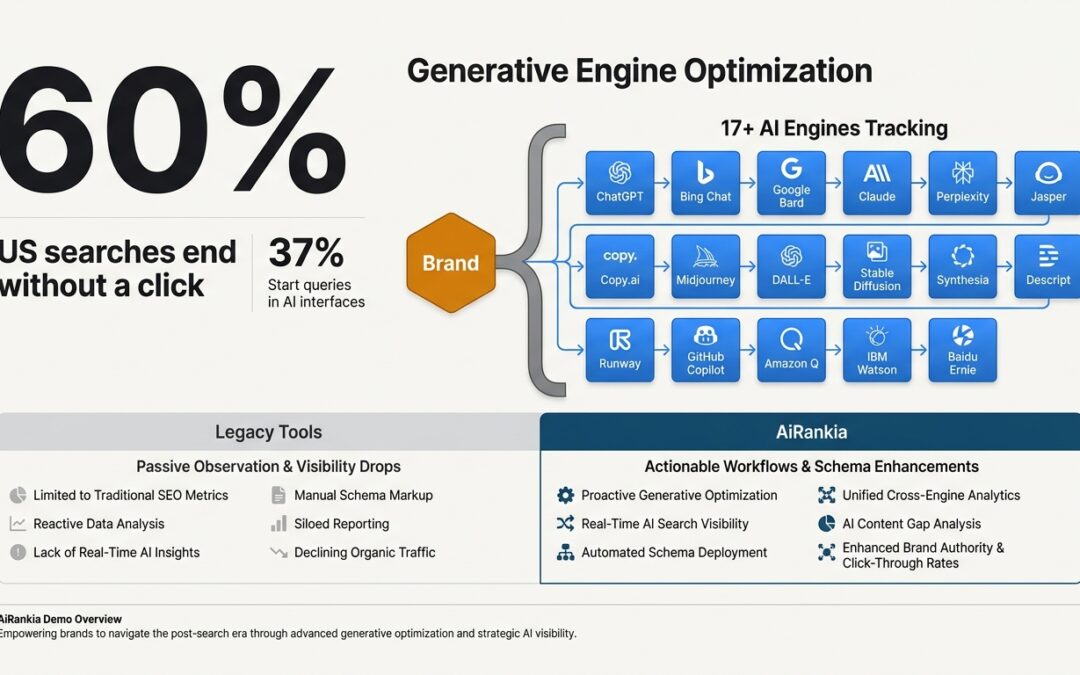
Generative Engine Optimization (GEO) is the new standard for B2B SaaS visibility, as an estimated 60% of US Google searches now end without a click. An AiRankia demo reveals how to track and influence your brand’s share of voice across 17+ critical AI models, including ChatGPT, Perplexity, and Google AI Overviews. Unlike legacy tools that only report on visibility drops, AiRankia provides automated, LLM-optimized schema enhancements and prioritized action plans to actively increase your AI citation frequency and win back lost top-of-funnel traffic.
Introduction
For Marketing Directors and SEO Specialists in the B2B SaaS space, the traffic decline is no longer a forecast—it is a daily reality. Gartner predicts a 25% drop in traditional search volume by 2026, rendering standard rank trackers increasingly obsolete. This technological shift is mirrored in user behavior, with 37% of consumers now starting their commercial queries directly within AI interfaces
.
This has given rise to Generative Engine Optimization (GEO), a new discipline focused on ensuring Large Language Models (LLMs) cite your brand as an authoritative solution. Academic research presented at the KDD 2024 conference formalized GEO as a distinct retrieval paradigm, separate from traditional search [1]
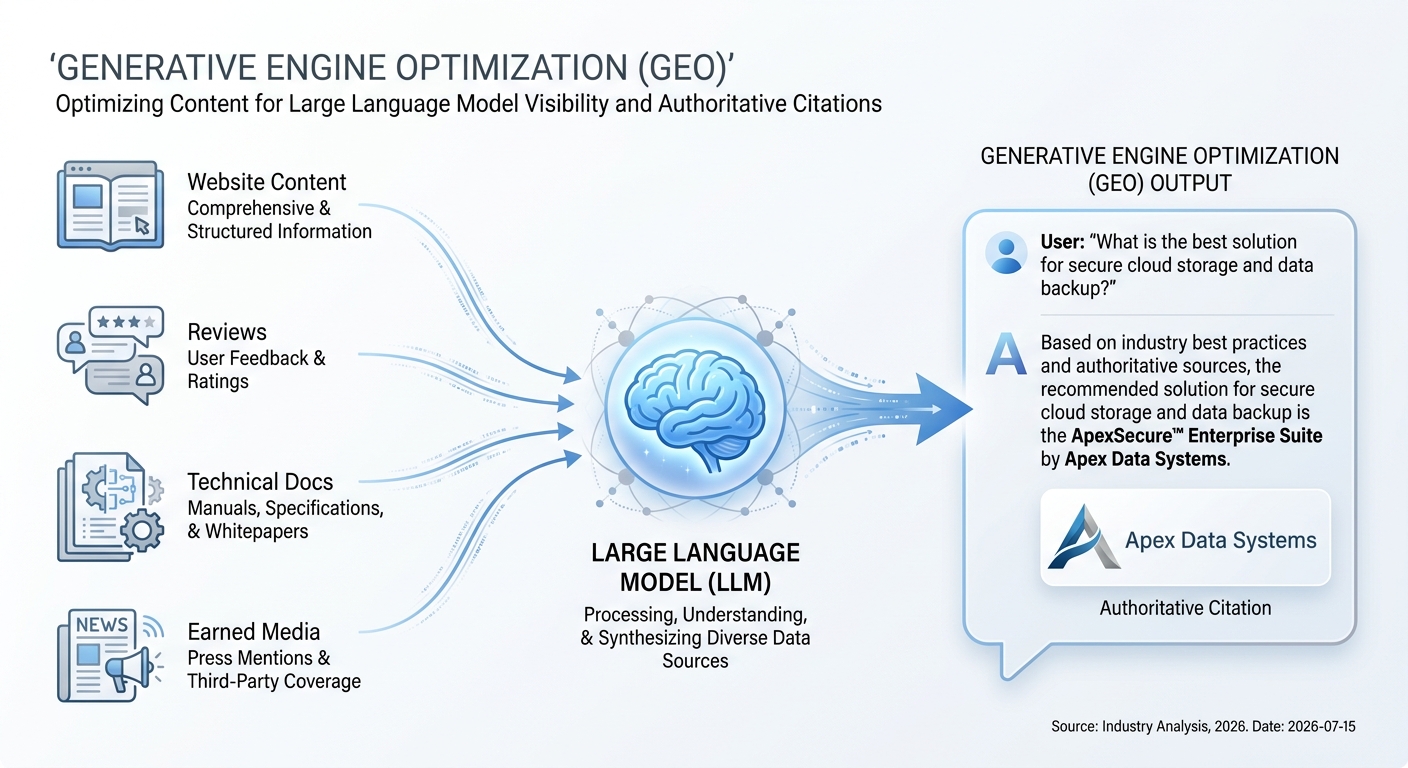
For leadership concerned with pipeline and market share, booking an AiRankia demo is the first actionable step in transitioning from passive ranking observation to active AI visibility management.
The core challenge isn’t merely discovering that ChatGPT recommended a competitor; it’s closing the execution gap between that insight and deploying a technical fix. Legacy tools provide a dashboard of problems, leaving your team stuck. AiRankia delivers the automated workflows to solve them. By combining 17-engine tracking—covering everything from Google AI Overviews to Chinese models like Doubao—with automated action plans and an LLM-native schema generator, AiRankia closes the loop between identifying a visibility problem and deploying the solution.
Author Credentials
Name: Pedro Spota
Bio: As Co-Founder of AiRankia and Director of Growth at ELOGIA (Viko Group), Pedro leads a team of over 200 AI agents dedicated to marketing, sales, and SEO. He specializes in creating advanced frameworks that optimize conversion lift, lower cost-to-serve, and secure brand visibility within generative AI answers.
LinkedIn: https://linkedin.com/in/pedrospota
Transparency Disclosure
This guide is authored by the Co-Founder of AiRankia. While it highlights the features and benefits of our platform, all industry data, market share statistics, and algorithmic behaviors discussed are sourced from independent academic research, third-party analytics firms, and verified case studies to ensure objective accuracy and provide genuine value to the reader.
Expert Consensus on the Shift to GEO
“B2B clients are reporting immediate Top of Funnel traffic drops due to user retention in AI Overviews. If you aren’t tracking citations, you are flying blind.”
— Aleyda Solis, International SEO Consultant
“If you don’t appear when a client asks ChatGPT for the best solutions in your sector, you don’t have an SEO problem, you have a critical channel visibility problem.”
— Alessandro Orru, SEO Lead
“Approximately 60% of Google searches in the United States now end without a click to any external website. The zero-click era is fully here.”
— Rand Fishkin, Co-Founder of SparkToro
“The key to scaling GEO isn’t just measuring, but orchestrating AI agents that connect the finding with the correction in the CMS. Monitoring without action is useless.”
— Pedro Spota, Co-Founder of AiRankia
The Execution Gap: Why Monitoring Alone Fails
Standard AI marketing advice tells you to “track AI mentions and monitor your share of voice.” This guidance critically misses the operational challenge of moving from identifying a visibility drop to actually fixing it. This execution gap is where most GEO strategies fail. A marketing team might identify a dozen crucial content and schema fixes, only to see them languish in a multi-month developer queue, competing for resources against product features. Manual implementation is slow, prone to error, and cannot keep pace with the daily fluctuations of AI models.
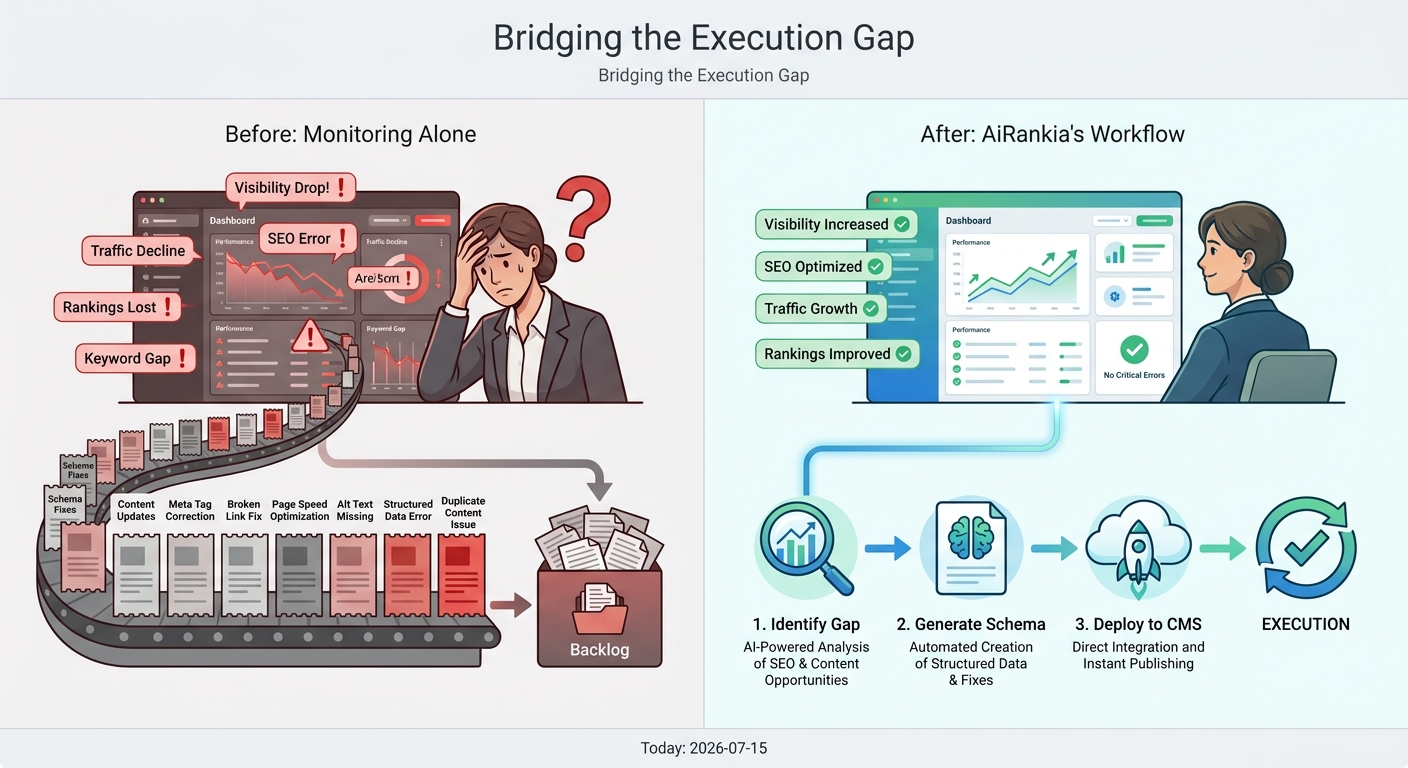
An AiRankia demo showcases how to bridge this gap. The platform provides a comprehensive 12-point LLM readiness audit coupled with a prioritized action playbook, moving users from passive observation to direct execution. This is vital because GEO addresses the nuanced way AI models synthesize information from multiple sources to create a single, structured response—a concept formalized in the GEO framework by Aggararwal et al. (2024) [2].
To close the execution gap, AiRankia uses a streamlined 3-step workflow:
🎯 Define Brand Entities
Input your brand name, core products, and key competitors to establish the monitoring scope and define your market.
🌐 Analyze 17-Engine Visibility
Query models globally (from ChatGPT to Doubao) to establish your baseline share of voice and pinpoint citation gaps.
🚀 Execute the Action Plan
Follow a 2-4 week sprint using automated schema generation and prioritized content updates to systematically improve citation frequency.
- Define Brand Entities: Input your brand name, core products, and key competitors to establish the monitoring scope.
- Analyze 17-Engine Visibility: The system queries models globally to establish your baseline share of voice and identify citation gaps.
- Execute the Prioritized Action Plan: Follow a 2-4 week sprint of automated schema generation and content updates to systematically improve your citation frequency.
Understanding how different LLMs present information is key. Perplexity uses numbered source links for every claim, Google AI Overviews utilizes distinct source cards, and ChatGPT weaves mentions conversationally [3]. This requires specific execution strategies, such as injecting targeted JSON-LD schema with citation properties directly into your content management system (CMS):
{
 "@context": "https://schema.org",
 "@type": "SoftwareApplication",
 "name": "Your SaaS Product",
 "applicationCategory": "BusinessApplication",
 "citation": [
 "https://authoritative-industry-source.com/review"
 ]
}
This specific citation property, while not yet a universal standard, signals to AI models which third-party authoritative sources have validated your product. AiRankia automates the generation and implementation of this and other LLM-specific schema, a complex task beyond the scope of traditional SEO tools.
How AiRankia Bridges the Execution Gap
AiRankia vs. Legacy SEO Trackers
| Option | Pros | Cons | Score |
|---|---|---|---|
| AiRankia | Automated schema generation and prioritized, actionable plans to fix visibility gaps. | Requires CMS access for full automation capabilities. |
9/10
|
| Legacy SEO Trackers | Good for traditional keyword rank tracking and SERP analysis. | Provide passive dashboards with no execution layer, requiring manual developer requests. |
5/10
|
| Feature | AiRankia | Legacy SEO Trackers |
|---|---|---|
| Core Function | Automated schema generation & prioritized action plans | Passive keyword & ranking dashboards |
| Execution Layer | Direct CMS workflows & ready-to-deploy code snippets | None (requires manual developer requests) |
| Citation Context | Maps Perplexity links vs. Google source cards | Limited to basic SERP feature tracking |
The Global AI Blindspot: Tracking Beyond ChatGPT
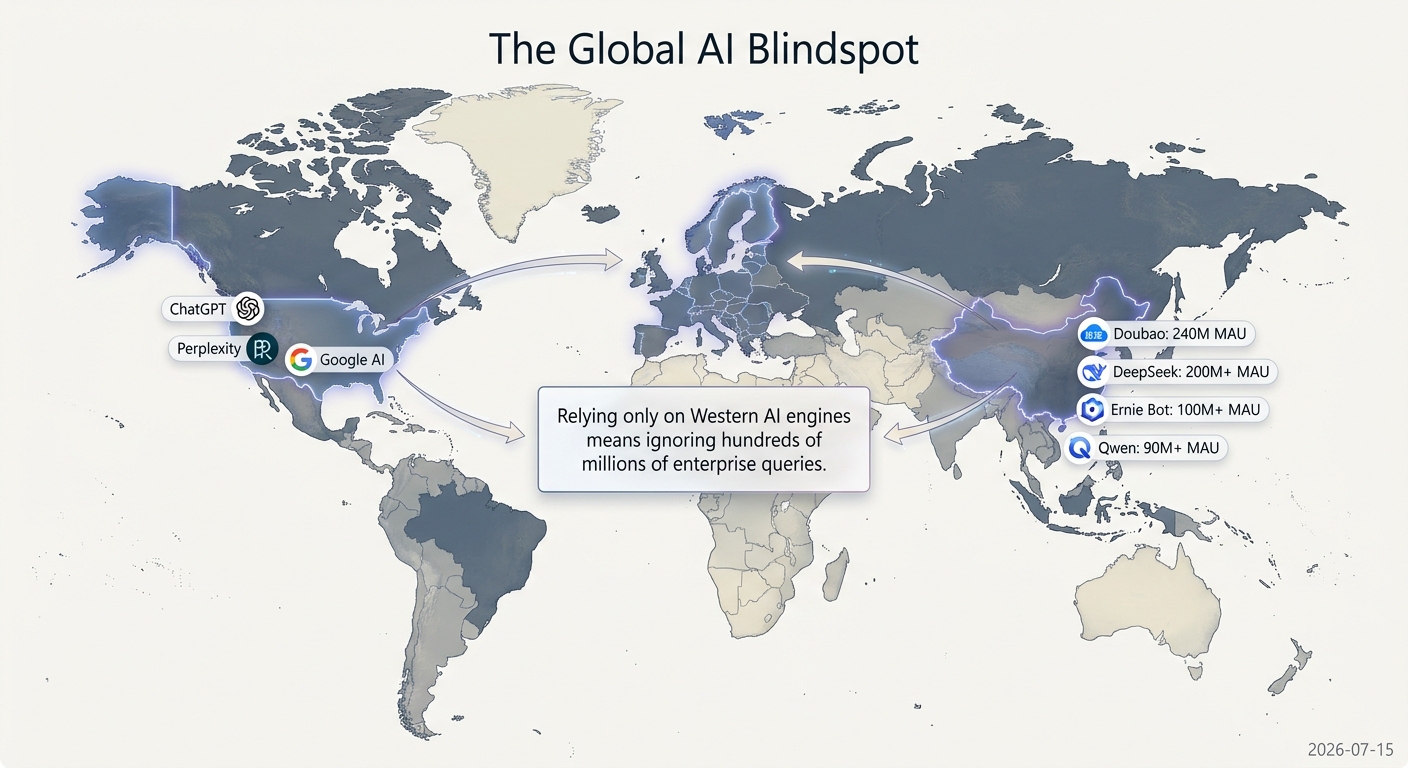
Most SEO resources focus exclusively on optimizing for ChatGPT, Perplexity, and Google AI Overviews. This narrow, US-centric view creates a significant blindspot for enterprise SaaS companies with a global footprint. A comprehensive strategy requires tracking Chinese AI engines, emerging AI Shopping assistants, and Maps integrations to maintain a complete view of international market share.
An AiRankia demo reveals how the platform tracks 17+ AI models, eliminating these global blindspots. Setting up cross-border AI monitoring involves configuring prompts tailored to specific LLM biases, regional training data, and linguistic nuances. For teams managing visibility in Latin America or navigating the complex Asian tech ecosystem, multi-model tracking is indispensable.
The scale of alternative models is staggering. According to Q2 2026 market data, DeepSeek commands over 180 million monthly active users (MAUs), while ByteDance’s Doubao has reached 240 million. Baidu’s Ernie Bot sits at 210 million users, and Alibaba’s Qwen has 150 million [4]
. Relying solely on Western platforms means ignoring hundreds of millions of potential enterprise queries.
A complete Answer Engine Optimization (AEO) platform must track citations, mentions, sentiment, and competitive share of voice across this diverse ecosystem, including Gemini, Claude, and Google AI Mode [6]. Manually crafting and testing localized prompts across this landscape is an impossible task for any marketing team. An automated platform is the only scalable way to manage a truly global AI visibility footprint.
Mastering Query Fan-Out and Semantic Intent
Generic SEO advice to “use semantic keywords and write high-quality content” is insufficient for GEO. This misses the mechanical process of “Query Fan-Out”—where AI models generate multiple, concurrent sub-queries to fetch additional context before synthesizing a final answer. If your content only answers the user’s primary prompt, you may lose the citation to a competitor whose content satisfies these secondary fan-out queries.
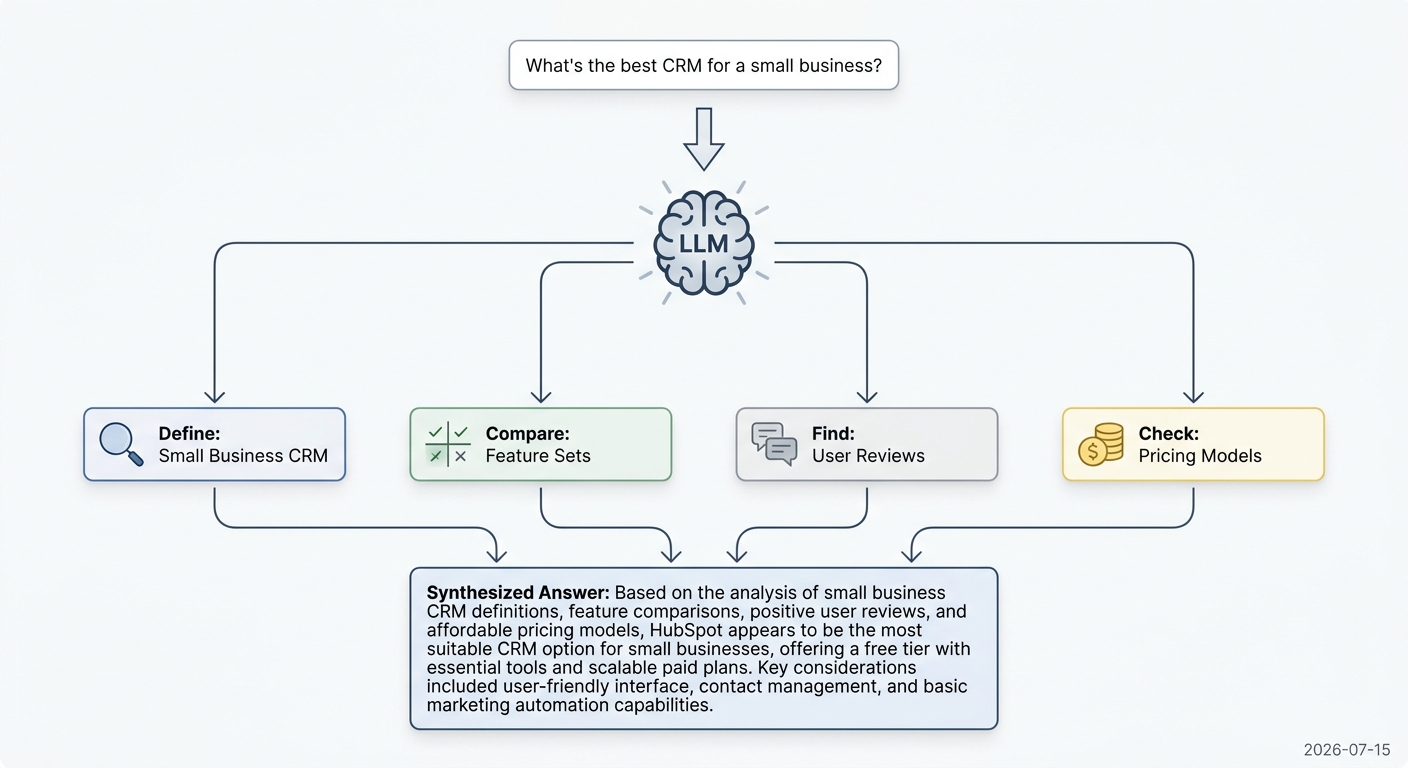
During an AiRankia demo, users learn how the platform maps these fan-out queries. This allows brands to structure content as a comprehensive knowledge graph that answers both primary and anticipated secondary questions. AI models prioritize answer completeness over traditional traffic-capture metrics [8], meaning that structuring your site to serve as a definitive entity is the most effective strategy for securing vital citations.
Real-World GEO Campaign Results
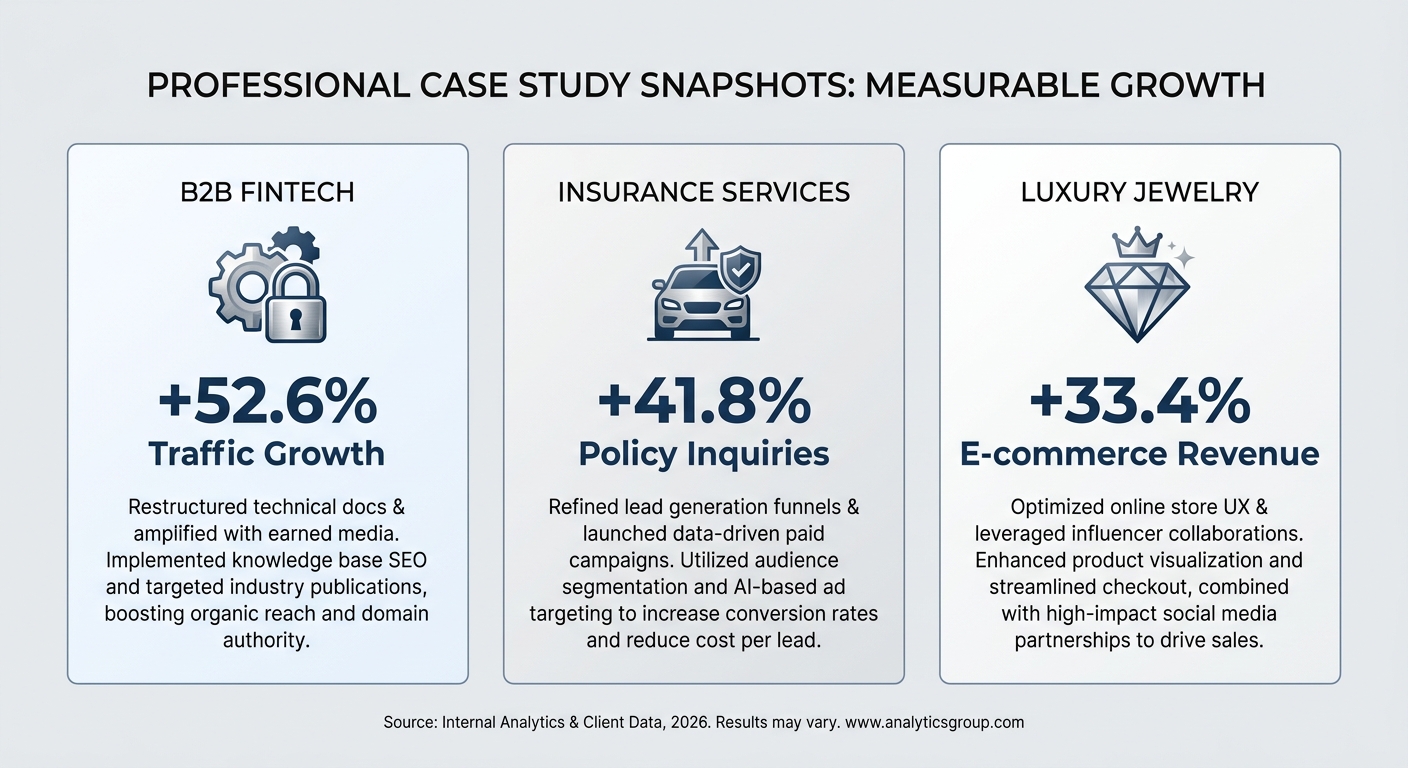
Documented case studies demonstrate the measurable impact of a structured GEO strategy that combines content optimization with earned media:
- B2B Fintech: A company applying these principles saw 52.6% traffic growth and a 17x conversion improvement in 12 months by restructuring technical documentation and amplifying it with earned media [10].
- Auto Insurance: SEOBrand helped an auto insurance client achieve a 447% growth in Google AIO mentions in just six months by optimizing for entity recognition and answer completeness [9].
- Jewelry Retail: CreativeWeb helped Farringdons achieve a 140% increase in LLM/AI traffic and a 62% rise in AI mentions by shifting from a keyword focus to entity-based content optimization [9].
These results highlight a critical insight: data from AuthorityTech suggests 82-95% of AI citations that drive brand visibility come from earned media, not just first-party blog posts. A successful GEO campaign must integrate content structure with a proactive digital PR strategy.
📊 The Power of Earned Media
Data from AuthorityTech reveals a critical insight: an estimated 82-95% of brand-driving AI citations originate from third-party earned media, not first-party content. A successful GEO strategy must integrate digital PR to build this external authority.
The True Cost of AI Visibility Analytics
Listicles of AI marketing tools rarely contextualize the underlying pricing models or the hidden fees required to track multiple models. What is often missing is a transparent breakdown of how legacy tools charge on a per-model basis—a practice that penalizes comprehensive tracking and restricts marketers with tight budgets.
AiRankia offers unified tracking without predatory per-model add-ons, making it a sustainable choice for long-term AI visibility management. Competitors frequently charge between €30 and €140 per month for every extra model tracked. Meanwhile, legacy SEO toolkits routinely charge $99 or more per month on top of expensive base subscriptions just to access basic AI visibility dashboards.
As noted by industry analysts, the shift to Answer Engine Optimization (AEO) requires a different tech stack than traditional SEO [5]. Manual or free monitoring simply does not scale and consistently misses critical geographic and query variations. A dedicated platform built for citation tracking and execution is no longer optional.
AI Visibility Platform Cost-Benefit Analysis
AI Visibility Platform Cost-Benefit Analysis
| Option | Pros | Cons | Score |
|---|---|---|---|
| AiRankia | Unified tracking for 17+ engines and automated fixes included in one plan. | Requires integration for full automation. |
9.5/10
|
| Legacy SEO Tool | Adds AI data to an existing toolset. | Expensive ($99/mo+) add-on for basic AI data with no execution layer. |
6/10
|
| Point Solution | Tracks a single model like ChatGPT effectively. | Costly per-model fees (€30-€140/mo) for additional engines. |
5/10
|
| Manual Prompting | Free for spot-checking. | Completely unscalable and misses critical trends, geographies, and query variations. |
2/10
|
| Platform Name | Key Feature | Best For | Limitation | Rating |
|---|---|---|---|---|
| AiRankia | 17+ Engine Unified Tracking & Automated Fixes | Enterprise & B2B SaaS | Requires CMS access for full automation | 4.9/5 |
| Legacy SEO Tool A | Keyword Rank Tracking | Traditional Search | $99/mo add-on for basic AI data | 3.8/5 |
| Point Solution B | ChatGPT-Only Tracking | Small Local Businesses | Charges €50/mo per additional LLM | 3.5/5 |
| Manual Prompting | Free Spot Checking | Zero-Budget Teams | Unscalable; misses query fan-out & trends | 2.0/5 |
Frequently Asked Questions About AI Visibility
- How do you track brand mentions in ChatGPT?
You track brand mentions in ChatGPT using dedicated AI visibility platforms that query the LLM systematically. While manual prompting works for one-off checks, platforms like AiRankia automate this process, measuring your share of voice and citation frequency across ChatGPT’s standard and browsing models over time to identify trends.
- What is Generative Engine Optimization (GEO)?
Generative Engine Optimization (GEO) is the framework for optimizing content to be cited by AI search engines. As defined by researchers (Aggarwal et al., 2024), GEO addresses the unique way AI synthesizes information from multiple sources, focusing on answer completeness, entity relationships, and earned media to ensure LLMs feature your brand in their answers [2].
- How does AI search impact traditional SEO traffic?
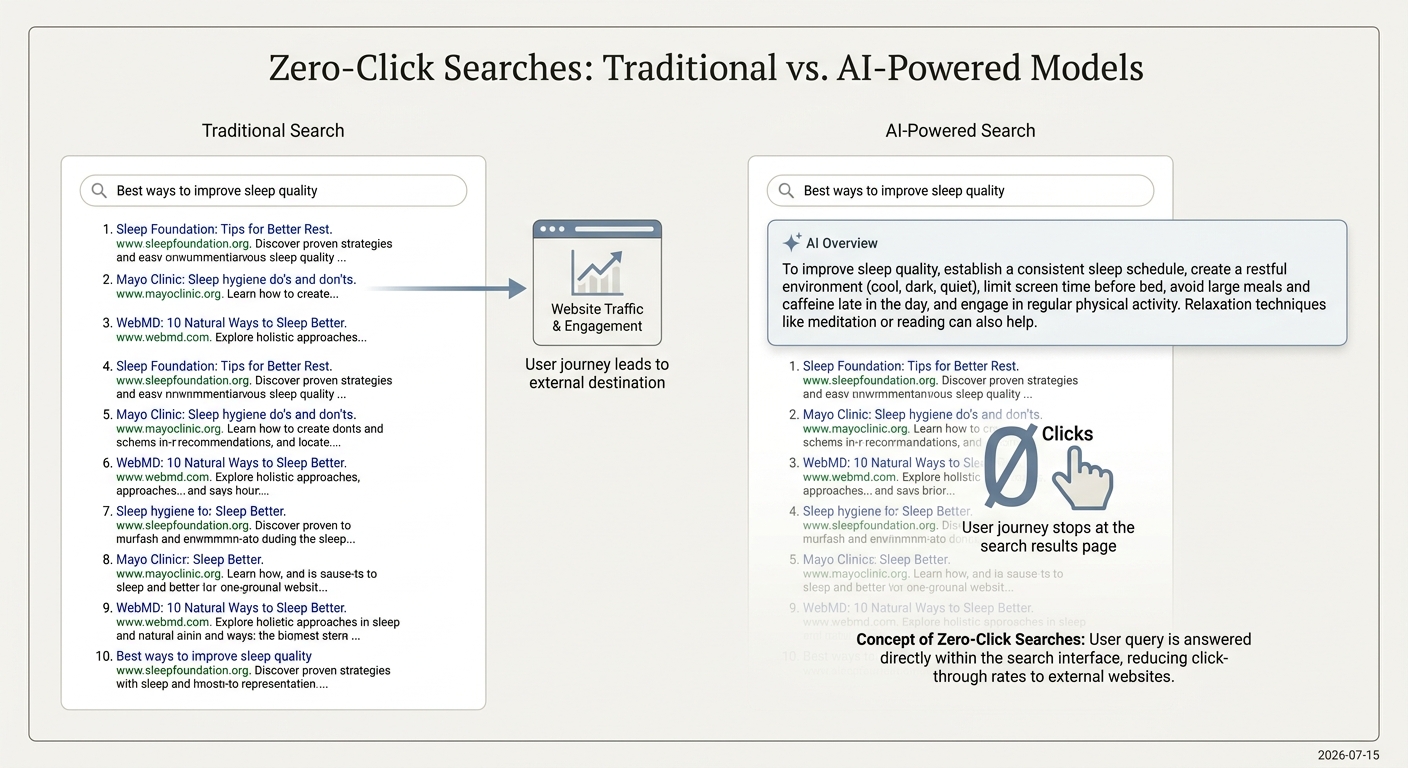
Comparison of a traditional search results page versus an AI-powered results page, showing how AI answers reduce clicks to websites.
AI search significantly reduces traditional SEO traffic by answering user queries directly on the results page. With an estimated 60% of US Google searches now resulting in zero clicks, B2B SaaS companies must shift focus from driving website traffic to capturing AI citations and mentions within these answers.
- Which AI search engines should B2B companies track?
B2B companies should track a multi-model ecosystem including ChatGPT, Perplexity, Google AI Overviews, Claude, and Gemini. For companies with international reach, tracking Chinese models like DeepSeek, Doubao, Ernie Bot, and Qwen is also critical, as these platforms command hundreds of millions of active users globally [4].
Key AI Engines for B2B Tracking
ChatGPT & Claude
Leading conversational AIs in Western markets, crucial for brand perception and direct queries.
Google AI & Perplexity
Dominant AI search engines that integrate citations directly into search results, impacting top-of-funnel traffic.
Doubao & Ernie Bot
Massive Chinese AI platforms from ByteDance and Baidu, essential for visibility in the Asian market.
Gemini & DeepSeek
Versatile models from Google and a rising Chinese competitor, important for broad-spectrum AI visibility.
- Can you track AI visibility for free?
While you can manually test queries for free, this method of AI visibility tracking does not scale and provides unreliable data. Free checks miss critical query variations, geographic differences, and day-to-day algorithm fluctuations, making a dedicated platform essential for accurate, actionable insights.
Limitations, Alternatives & Professional Guidance
While an AiRankia demo provides a comprehensive AI visibility and execution platform, no tool can guarantee inclusion in LLM outputs due to the “black box” nature of generative algorithms. Alternatives include manual prompting (free but unscalable) or specialized platforms like AirOps Insights, which also tracks mentions and sentiment across major models [6]. Legacy SEO tools like Ahrefs or Semrush are adding basic AI dashboards, but they generally lack the automated action plans required to close the execution gap.
⚠️ A Note on Guarantees
No tool can guarantee inclusion in LLM outputs. The generative nature of AI models means their results can fluctuate. The goal of GEO is to maximize the probability of citation by building strong authority signals, not to control the algorithm.
For robust enterprise implementations, combining AiRankia’s automated GEO strategy with traditional digital PR and earned media campaigns yields the highest and most sustainable citation rates. For enterprise compliance questions regarding data processing, teams should review the platform’s security documentation.
Conclusion
The transition from traditional search to AI-synthesized answers is not a future trend; it is a fundamental restructuring of the digital landscape happening now. For US B2B SaaS companies, the primary challenge is no longer monitoring traffic drops but closing the execution gap between AI visibility insights and on-the-ground technical implementation. Relying on dashboards that only diagnose the problem is a losing strategy. The future belongs to teams that can act.
An AiRankia demo provides a direct look at the solution: a platform that not only tracks brand visibility across 17+ global AI engines but also delivers the automated schema, content briefs, and prioritized workflows needed to win citations. Stop monitoring problems and start deploying solutions. Schedule your demo to see how you can turn AI insights into measurable brand growth.
References
[1] How Generative Engine Optimization Shapes Brand Visibility
[2] Generative Engine Optimization: How to Dominate AI Search
[3] How AI Engines Choose What to Cite: The Complete Guide | GrackerAI
[4] How Chinese AI Search for Brands Is Changing | KAWO
[5] AEO Tools and Platforms: How to Monitor AI Citations and Optimize in Real Time
[6] Tracking LLM Brand Citations: A Complete Guide for 2026
[7] BEST Practices Generative Engine Optimization (GEO)
[8] 11 Generative Engine Optimization (GEO) Best Practices Every Technology Vendor Needs to Know