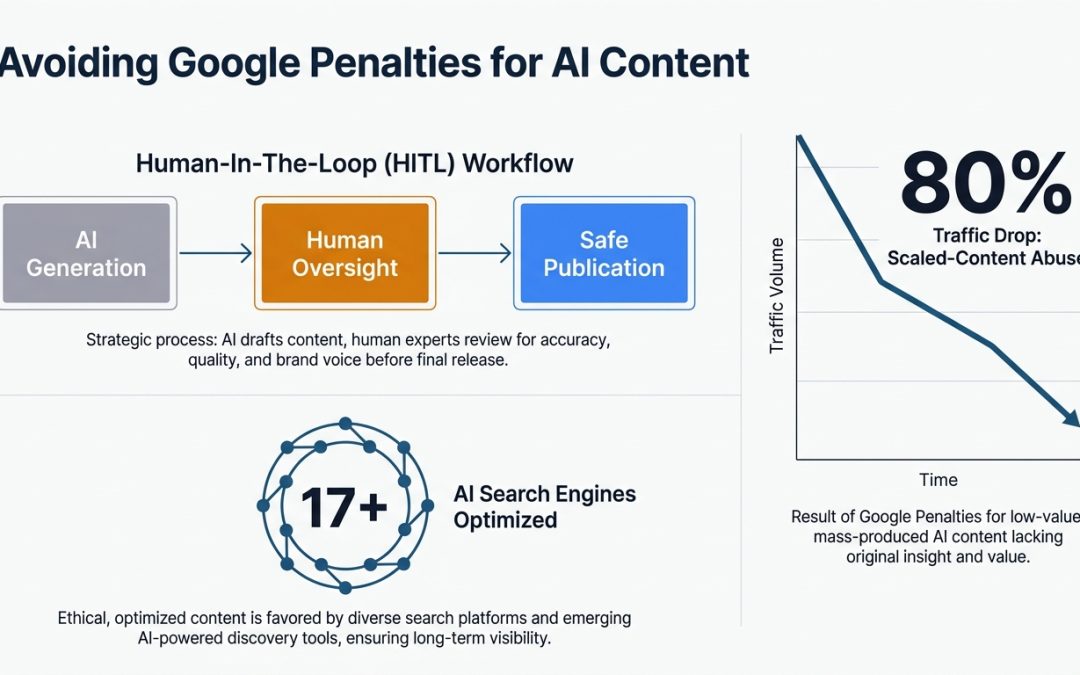
Meta: Does Google penalize AI content? Learn how US B2B brands avoid scaled-content abuse penalties, recover from core updates, and dominate 17+ AI search engines.
Key Takeaways
Does Google penalize AI content? No, Google does not penalize content simply for being AI-generated. However, it actively issues manual penalties for “Scaled-Content Abuse”—mass-produced, low-value pages created without human oversight. To avoid Google penalties for AI content, US B2B SaaS companies must implement a Human-In-The-Loop (HITL) framework, ensuring factual accuracy, original entity injection, and E-E-A-T compliance before publishing.
💡 Google’s Stance on AI Content
Google penalizes the *method*, not the *tool*. The target is ‘Scaled-Content Abuse’—low-value, mass-produced content created without human oversight. High-quality, human-reviewed, AI-assisted content is not penalized and can rank well.
Introduction
For B2B SaaS marketing directors, the ground has shifted. The March 2024 Core Update and spam update, which introduced Google’s new spam policy on “scaled content abuse,” triggered massive traffic volatility. Leadership is asking why leads are down, and teams are scrambling to understand why their content, once a reliable engine for growth, is now a liability. Some sites that relied on unmonitored AI workflows saw their traffic fall, a stark reminder that what worked yesterday is now a direct path to a penalty
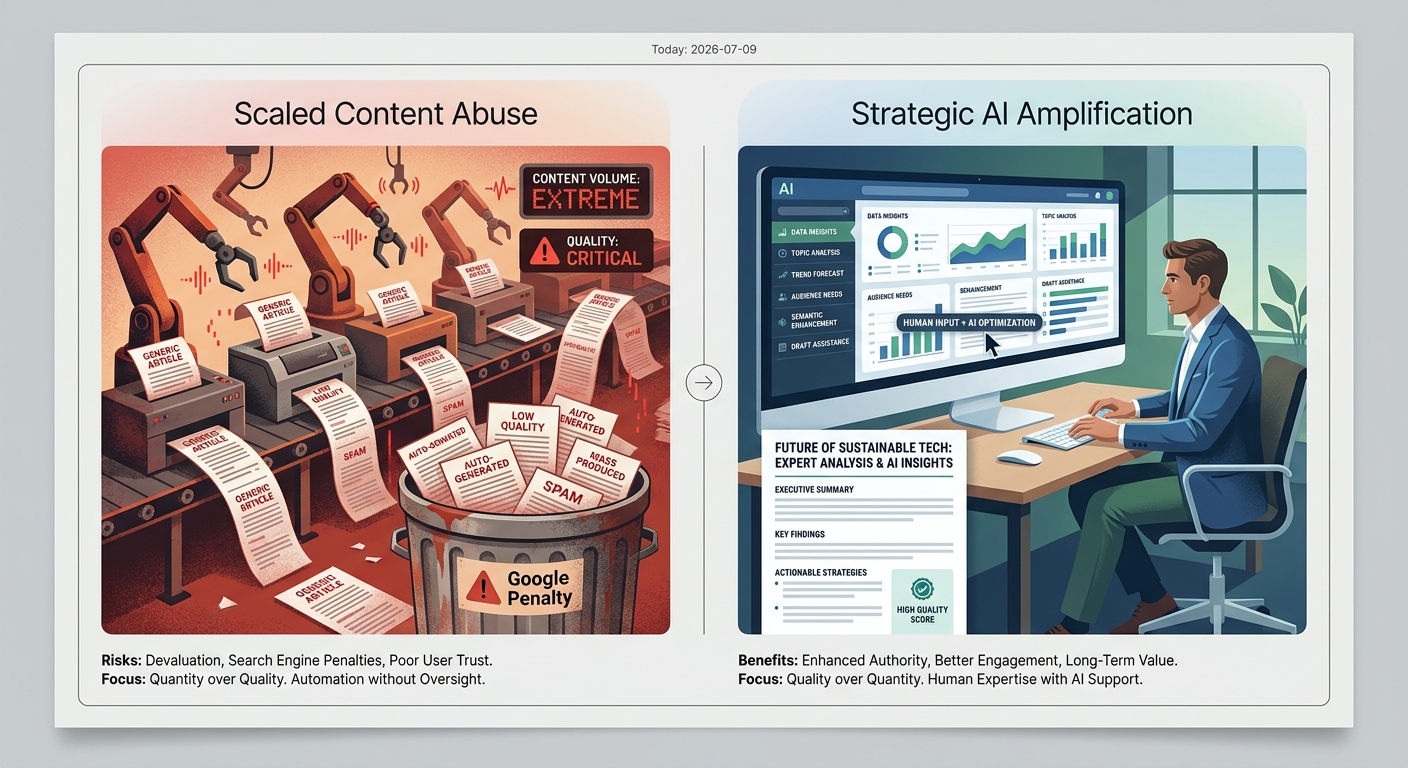
The core of the issue is a misunderstanding of AI’s role. Using it as an unsupervised publishing engine is a recipe for failure. Using it as a strategic amplifier for human expertise is the key to survival and growth. If you are asking how to avoid Google penalties for AI content, the answer lies in pivoting from traditional SEO to Generative Engine Optimization (GEO).
This guide provides an enterprise-ready framework for B2B SaaS teams to safely use AI. We will show you how to diagnose penalties, implement a defensible Human-In-The-Loop (HITL) workflow, and expand your brand’s visibility across the 17+ AI models that now define the search landscape.
Author Credentials & Transparency
- Author: Pedro Spota, Director of Growth & Co-Founder of AI Rankia.
- Bio: Pedro designs data-driven growth systems and orchestrates 200+ AI agents for marketing and SEO, specializing in Generative Engine Optimization (GEO) for enterprise B2B SaaS.
- LinkedIn: https://www.linkedin.com/in/pedrospota
- Transparency Disclosure: This guide was developed by human SEO experts at AI Rankia, utilizing proprietary data from our tracking of 17+ AI models. AI tools were used for data structuring and formatting, with all insights manually verified by our Director of Growth.
Understanding Google’s “Scaled-Content Abuse” Penalty
The “Scaled-Content Abuse” penalty is a manual action Google applies to sites that mass-produce low-value content, with or without AI [3]. SEO professionals first spotted this specific enforcement language appearing in Google Search Console dashboards following the March 2024 spam policy update [2]. Generic advice often conflates this explicit penalty with the silent, algorithmic devaluations that follow core updates. Understanding the difference is critical for a successful recovery.
Manual Action vs. Algorithmic Devaluation
| Option | Pros | Cons |
|---|---|---|
| Manual Action (‘Scaled-Content Abuse’) | Clear diagnosis via a notification in Google Search Console. A specific violation to address. | Results in a severe, often near-total, drop in visibility. Requires a formal reconsideration request. |
| Algorithmic Devaluation | Less severe than a full manual action; often impacts specific pages or sections rather than the entire site. | Silent drop in rankings with no notification. Recovery requires a fundamental improvement in overall site and content quality (E-E-A-T). |
- Manual Action: A direct penalty for a policy violation. It triggers a notification in Search Console and often results in a severe, near-total drop in visibility.
- Algorithmic Devaluation: A silent drop in rankings. No notification is sent. Google’s systems have simply reassessed your site as less helpful or authoritative compared to others. The March 2024 Core Update, which Google said aimed to reduce low-quality, unoriginal content in Search results by 40%, was a clear escalation in Google’s war on unhelpful content.
For marketing directors and SEO leads facing a traffic crisis, this 3-stage triage process provides a clear path forward:
Diagnose
Check Google Search Console for a ‘Scaled-Content Abuse’ manual action. If none exists, the issue is an algorithmic devaluation related to content quality.
Triage
Conduct a content audit. Aggressively prune or de-index zero-traffic, low-value pages. Consolidate articles with overlapping intent to strengthen authority.
Rebuild
Reconstruct high-value pages using a Human-in-the-Loop (HITL) process. Inject proprietary data, expert insights, and unique frameworks to demonstrate E-E-A-T.
- Diagnose: Immediately check Google Search Console under “Security & Manual Actions.” If you see a “Scaled-Content Abuse” notice, you have a manual action [2]. If not, your traffic loss is an algorithmic devaluation tied to content quality and helpfulness.
- Triage: Initiate a content audit. Ruthlessly prune or de-index low-performing, zero-traffic pages that offer no unique value. Merge articles with overlapping intent to consolidate authority and eliminate keyword cannibalization. This isolates the core assets worth saving.
- Rebuild: Reconstruct high-value pages using a Human-in-the-Loop (HITL) process. The goal is not just to rewrite text but to fundamentally upgrade the content’s value by injecting proprietary data, unique frameworks, and genuine expert insights that demonstrate first-hand experience (E-E-A-T). As Google’s own experts confirm, simply replacing AI text with human-written text is not enough to recover from a quality-based devaluation [4]
⚠️ Recovery Requires More Than a Rewrite
Google experts have confirmed that simply replacing low-quality AI text with human-written text is insufficient for recovering from an algorithmic devaluation. The site’s fundamental value proposition must be improved by adding genuine, experience-based insights and unique information.
.
The HITL Workflow: An Enterprise Framework for Safe AI Content
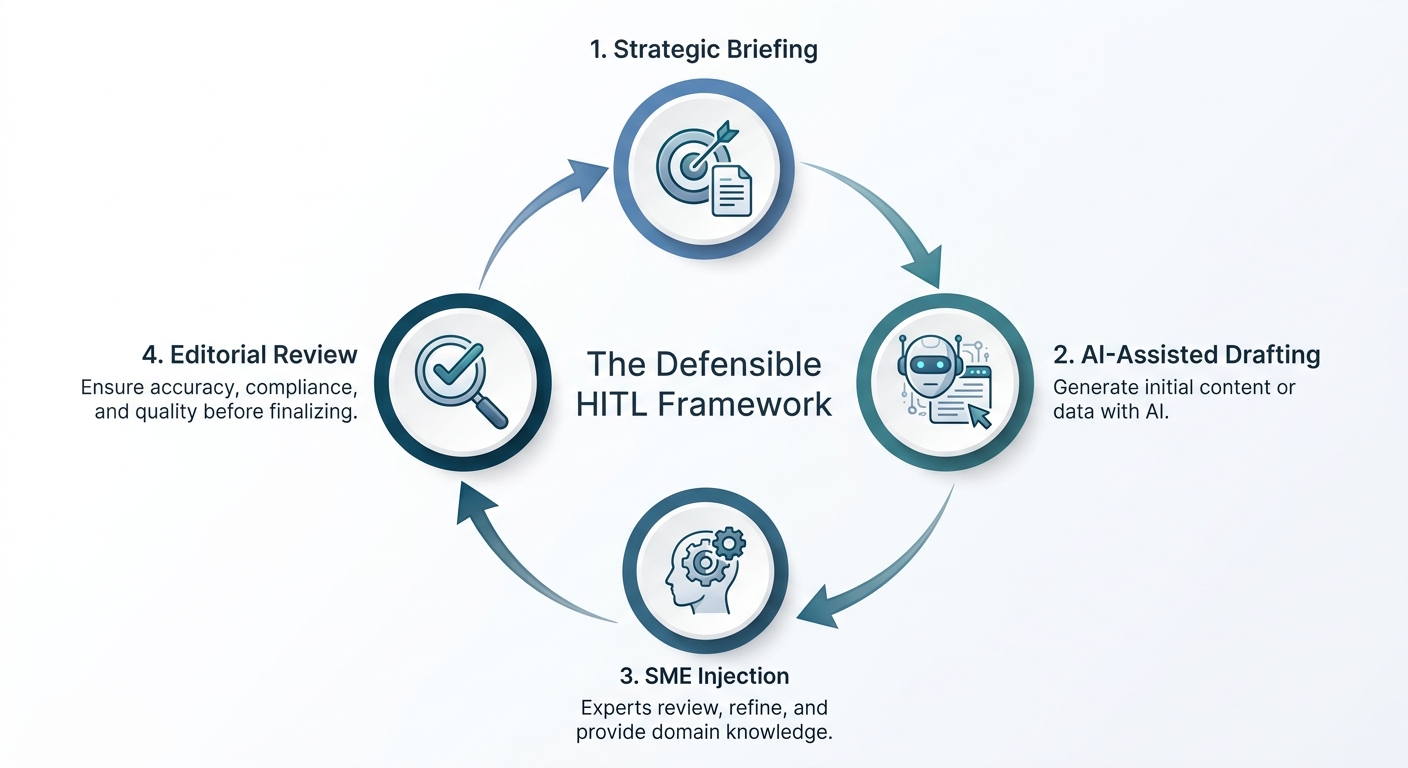
A Human-in-the-Loop (HITL) workflow is a system that integrates human expertise at critical checkpoints of the AI content creation process. Basic advice to “edit your AI content” is insufficient for B2B SaaS brands that need a scalable, defensible system. The goal is to transform AI from a generic writer into a powerful research assistant for your internal subject matter experts (SMEs).
The data shows that AI use is not the problem. An Ahrefs study of 600,000 pages found 86.5% contained AI-generated text, and Ahrefs measured a correlation of 0.011, effectively zero, between the share of AI-generated content and Google ranking position [9]. The penalty risk comes from unmonitored, low-value application [10]. A robust HITL workflow ensures AI drafts the structure, but humans provide the soul and strategic value [7]. As the community consensus shows, “If your AI-generated content is helpful, original, factually accurate, and demonstrates EEAT, it can rank just fine” [8].
Here is a HITL framework designed for B2B SaaS teams:
- Strategic Briefing & Data Ingestion: A human strategist (e.g., Head of Content) defines the article’s objective, target persona, and unique angle. Crucially, they feed the LLM proprietary data: anonymized product usage metrics, customer support ticket trends, common integration roadblocks from support logs, or internal market research.
- AI-Assisted Drafting: The AI generates a first draft based on the structured brief and unique data provided. This accelerates production, moving from a blank page to a workable structure in minutes.
- Subject Matter Expert (SME) Injection: A human expert (e.g., a product manager, senior engineer, or customer success lead) reviews the draft. This is the most critical E-E-A-T step. The SME adds nuanced insights, real-world examples of customer friction, and proprietary frameworks that an AI cannot invent.
- Editorial Review & Fact-Checking: A final editor polishes the content for brand voice, clarity, and flow. They check claims, statistics, and quotes against their sources before publication.
Common Pitfall: Mistaking editorial polish for subject-matter expertise. A copyeditor’s role is to improve clarity and style; an SME’s role is to add irreplaceable, experience-based value. Assigning an editor to do an SME’s job is a common cause of thin, unhelpful content that gets penalized.
⚠️ Common Pitfall: The Editor vs. The Expert
Do not assign an editor to do a Subject Matter Expert’s (SME) job. A copyeditor improves clarity and style. An SME adds irreplaceable, experience-based value and proprietary insights. Confusing these roles leads to thin, unhelpful content that Google may devalue.
Finally, add a simple transparency disclosure. A statement like, “This article was drafted with AI assistance and verified for accuracy by our in-house engineering experts,” builds trust and aligns with E-E-A-T principles [5]

.
Beyond Google: Optimizing for 17+ AI Search Engines
Focusing solely on Google Search Central guidelines is a dangerously narrow strategy. A penalty or devaluation on Google can create a “brand desert,” erasing your visibility across the entire generative AI ecosystem—including AI Overviews, ChatGPT, and Perplexity—which uses the web as its primary knowledge base.
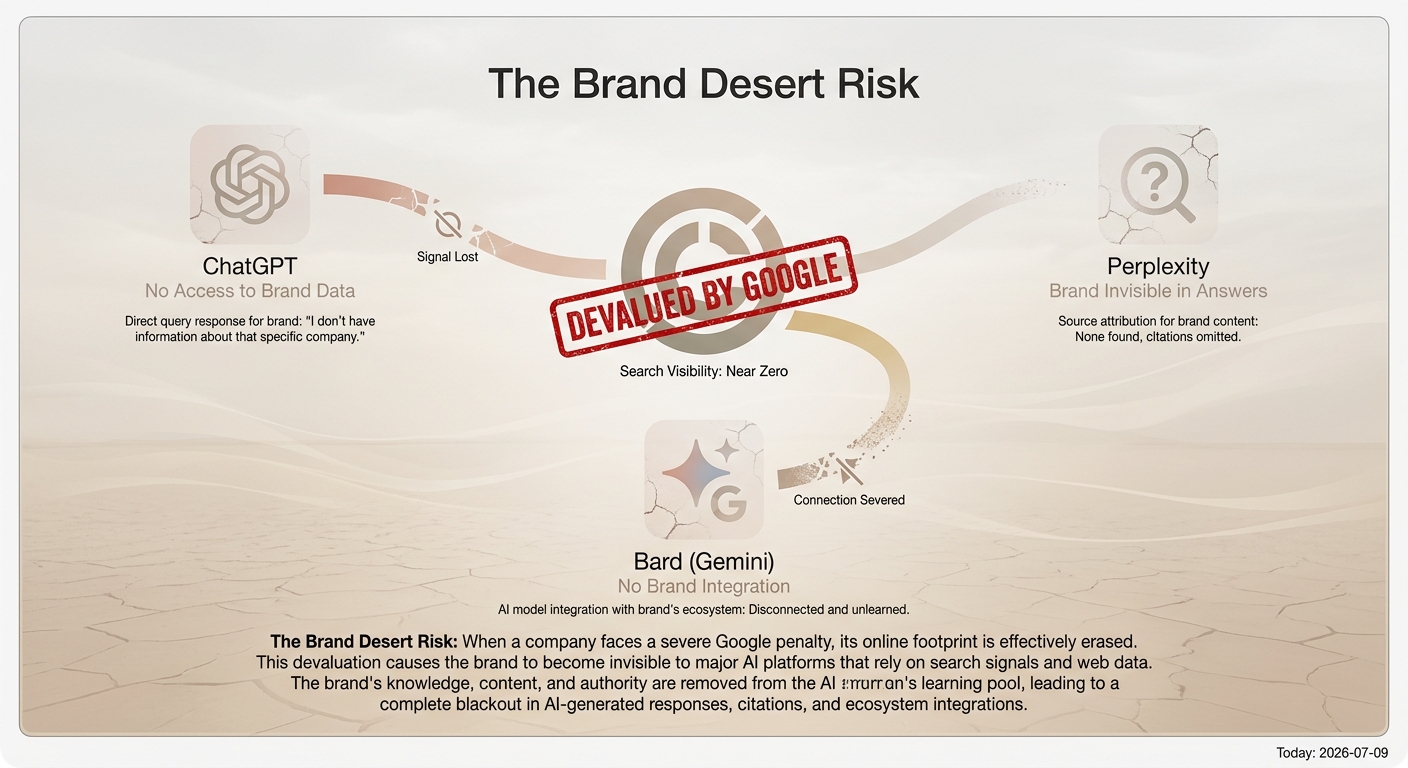
Survival in 2024 and beyond requires a defensive diversification of your digital presence. This is the core of Generative Engine Optimization (GEO). If Google’s algorithm devalues your content, your brand must still appear as an authoritative source in other AI-driven answer engines.
Google’s own guidance for its generative features emphasizes the need for “valuable, unique, non-commodity content” [1]. If your article merely rephrases what the LLM already knows from its training data, it has no incentive to cite you. To become a citable source for Retrieval-Augmented Generation (RAG) systems, you must structure your expert knowledge for machines:
How to Become a Citable Source for AI
Use Clear, Factual Language
State facts, statistics, and definitions directly and unambiguously so AI models can easily extract and understand them.
Format for Machines
Employ descriptive headers (H2, H3), bullet points, and tables to make key data points easily parseable for RAG systems.
Provide Unique Entities
Include specific names, dates, proprietary metrics, and unique terminology that create a data fingerprint only your brand possesses.
- Use Clear, Factual Language: State facts, statistics, and definitions directly and unambiguously.
- Format for Machines: Employ descriptive headers (H2, H3), bullet points, and tables to make key data points easily extractable for AI models.
- Provide Unique Entities: Include specific names, dates, proprietary metrics, and unique terminology from your business. This creates a distinct data fingerprint that only your brand possesses.
By formatting your content this way, you are not just optimizing for Google’s crawlers; you are positioning your brand as an essential, citable source for the next generation of search. Use platforms like AI Rankia to track your brand’s visibility and citations across 17+ AI engines, ensuring your GEO strategy translates into measurable, resilient visibility.
How to Avoid Plagiarism and Maintain Originality
True originality with AI content is not about passing a plagiarism checker. The real danger is “semantic duplication”—creating content that is technically unique but offers no new information or value. Because LLMs are designed to average their training data, their default output is often a collage of existing ideas, which Google’s systems can flag as unhelpful.
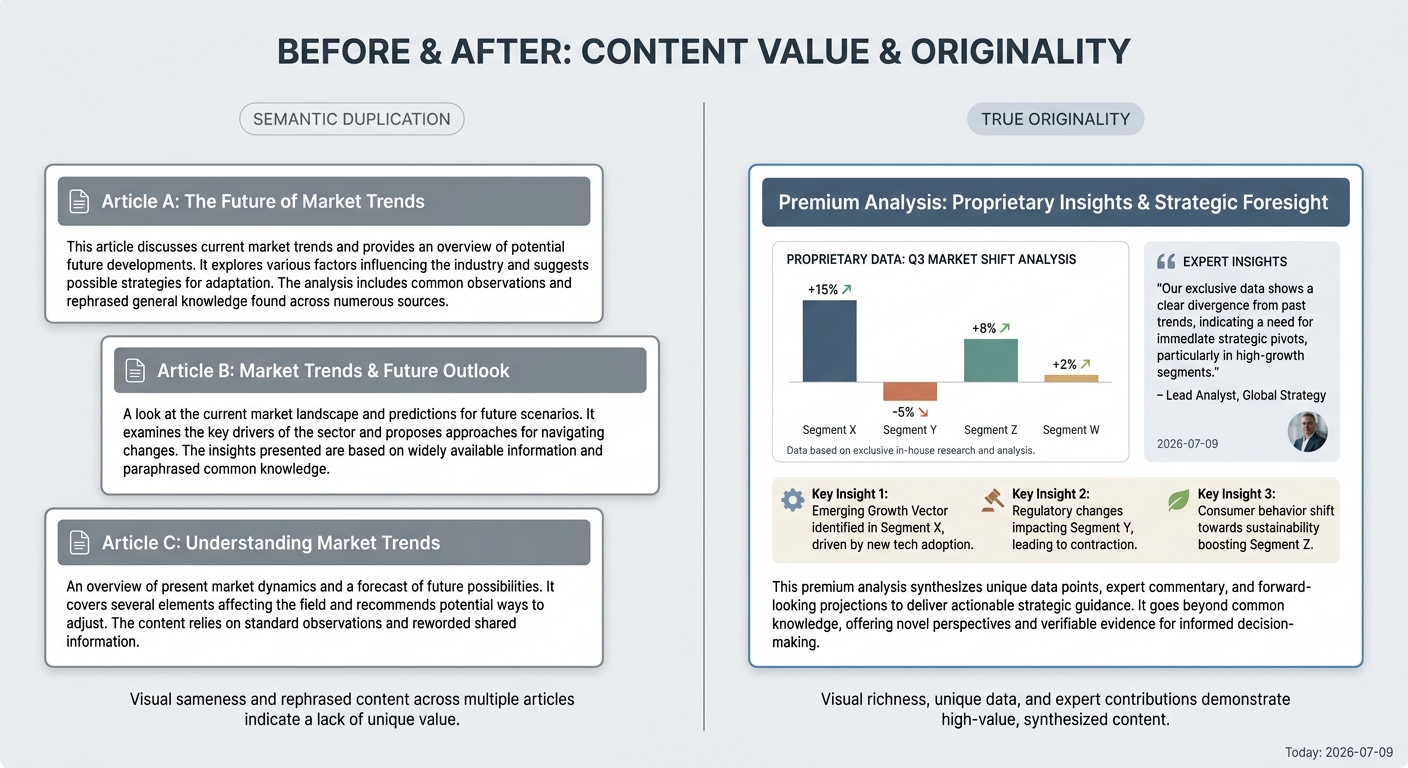
As Google’s John Mueller noted, you cannot recover from a quality issue by simply rewriting low-quality text; the site’s fundamental value proposition must improve [4]. The solution is to shift AI’s role from a generic “writer” to a constrained “data analyst.” This requires advanced prompting that forces the model to synthesize your unique information.
Use this constrained synthesis prompt to generate genuinely original insights:
# Example Prompt for Original Synthesis
Context: [Insert your proprietary US B2B SaaS customer churn data table here.]
Task: Analyze the provided data to identify the top three drivers of customer churn. For each driver, provide a one-sentence summary based ONLY on the data.
Constraint: Do NOT use any external knowledge. Base your entire analysis on the provided metrics. Structure the output as a bulleted list.
This technique forces the AI to perform novel analysis on your proprietary data. The resulting content is inherently original and defensible because the insights are derived from your unique business experience, not the public web.
Frequently Asked Questions
Does Google penalize AI written content?
No, Google does not penalize content solely for being AI-generated. Google’s policies target the method of production, not the tool. It acts against “scaled content abuse”: many pages generated mainly to manipulate rankings, with little or no value to users. E-E-A-T is not in itself a specific ranking factor [8]. High-quality, human-reviewed AI-assisted content can rank perfectly well.
How to avoid AI summary on Google?
While you cannot completely opt out of Google’s AI Overviews, you can heavily influence how your content is used. Structure your articles with clear, factual data, descriptive headers, and unique insights from your SMEs. This increases the probability that when an AI model cites your page, it accurately represents your brand’s expert position and drives qualified traffic.
How to recover from Google penalties?
Recovery depends on the diagnosis. If you have a manual “Scaled-Content Abuse” action in Google Search Console, you must address the specific violation and submit a reconsideration request. If it’s an algorithmic devaluation, prune low-value AI pages, consolidate overlapping topics, and use the HITL framework to rebuild your most critical content with deep human expertise and proprietary data.

Limitations, Alternatives & Professional Guidance
While the HITL framework is the most robust defense against Google penalties, the AI and search landscape is evolving weekly. Relying on manual SEO audits alone is no longer a scalable or proactive solution for enterprise B2B SaaS companies. To stay ahead, brands must adopt automated GEO platforms like AI Rankia to continuously monitor brand visibility and reputation across the fragmented landscape of 17+ AI models.
Conclusion
Avoiding Google penalties for AI content isn’t about abandoning the technology; it’s about abandoning lazy, unmonitored automation. The era of winning with sheer content volume is definitively over. For B2B SaaS leaders, the path forward is clear: implement a rigorous Human-In-the-Loop workflow to embed your team’s irreplaceable expertise into every piece of content. This is how you build a moat of E-E-A-T signals that both algorithms and customers trust.
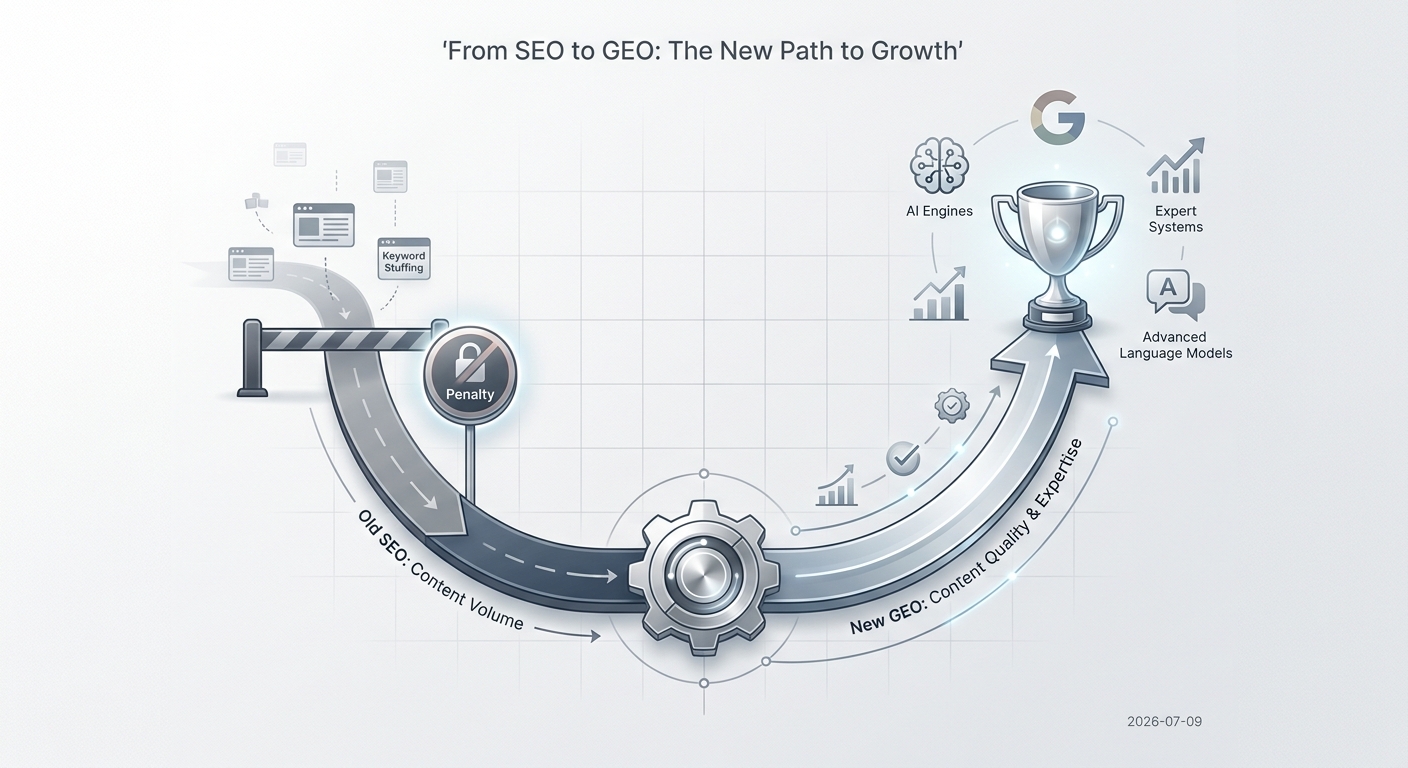
This strategic shift from traditional SEO to Generative Engine Optimization is no longer optional—it’s essential for de-risking your marketing efforts and building a resilient brand. Don’t wait for a penalty notification to force your hand.
Take the first step today. Explore AI Rankia to track your brand’s reputation and measure your visibility across the 17+ AI search engines that determine your success.
References
[3] The Ultimate Guide to Google’s Scaled Content Abuse Policies – Breakline
[4] Social Samosa – Google Search Advocate John Mueller said
[5] Trusted AI SEO Guide 2025: EEAT, Ethics & Safe AI Content
[6] What is EEAT? Boost Your Website’s Authority With These Tips
[7] HITL: The Importance of a Human-in-the-Loop Approach to AI
[8] Does AI content negatively impact SEO?: r/DigitalMarketing
[10] Does AI content rank well in search? [Survey + Data study]