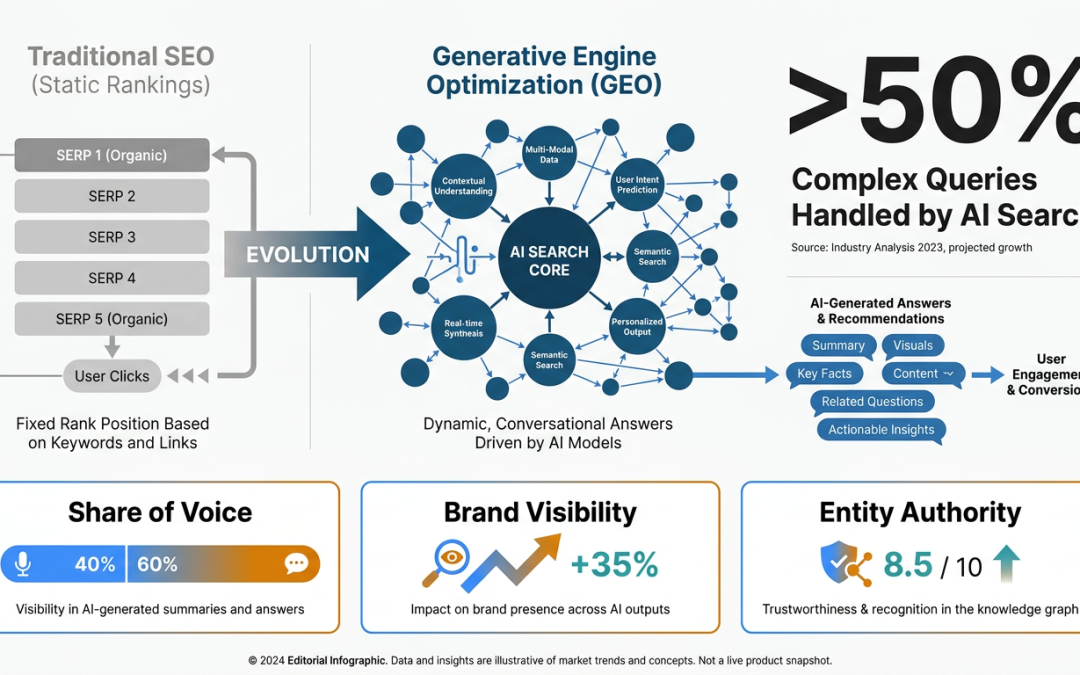
Key Takeaways
💡 Key Takeaways
GEO now means Generative Engine Optimization, not geographic tools. Success in 2026 requires tracking brand visibility in AI answers from models like ChatGPT and Perplexity, as traditional SEO rankings are no longer enough.
In the modern marketing lexicon, GEO tools refer to Generative Engine Optimization platforms. While this term historically meant Geographic Information Systems (GIS) or IP location software, its primary definition has shifted. Today’s advanced GEO tools are essential for tracking brand visibility, Share of Voice, and Entity Authority within AI search engines like ChatGPT, Claude, and Perplexity. For US marketers, these platforms are critical for ensuring brands are accurately cited and recommended in AI-generated answers, moving beyond the limitations of traditional search metrics.
Introduction: The Generative Shift Marketers Can’t Ignore
For years, a search for “geo tools” would lead you to a scattered collection of Geographic Information Systems (GIS) and basic IP location trackers. As we navigate 2026, that definition has been irrevocably rewritten. For marketers in the United States and beyond, understanding and mastering modern GEO tools—now synonymous with Generative Engine Optimization—is no longer a forward-thinking advantage; it’s a fundamental requirement for survival in an AI-first search landscape.
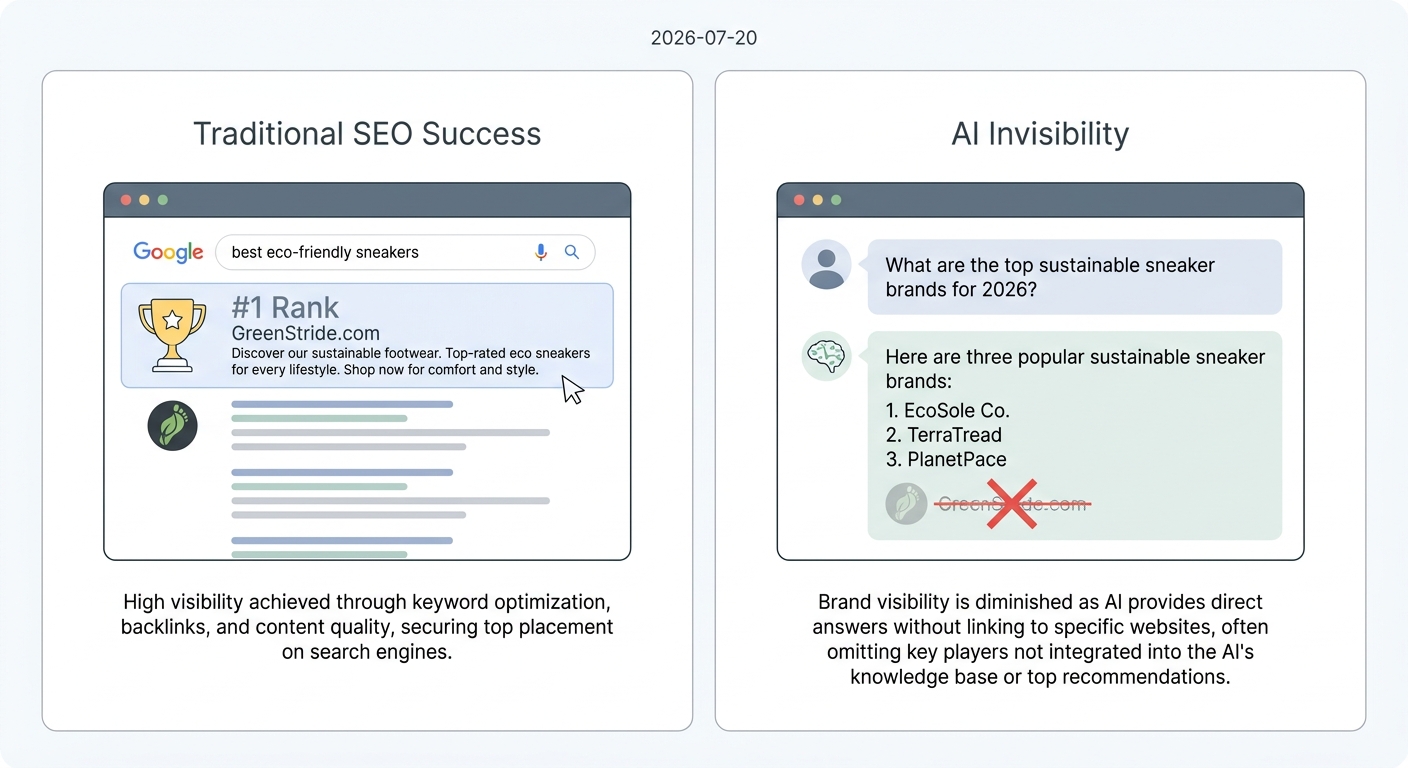
Gartner predicted that traditional search engine volume will drop 25% by 2026 due to AI chatbots and other virtual agents. As traditional search engines morph into conversational AI interfaces, relying solely on standard SEO metrics like keyword rankings is a direct path to traffic loss and digital obscurity. Your brand could rank #1 on Google, but if an AI like ChatGPT or Perplexity fails to mention you in its answer, you have effectively become invisible to a growing segment of your audience.
📊 The Tipping Point
Gartner predicted that traditional search engine volume will drop 25% by 2026 due to AI chatbots, making visibility within AI answers a critical marketing battleground.
This guide cuts through the noise. We will disambiguate the term “GEO tools,” explore the critical pivot from tracking static rankings to monitoring dynamic AI interactions, and provide a comprehensive framework for selecting the best platforms. We will highlight how a robust ecosystem of tools, like AI Rankia’s suite, empowers your brand to not just participate in, but dominate, the generative search era.
Author Credentials & Transparency
Author: The AI Rankia Data Team
Bio: We are a team of enterprise SEO and AI Search specialists dedicated to tracking brand performance across more than 17 distinct AI models, with a focus on the volatile US market. Our analysis draws on the AI Rankia index, which records 817,799 source citations in answers from 8 AI search engines.
LinkedIn: AI Rankia Corporate LinkedIn
Transparency Disclosure: This guide is produced by AI Rankia, a comprehensive GEO SaaS platform. While we feature our own platform as a prime example of a complete solution, we also objectively review and compare other industry tools. Our analysis is grounded in third-party data and community consensus to help you make a fully informed decision for your specific needs.
Expert Consensus: The Shift to GEO
“GEO is not ‘new SEO.’ It’s a visibility layer for the answer era. If your brand isn’t in the shortlist inside AI answers, your rankings can be perfect and you’ll still lose.”
Expert Consensus: The Shift to GEO
Eli Schwartz
“GEO is not ‘new SEO.’ It’s a visibility layer for the answer era. If your brand isn’t in the shortlist inside AI answers, your rankings can be perfect and you’ll still lose.”
Aleyda Solis
“While SEO success is measured in rankings, GEO success is measured in Share of Voice and Entity Authority.”
r/SEO Community
“Advanced GEO platforms provide the measurement, monitoring, and optimization layer traditional SEO tools can’t, helping teams win share-of-answer.”
— Eli Schwartz
“While SEO success is measured in rankings, GEO success is measured in Share of Voice and Entity Authority.”
— Aleyda Solis
“Advanced GEO platforms provide the measurement, monitoring, and optimization layer traditional SEO tools can’t, helping teams win share-of-answer.”
— r/SEO Community
What Are GEO Tools? A Necessary Disambiguation
The term “geo tools” currently suffers from a significant split intent in search results, creating confusion for marketers.
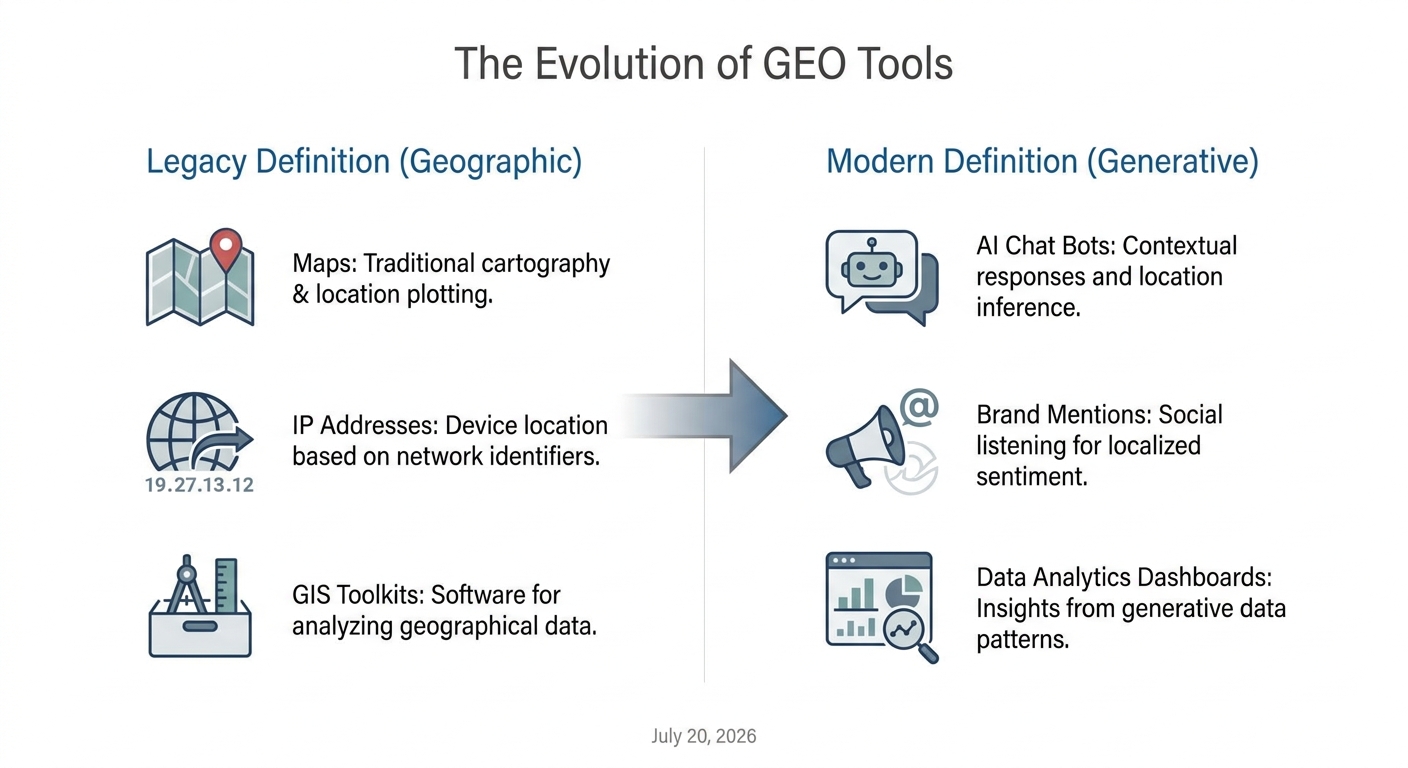
- The Legacy Definition (Geographic): Historically, developers and marketers used this phrase when searching for Java GIS toolkits, geo location tools, or an IP geo search API to map user coordinates for localized apps and services. These technologies remain vital for specific development use cases.
- The Modern Definition (Generative): In the 2026 marketing context, the term has pivoted entirely to Generative Engine Optimization. Modern GEO tools are sophisticated software platforms designed to monitor, analyze, and improve how Large Language Models (LLMs) perceive and recommend a brand.
Instead of tracking URL positions on a traditional search engine results page (SERP), these platforms evaluate conversational outputs. According to recent industry analysis, “GEO tools track how AI systems talk about your brand, what they cite, and where you are invisible” [5].
These platforms perform several key functions that traditional SEO tools cannot:
Core Functions of Modern GEO Platforms
Share of Voice Analysis
Measures how often your brand is mentioned vs. competitors in AI answers for key prompts.
Citation Tracking
Identifies the exact sources an LLM uses to formulate its response, revealing the ‘why’ behind its recommendations.
Sentiment Analysis
Determines if your brand is portrayed positively, neutrally, or negatively in AI-generated text.
Invisibility Analysis
Pinpoints high-intent queries where your brand fails to appear, highlighting critical content gaps.
- Share of Voice Analysis: Measuring how often your brand is mentioned compared to competitors in AI-generated answers for specific prompts.
- Citation Tracking: Identifying the exact source documents (articles, reviews, data) an LLM uses to formulate its responses, revealing the “why” behind its recommendations.
- Sentiment Analysis: Determining if AI models portray your brand in a positive, neutral, or negative light, allowing for proactive reputation management.
- Invisibility Analysis: Pinpointing critical, high-intent queries where your brand fails to appear entirely, highlighting your most urgent content and authority gaps.
If your brand’s discovery depends on being found through ChatGPT, Perplexity, or Google’s AI Overviews, leveraging dedicated Generative Engine Optimization software is a non-negotiable step to prevent digital extinction.
How to Evaluate and Select the Best GEO Tools
A common pitfall is relying on AI models themselves to recommend the best GEO platforms. These queries often yield generic lists of GIS software or outdated SEO tools, failing to distinguish the AI-specific features that truly matter. To navigate the market effectively, practitioners must adopt a rigorous 4-step evaluation framework.
🤖 Assess Engine Coverage
Ensure the tool tracks a diverse range of AI models (ChatGPT, Claude, Perplexity) to get a complete picture of your visibility.
🔍 Demand Citation Transparency
Prioritize platforms that reveal the exact source URLs an AI used, providing actionable insights for content strategy.
🎯 Verify Actionability
Look for features like Prompt Discovery and Invisibility Gap analysis that translate data into clear optimization tasks.
🏢 Check Enterprise Readiness
For teams, confirm the tool offers white-label reporting, API access, and multi-user workflows for scalability.
- Comprehensive Engine Coverage: A tool tracking only ChatGPT provides a dangerously incomplete picture. User behavior is fragmented across models like Claude, Perplexity, and Gemini, each with unique biases and training data. Your brand’s visibility can vary dramatically between them. Prioritize platforms that monitor a diverse range of relevant AI models.
- Deep Citation Transparency: Knowing if your brand was mentioned is surface-level data. Knowing why
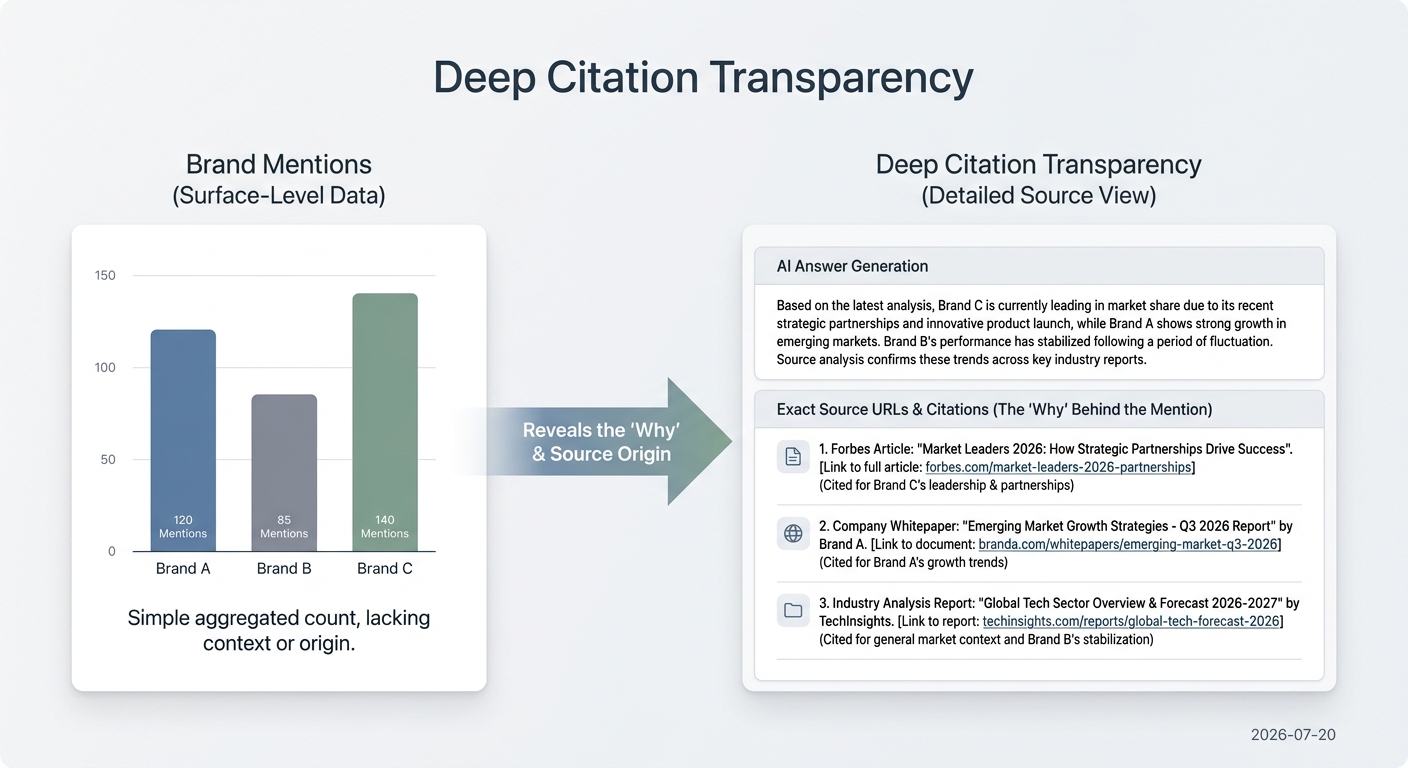
A diagram explaining deep citation transparency, which shows the sources an AI used to generate an answer. is where strategy begins. The best tools reveal the exact source URLs an LLM used to construct its answer, allowing you to trace its “reasoning.” This is the most actionable data point, enabling you to improve source content or build new, highly citable assets.
- Actionability & Prompt Discovery: Superior tools translate data into clear actions. This starts with Prompt Discovery (the AI equivalent of keyword research) to find what users are actually asking. The platform should then help prioritize efforts by flagging “Invisibility Gaps” and “Sentiment Risks” where intervention will have the maximum impact.
- Enterprise & Agency Readiness: For teams, scalability is paramount. Look for features like multi-user workflows, customizable white-label reporting, and robust API access. The ability to pipe GEO data into central BI dashboards (like Tableau or Power BI) is crucial for connecting AI Share of Voice to core business KPIs like leads and revenue.
Feature Comparison Matrix: Leading GEO Tools
Leading GEO Tools at a Glance
| Option | Pros | Cons | Score |
|---|---|---|---|
| AI Rankia | Comprehensive suite tracking 17+ models; end-to-end solution. | May have a learning curve for users new to AI optimization. |
9/10
|
| Geoptie | Good starting point for free AI search optimization audits. | Limited historical data and model coverage for enterprise use. |
6/10
|
| Answer Socrates | Excellent for identifying user prompts and question-based intents. | Lacks deep brand sentiment and competitive analysis features. |
7/10
|
| Semrush AI Toolkit | Integrates AI features into a familiar, widely-used SEO suite. | Less specialized and deep than dedicated, purpose-built GEO platforms. |
7/10
|
| Tool Name | Core Feature | Best For | Key Limitation |
|---|---|---|---|
| AI Rankia | Multi-engine suite, 17+ models | Comprehensive, end-to-end AI tracking | May have a learning curve for pure traditional SEOs |
| Geoptie | Audit tools & rank trackers | Free AI search optimization for beginners [1] | Limited historical data retention and model coverage |
| Answer Socrates | GEO Keyword Discovery | Identifying user prompts and question-based intents [2] | Lacks deep brand sentiment and competitor analysis |
| ShopMentions | Shopify LLM Tracking | E-commerce brands tracking product mentions [2] | Highly niche; not suitable for B2B or service industries |
| OtterlyAI | GEO benchmarking | High-level AI search referral tracking [1] | Primarily focuses on baseline metrics, less on citation detail |
| Semrush AI Toolkit | AI features in a legacy suite | Teams already invested in the Semrush ecosystem [3] | Can be less specialized than dedicated GEO tools |
Visibility in AI answers can influence B2B pipeline. This underscores why tool selection is a high-stakes decision. As noted by industry reviewers, comparing the best free GEO tools by use case [1]
📊 The Bottom-Line Impact
Visibility in AI-generated answers can influence B2B pipeline, making GEO a revenue-relevant discipline.
reveals that many lack the nuance for modern optimization. Evaluators should prioritize tools offering deep citation transparency and actionable prompt discovery [2][1], ensuring they are investing in specialized AI platforms rather than legacy tools with tacked-on AI features [3].
Core Metrics & KPIs in Generative Engine Optimization
While traditional SEO fixates on rankings and clicks, GEO operates on a new set of KPIs designed to measure influence within conversational AI. A robust GEO tool provides a dashboard that moves beyond simple mention counting to deliver deep, actionable insights into your brand’s standing.
Here are the core metrics that define GEO success:
- Share of Voice (SoV) in AI: This cornerstone metric measures the percentage of times your brand appears in AI answers for a target set of prompts versus your competitors. An SoV of 30% means your brand accounts for 30% of the brand mentions among all mentions of the tracked brands in AI answers (the exact formula varies by tool, see Ahrefs’ definition), for a query like “best enterprise CRM.”
- Citation Rate & Source Quality: This tracks how often your domain’s content is used as a source for an AI’s answer. A high citation rate signals to the AI that your entity is an authority. Quality is paramount—a citation from your proprietary research report is exponentially more valuable than a passing mention on a forum.
- Entity Authority Score: This is a proprietary score, calculated by advanced GEO platforms like AI Rankia, that quantifies an AI’s perception of your brand’s expertise on a topic. This aggregate score is influenced by mention frequency, sentiment, and the authority of domains that mention you within the AI’s training data.
- Sentiment Analysis: This KPI analyzes the context of each mention—is the AI recommending your product, describing it neutrally, or highlighting a negative review? This allows you to quickly identify and address reputational risks within AI ecosystems.
- Invisibility Gap Analysis: This critical metric pinpoints high-intent prompts where competitors are mentioned but your brand is not. This reveals your most urgent content and authority gaps, providing a clear roadmap for optimization.

By tracking these KPIs, marketers can shift from a reactive to a proactive GEO strategy, systematically building their brand’s presence where future customers are seeking answers.
Integrating GEO with Your Existing SEO Strategy
A common misconception is that Generative Engine Optimization is a completely separate discipline from traditional SEO. The reality is that modern GEO tools bridge the gap, allowing classic SEO tactics to directly fuel AI visibility. Your existing SEO efforts are the foundation upon which your GEO success is built.
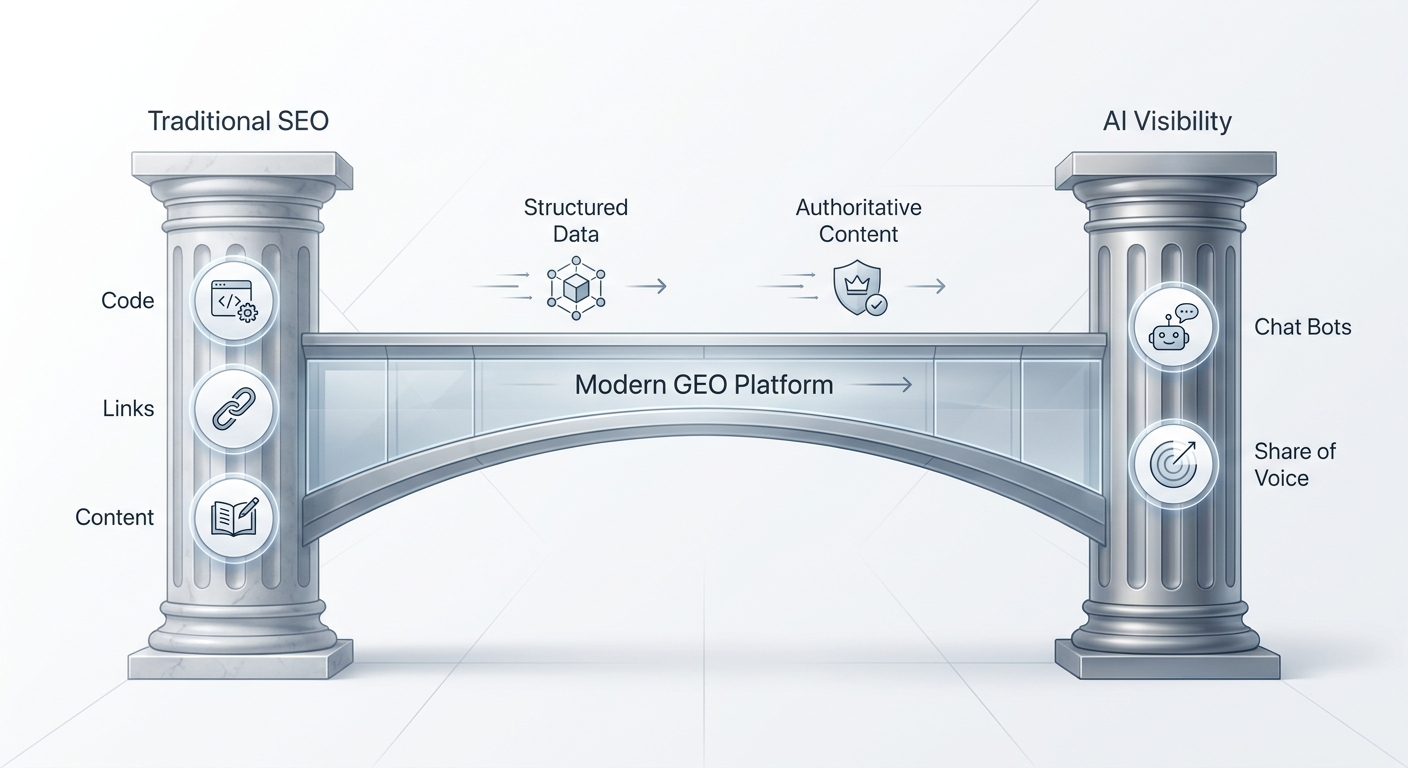
Platforms like AI Rankia serve as this vital hybrid bridge. By understanding how LLMs integrate with search engines, teams can structure their content and data to be easily digested and cited by generative models.
Here’s how to integrate your efforts for maximum impact:

- Supercharge Your Schema Markup: Go beyond basic schema. Implement robust
Organization,Person,Product, andArticleschema with detailed properties. This provides LLMs with structured, unambiguous data about your brand entity, its offerings, and its expertise, making you an easy and reliable source. - Focus on Authoritative, Topical Backlinks: In the eyes of an LLM, not all links are equal. A single link from a respected industry journal or academic institution is a powerful signal of authority, weighing more heavily than hundreds of low-quality links. These are the sources AI models trust.
- Treat Your Content as Future Training Data: Every piece of content you publish is a potential training document for future AI models. Ensure it is well-structured, factually impeccable, and clearly asserts your brand’s connection to key concepts.
Pro-Tip: Write for Citation
Structure key definitions, statistics, and insights for easy extraction by LLMs. Instead of burying a data point in a long paragraph, present it as a self-contained, authoritative statement.
- Less Citable:
✅ Pro-Tip: Write for Citation
Structure key stats and insights for easy extraction. Instead of burying data in a paragraph, present it as a clean, attributable fact that an LLM can confidently lift and cite. For example: ‘According to the Flexera 2026 State of the Cloud Report, 73% of organizations use hybrid cloud, up 3 percentage points year over year.’ is far more citable than a long, narrative sentence.
“Our extensive research, which was conducted over the past year, has shown that there is a significant trend towards companies adopting hybrid cloud solutions, with usage rising by about 3 percentage points.”
- More Citable: “According to the Flexera 2026 State of the Cloud Report, 73% of organizations use hybrid cloud, up 3 percentage points year over year. This growth is driven by the need for increased flexibility and cost management.”
The second version is a clean, attributable fact that an LLM can confidently lift and use to answer a user’s query, often with a direct citation back to your report.
As Alex Birkett notes regarding the best GEO tools for agencies, focusing on scalability and reporting is crucial for client success [4]. By combining SEO foundations with advanced generative tracking, teams can create a cohesive strategy that maximizes visibility across all search modalities.
The Critical Impact of US Geographic Location on AI Responses
A significant blind spot in most GEO discussions is the false assumption that AI models provide uniform answers globally. In reality, models like ChatGPT and Gemini frequently alter their responses based on the user’s IP address and inferred geographic location. What is missing from standard advice is the critical need to track AI responses across different US states and cities.
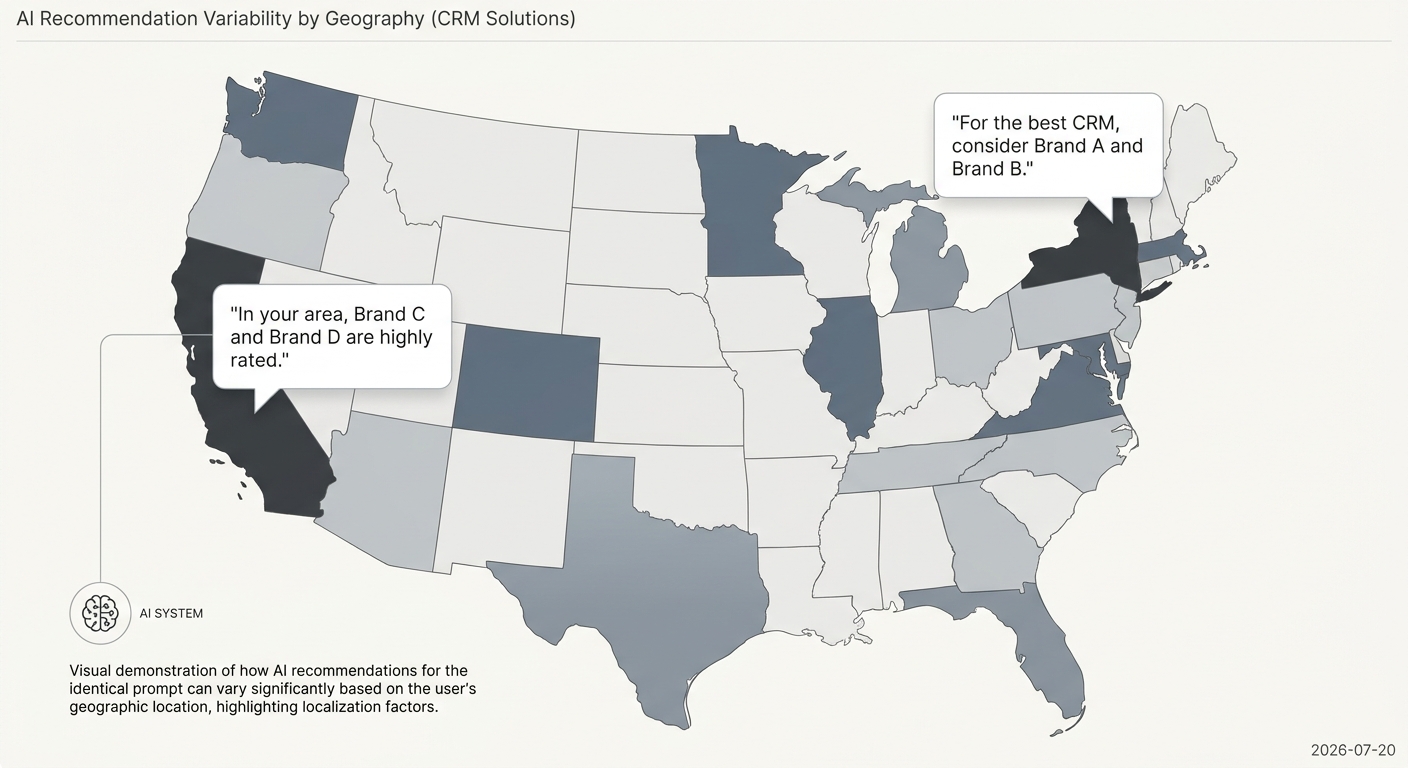
AI Rankia offers a dedicated Local module for local tracking, designed specifically to navigate this US local search volatility. Just as marketers rely on a geo location rank tracker for local SEO, modern practitioners need a sophisticated geo location tracker to understand how generative engines alter recommendations based on location. Brand recommendations for location-sensitive prompts like “best local insurance agent” can differ between US states.
📊 Geographic Volatility
Brand recommendations for the same prompt can differ between US states, highlighting the critical need for localized AI response tracking.
This variance occurs because LLMs integrate local context from geo-tagged data sources like Google Business Profiles, regional news articles, and local forums. An AI may recommend entirely different software vendors to a user in New York compared to a user in Los Angeles because its training data for each region is different.
To set up local US tracking for AI responses, practitioners should:
📍 Define Target Geographies
Input target city centers or geographic coordinates into a modern GEO platform with local tracking capabilities.
📡 Simulate Local Prompts
Run target prompts through the platform’s local tracker to simulate queries from specific US IP addresses.
🗺️ Analyze Query Fan-Out
Use analysis tools to visualize how brand recommendations and sentiment shift across different states or cities.
- Define target geographic coordinates or city centers within a modern GEO platform.
- Input target prompts into the platform’s local tracker, ensuring the tool simulates queries from those specific US IP addresses.
- Run a Query Fan-Out Analysis to visualize how the AI’s brand recommendations and sentiment shift across state lines.
Monitoring this geographic variance is essential for local businesses and national brands aiming to maintain consistent Share of Voice across the entire United States.
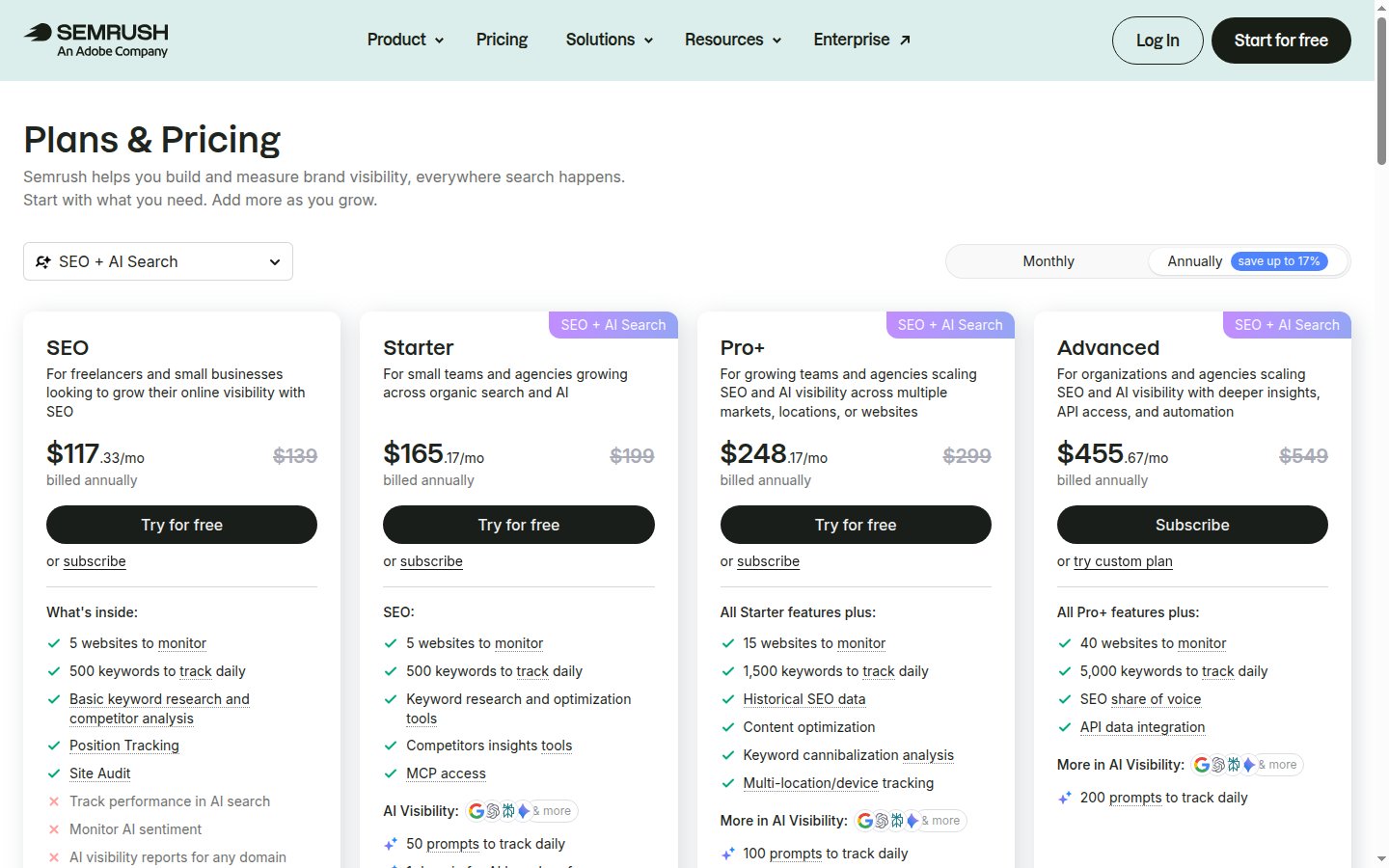
Published pricing (verified September 2026)
| Tool | Plan | Price | Billing | What it includes |
|---|---|---|---|---|
| Semrush | Pro+ | 248.17 USD/mo | billed yearly | 15 websites, 1,500 keywords, 100 AI prompts daily |
| Semrush | Advanced | 455.67 USD/mo | billed yearly | 40 websites, 5,000 keywords, 200 AI prompts daily |
| Semrush | Enterprise | on request | Custom pricing available | Unlimited projects & custom limits, custom AI prompt tracking |
Source: Semrush
How we evaluated these tools
This comparison is a documentary evaluation, not a hands-on benchmark: for each tool we reviewed its public website, its pricing page and its published feature list, and captured the screenshots you see above on September 2026. Prices are the ones displayed on each vendor's site on that date (annual billing where the vendor shows it that way) and can change; every table links to the source page so you can check it. We did not run paid campaigns on every tool for this article.
Frequently Asked Questions (FAQ)
- What does GEO stand for in marketing?
In modern digital marketing, GEO stands for Generative Engine Optimization. It is the practice of optimizing a brand’s digital presence to be favorably featured in answers from AI models like ChatGPT and Google AI Overviews.
- How are GEO tools different from SEO tools?
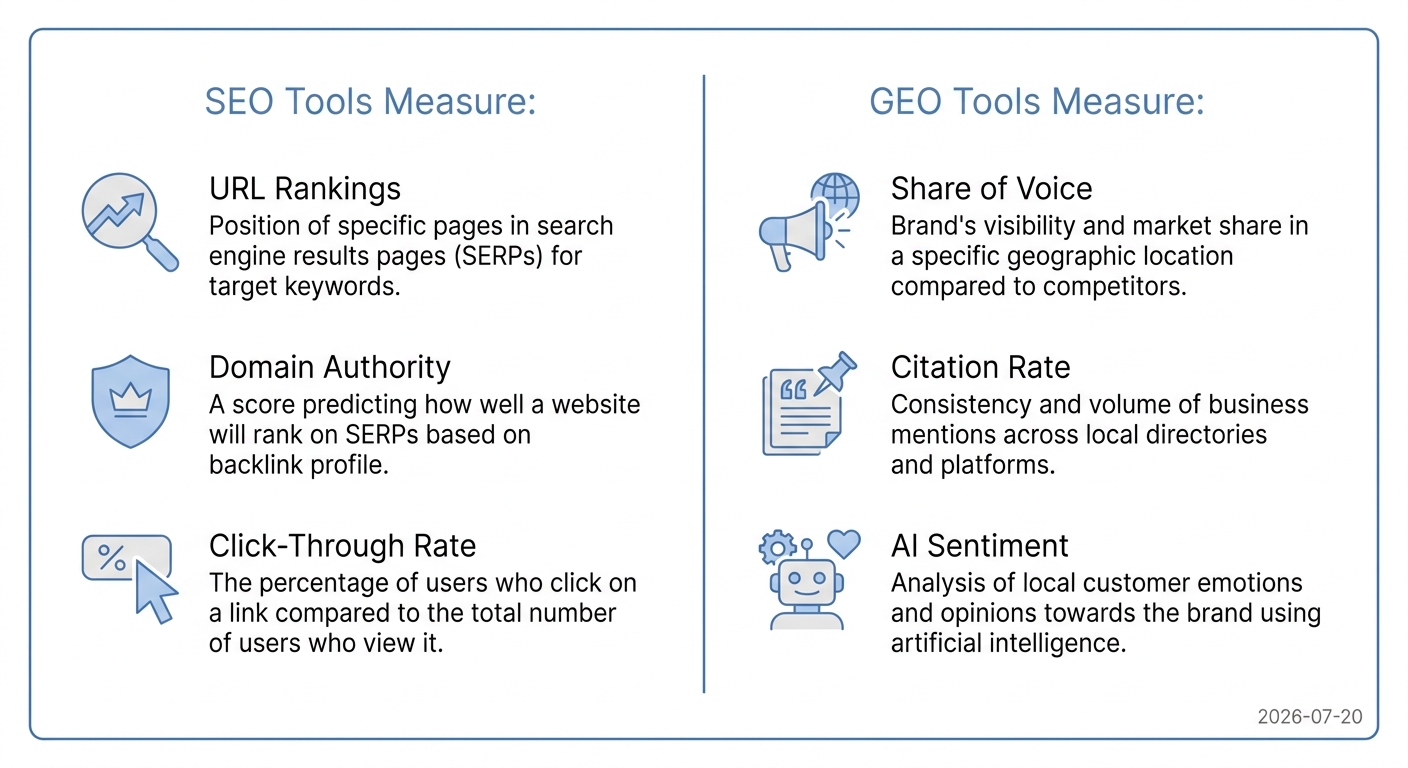
A comparison chart showing the differences between what SEO tools and GEO tools measure.
The core difference is what they measure. SEO tools track URL rankings on a search results page. GEO tools measure brand mentions, sentiment, and Share of Voice within the conversational text of an AI’s answer.
- What are the most important features in a GEO tool?
Prioritize three key features: 1) Multi-model tracking (covering ChatGPT, Claude, Perplexity, etc.), 2) Deep citation transparency (showing the source URLs behind an AI’s claims), and 3) Local US tracking to see how answers change by location.
- How do I track my brand’s mentions in ChatGPT?
You use a GEO platform’s prompt discovery and tracking features. You input a set of relevant user questions, and the tool simulates these queries across different AI models, analyzing the resulting text to report when, where, and how your brand was mentioned.
- Why is my brand invisible in AI search results?
Invisibility in AI answers often stems from low Entity Authority. This can be caused by a lack of high-authority mentions, unoptimized schema markup, or weak contextual associations in the AI’s training data, preventing it from recognizing your brand as a relevant solution.
- How much do GEO tools typically cost?
Pricing varies widely. Enterprise-grade platforms can exceed $500/month. However, more accessible starter tiers can provide AI tracking for agencies and in-house teams without requiring a massive budget.
Limitations, Alternatives & Professional Guidance
While GEO tools provide indispensable visibility metrics, they are not a magic bullet. Their data is only valuable when paired with a robust strategy that includes creating high-quality, original content and building a strong, authoritative digital presence. AI models are updated constantly, meaning optimization is an ongoing process of monitoring and adaptation, not a one-time fix. For complex enterprise implementations or for teams new to the space, consulting with an AI SEO specialist is highly recommended to ensure accurate data interpretation and effective strategy alignment.

Conclusion: Win the Answer, Win the Future
The digital marketing landscape has fundamentally changed. The term “geo tools” has evolved from a niche for IP trackers to the banner for essential Generative Engine Optimization platforms. For US marketers in 2026, tracking Share of Voice across 17+ AI models is no longer an innovative tactic—it is a baseline requirement for survival, especially given the high volatility of local AI search responses.
Relying on traditional ranking metrics while ignoring conversational AI citations is like celebrating a high score in a game that no one is playing anymore. It leaves your brand dangerously exposed to digital invisibility. It is time to stop flying blind in the new era of search. By leveraging a comprehensive suite of optimization features—from multi-model tracking and citation analysis to local US query simulation—you can ensure your brand is not just mentioned, but recommended as the authoritative answer.
To see how these metrics can transform your strategy and protect your brand’s future, we invite you to access the Free Trial of AI Rankia’s Starter Plan. Unlock the full platform today and start winning the answer.
References
[1] Best Free GEO Tools in 2026: Tested & Compared by Use Case.
[2] 10 Best Generative Search Optimization (GEO) Tools.
[3] Best GEO Tools for Generative Engine Optimization in 2026.