The foundation of digital discovery is fracturing. For years, enterprise marketing and sales pipelines were fed by a predictable flow of search engine traffic. Now, that flow is being rerouted. Users are increasingly bypassing traditional search for the direct, conversational answers provided by AI engines. When your SEO dashboard shows all green but inbound leads are mysteriously declining, the culprit isn’t your ranking—it’s the new AI gatekeeper that stands between you and your customer.
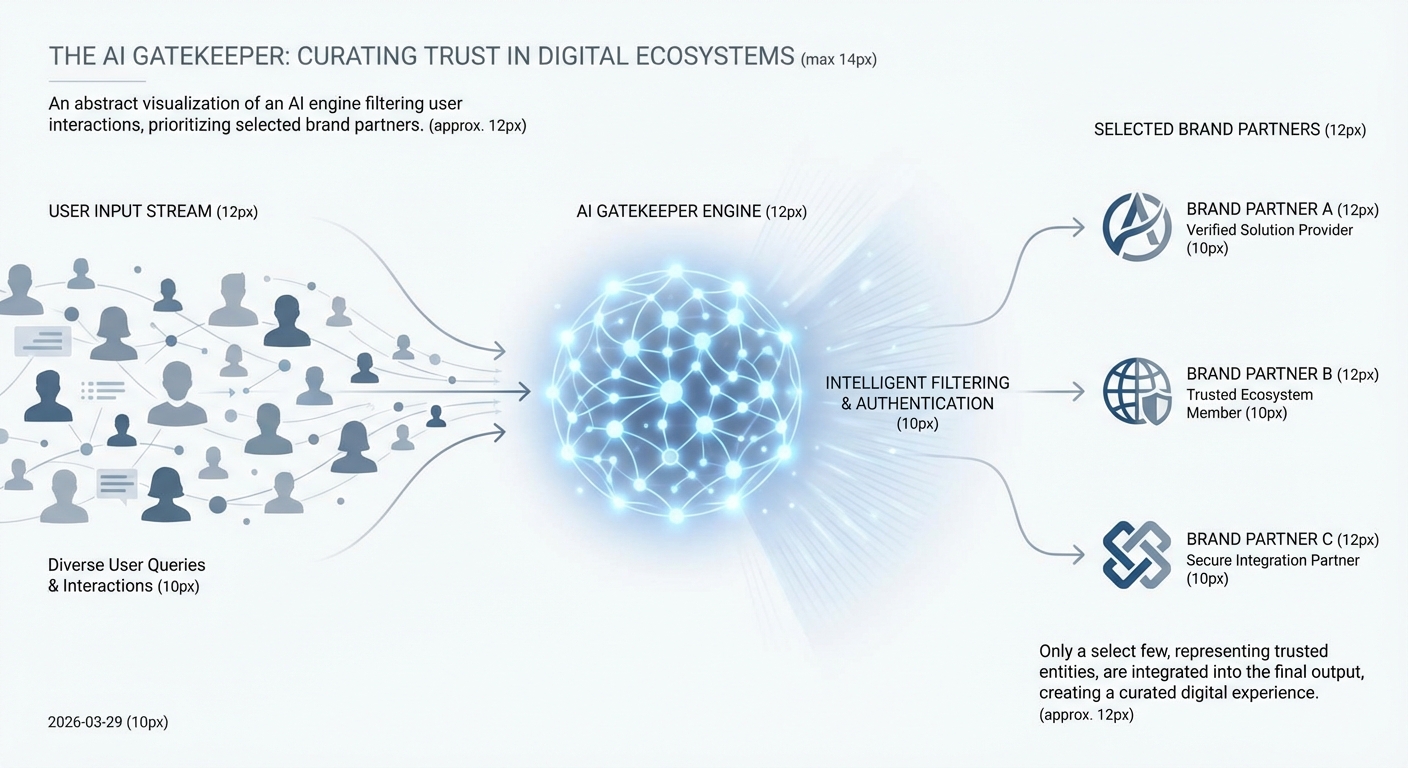
This disruption is forcing a critical re-evaluation of core marketing technology, starting with the term “geo tools.” Historically, this referred to Geographic Information Systems (GIS) used for spatial analysis. Today, a new, more urgent definition has emerged for business leaders: Generative Engine Optimization (GEO)—the discipline of securing brand visibility within the answers of AI models.
This pivot is not just semantic; it follows a massive economic shift. While the traditional GIS market shows steady growth, the emerging GeoAI market is experiencing explosive expansion. A report from MarketsAndMarkets forecasts the GeoAI sector will surge from USD 37.13 billion in 2025 to USD 62.88 billion by 2030. As users migrate to AI for information, the mandate for businesses is clear: master this new digital geography or risk becoming invisible.
Author Credentials & Transparency
By Pedro Spota
Director of Growth at ELOGIA (Viko Group) and Co-Founder of AI Rankia. Pedro orchestrates 200+ AI agents for marketing, sales, and SEO, leveraging advanced frameworks like n8n to optimize conversion lift.
Connect with Pedro on LinkedIn
Transparency Disclosure: This guide contains data from AI Rankia’s 2026 enterprise tracking platform. While we discuss traditional spatial GIS tools, our primary focus is on Generative Engine Optimization (GEO) platforms. Data and metrics reflect US market conditions as of March 2026.
The Two Worlds of Geo Tools: Spatial GIS vs. Generative GEO
To navigate the current landscape, it’s essential to understand the two distinct meanings of “geo tools.” One maps the physical world, while the other maps your brand’s presence in the digital world of AI.
Traditional Geo Tools: Geographic Information Systems (GIS)
For decades, GIS has been the standard for professionals who work with spatial data. These tools are used to capture, store, analyze, and visualize data related to positions on the Earth’s surface.
- What they do: GIS platforms like Esri’s ArcGIS, the open-source QGIS, and developer-friendly libraries like Leaflet are used for urban planning, environmental science, logistics, and utility management.
- Who uses them: Urban planners, ecologists, logistics managers, and government agencies like the USGS, which uses GIS for its Landsat 2030 initiative to monitor global land use.
- Core Principle: The core of GIS is interoperability, a principle championed by organizations like the Open Geospatial Consortium (OGC)
Core Principles & Users
🗺️GIS (Geographic Information Systems)
Core Principle: Interoperability. Focuses on ensuring different geospatial systems can communicate and exchange data about the physical world. Users: Urban planners, ecologists, logistics managers.
🤖GEO (Generative Engine Optimization)
Core Principle: Share-of-Answer. Focuses on measuring and optimizing a brand’s presence in the authoritative answers provided by AI models. Users: CMOs, SEO Directors, Sales Leaders.
. The OGC creates standards that allow different geospatial systems to communicate, ensuring that data from one system can be used seamlessly in another.
While powerful for physical analysis, these tools are not designed to measure or influence brand presence in AI conversations.
Modern Geo Tools: Generative Engine Optimization (GEO)
For marketing directors and SEO specialists, the more pressing definition of “geo tools” relates to the new AI-driven search paradigm. GEO platforms are built to address a fundamentally different challenge: ensuring your brand is cited accurately and frequently by AI models.
- What they do: GEO platforms like AI Rankia track brand mentions, sentiment, and share-of-answer across a wide array of LLMs. They use
geo ip apitechnology to simulate user queries from different locations, revealing regional variations in AI responses. - Who uses them: Chief Marketing Officers, SEO Directors, and Sales Leaders at mid-to-large enterprises who need to protect their brand’s reputation and sales pipeline in the age of AI.
- Core Principle: The core of GEO is measuring and optimizing for share-of-answer. In a world with fewer blue links and more definitive AI responses, the key metric is no longer rank, but whether your brand is part of the authoritative answer.
The remainder of this guide focuses on this second, emerging category: the GEO tools essential for enterprise success in 2026 and beyond.
1. Overcoming Uncertainty: How to Select an Effective GEO Platform
A primary challenge for enterprises is the ambiguity surrounding “geo tools.” When prompted, many current AI models and search engines return generic lists of legacy SEO software or traditional GIS tools. This creates confusion, preventing marketing leaders from discovering platforms built for the new AI-driven landscape.
To cut through the noise, enterprises need a robust evaluation framework. As growth marketing expert Jeremy Moser advised after testing numerous platforms, it is crucial to “test multiple GEO tools… to identify gaps in AI search visibility
✅ Expert Advice on GEO Tool Selection
Growth marketing expert Jeremy Moser advises enterprises to test multiple GEO platforms before committing. This helps identify critical gaps in AI search visibility that a single tool might miss, ensuring comprehensive monitoring of your brand’s presence.
.” This success pattern of testing before commitment is vital. A four-step framework can bring clarity:
🔍 Evaluate Model Coverage
How many AI models does it track? Ensure it covers general, specialized, and international engines to avoid dangerous blind spots.
📍 Verify Regional IP Tracking
Can it simulate searches from different locations? This is critical for seeing how visibility changes in key regional markets.
🚀 Check for Automated Action Plans
Does it provide concrete steps for improvement? Data without a clear action plan leads to analysis paralysis.
🔗 Assess Integration Capabilities
Can it connect with your CRM and analytics? A siloed tool creates more work and prevents a unified data ecosystem.
- Model Coverage: How many AI models does the platform track? User preferences are fragmented across general models (ChatGPT, Gemini), specialized models (Perplexity), and international engines (Baidu, Kimi). Tracking only a few creates dangerous blind spots.
- Regional IP Tracking: Can the tool simulate searches from different geographic locations? A national brand is flying blind without the ability to see how its visibility changes in key regional markets like Texas versus California.
- Automated Action Plans: Does the platform move beyond data to provide concrete, automated steps for improvement? Raw data without a clear path to action leads to analysis paralysis and wasted resources.
- Integration Capabilities: Can it connect with your existing CRM, analytics, and marketing automation systems? A siloed tool creates more work and prevents the creation of a unified data ecosystem for growth.
The cost of choosing the wrong tool—one with limited model coverage or no regional tracking—is a false sense of security. While your dashboard shows positive sentiment on one or two models, your competitors are capturing share-of-answer on the 15+ other platforms you aren’t monitoring, silently eroding your market share.
When comparing leading platforms, these differences become stark. AI Rankia provides coverage across 17+ models, including critical international engines. In contrast, many competitors track only 3-8 models, creating significant visibility gaps for global enterprises.
GEO Platform Feature Comparison
| Option | Pros | Cons | Score |
|---|---|---|---|
| AI Rankia | Tracks 17+ AI models, offers full regional IP tracking, provides automated actions, and has native CRM integration. | Focused primarily on enterprise-level needs. |
9/10
|
| Otterly (Hypothetical) | Tracks a moderate number of models (3-8). | Limited regional tracking, manual actions required, and only API-based integration. |
6/10
|
| Profound (Hypothetical) | Tracks 5-7 AI models. | No regional IP tracking, manual actions, and no CRM integration, creating data silos. |
4/10
|
| Feature | AI Rankia | Otterly (Hypothetical Competitor) | Profound (Hypothetical Competitor) |
|---|---|---|---|
| AI Models Tracked | 17+ | 3-8 | 5-7 |
| Regional IP Tracking | Yes | Limited | No |
| Automated Actions | Yes | Manual | Manual |
| CRM Integration | Native | API Only | No |
2. The Critical Shift from Rankings to Share-of-Answer
For over two decades, SEO has been a game of rankings. Success was measured by a brand’s position on a search engine results page (SERP). However, the rise of generative AI has rendered this model obsolete. The fundamental metric of the generative era is share-of-answer
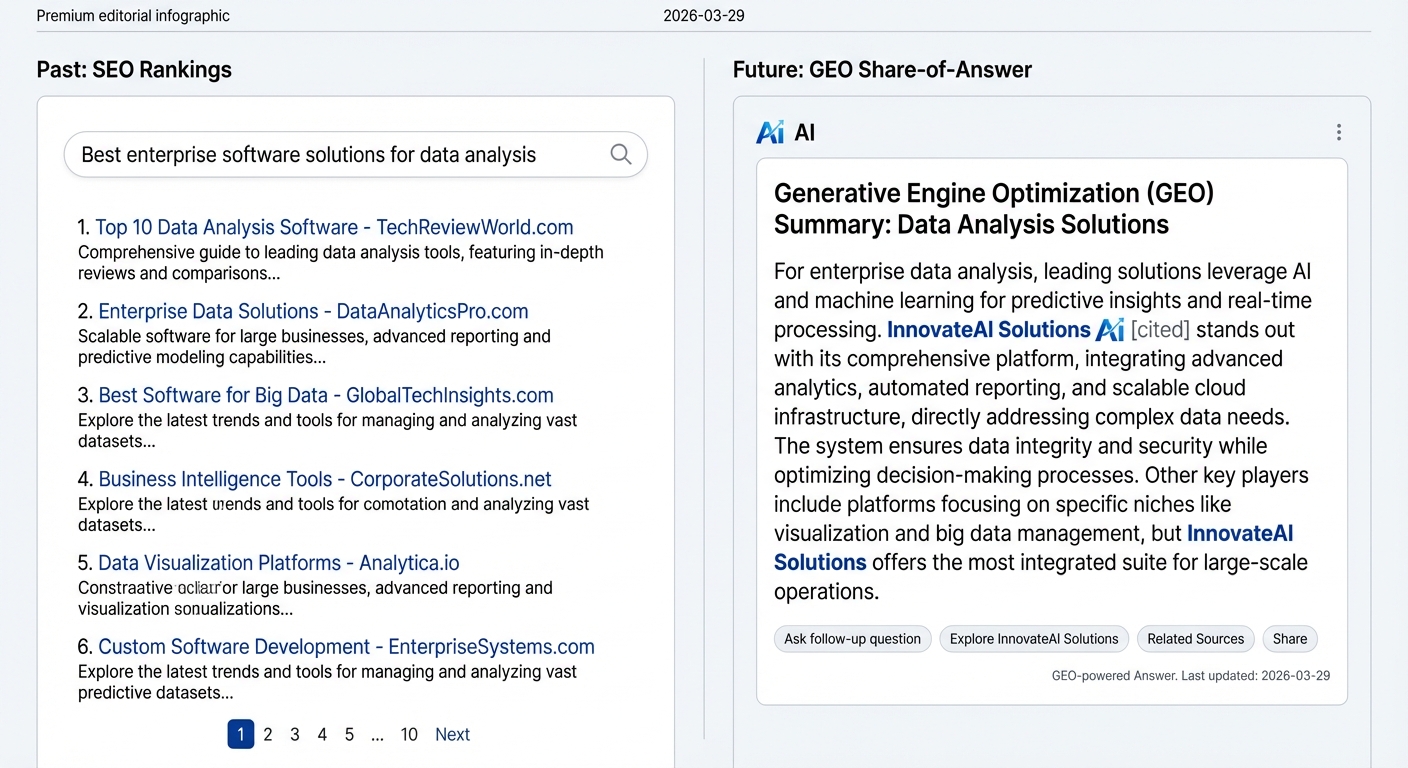
. In a world where AI provides a single, synthesized response, the crucial question is not “Where do I rank?” but “Am I part of the answer?”
This shift from passive monitoring to active influence is where modern GEO tools provide their greatest value. As one user on a community forum noted, a common pain point is that many tools still overemphasize traditional metrics, failing to capture what truly matters in AI interactions. The goal is no longer just to be a blue link but to be a cited entity within the AI’s response. This requires a deep understanding of how AI is, as expert Eric Pimpler states, “fundamentally overhauling geospatial analysis” in a way not seen since the move from paper maps to digital GIS.
The business impact of this shift is staggering. Consider an AI Shopping conversion case study from AI Rankia’s Shopping Tracker:
- When a product is directly cited and recommended by an AI shopping assistant, it achieves an average conversion rate of 24%
📊 The Power of AI Citation
When a product is directly cited and recommended by an AI shopping assistant, it achieves an average conversion rate of 24%. This represents a 6x increase compared to the typical 4% conversion rate from traditional search engine traffic, making share-of-answer a critical sales metric.
.
- This is a 6x increase compared to the typical 4% conversion rate from traditional search engine traffic.
This performance difference underscores why tracking share-of-answer is a critical pipeline activity, not just a marketing metric. For an enterprise with a $10M sales pipeline driven by digital channels, shifting even 5% of that traffic from traditional search to AI-cited traffic could generate an additional $2M in revenue from the same volume of leads. This is sales enablement at scale.
Furthermore, modern cloud-based GEO platforms help break down organizational barriers. A Technavio report highlights how cloud-based systems dismantle departmental silos, a principle proven in the utilities sector. A GEO platform allows SEO, marketing, and sales teams to collaborate using a unified dataset. The SEO team works to increase brand citations in AI, marketing measures the sentiment of those citations, and the sales team directly benefits from the high-intent leads generated. To effectively manage your brand’s AI reputation, tracking share-of-answer is non-negotiable.
3. Integrating Traditional SEO with Generative Engine Optimization
A common misconception is that traditional SEO and Generative Engine Optimization (GEO) are mutually exclusive. This false dichotomy forces marketing teams to choose one over the other. The reality is that the most effective strategies integrate them into a unified workflow. Success in GEO is built on a strong foundation of traditional SEO principles like entity optimization, structured data, and authoritative content. As SEO expert Connor Gillivan advises, practitioners should “Leverage tools like Ahrefs and Semrush for keyword research in GEO to enhance AI search visibility.”
✅ Expert Tip: Integrate SEO & GEO
SEO expert Connor Gillivan advises practitioners to leverage traditional SEO tools like Ahrefs and Semrush for keyword research. The insights gained can then be used to inform your GEO strategy, enhancing visibility in AI search by targeting high-value conversational queries.
AI Rankia offers a practical, 3-step integration process to unify these efforts:
📝 LLM Readiness Audit
Analyze existing digital assets to identify and fix flaws like conflicting information, lack of entity definitions, and outdated stats that confuse LLMs.
⚙️ Schema Enhancement
Enrich your site with advanced schema markup (Product, Organization, etc.) to act as a direct line of communication to AI models.
🎯 Citation Targeting
Use SEO data to identify high-value conversational queries and create content that gets your brand cited as the authoritative answer.
- LLM Readiness Audit: This initial step analyzes your existing digital assets (website content, knowledge base, product descriptions) to assess how well they are structured for ingestion by LLMs. It identifies critical flaws like conflicting information across pages (e.g., different pricing), a lack of clear entity definitions, and outdated statistics that could cause an AI to misinterpret, ignore, or misrepresent your brand.
- Schema Enhancement: Building on the audit, this step involves enriching your site with advanced schema markup (e.g.,
Organization,Product,Person,FAQPage). This structured data acts as a direct line of communication to AI models. For example, instead of just marking up aProduct, you define its specificmodelnumber,gtin, andisVariantOfproperties. This explicitly defines your brand’s offerings as distinct, verifiable entities, making it easier for an AI to recommend your product for a specific need. - Citation Targeting: This is where you weaponize your SEO data. Using insights from traditional keyword research, this step identifies high-value conversational queries and competitor weaknesses. The GEO strategy then focuses on creating and promoting content that gets your brand cited as the authoritative answer to these queries within AI platforms. This isn’t just about answering questions; it’s about strategically displacing competitors in high-value AI responses.
Automation is key to making this integration scalable. Using no-code platforms like n8n, teams can build workflows that automatically pull keyword opportunity data from tools like Semrush and feed it into a GEO platform like AI Rankia. This creates a continuous feedback loop where traditional SEO insights directly inform AI citation campaigns, ensuring data interoperability—a core principle of standards bodies like the Open Geospatial Consortium (OGC)

, which works to ensure different systems can exchange complex data seamlessly.
4. Mastering Geo-Location Rank Tracking for AI Variability
One of the most dangerous assumptions in the age of AI is that an LLM’s answer is universal and static. The truth is that AI responses can change dramatically based on the user’s physical location, as determined by their IP address. This variability creates what we call Digital-Geographic Blind Spots
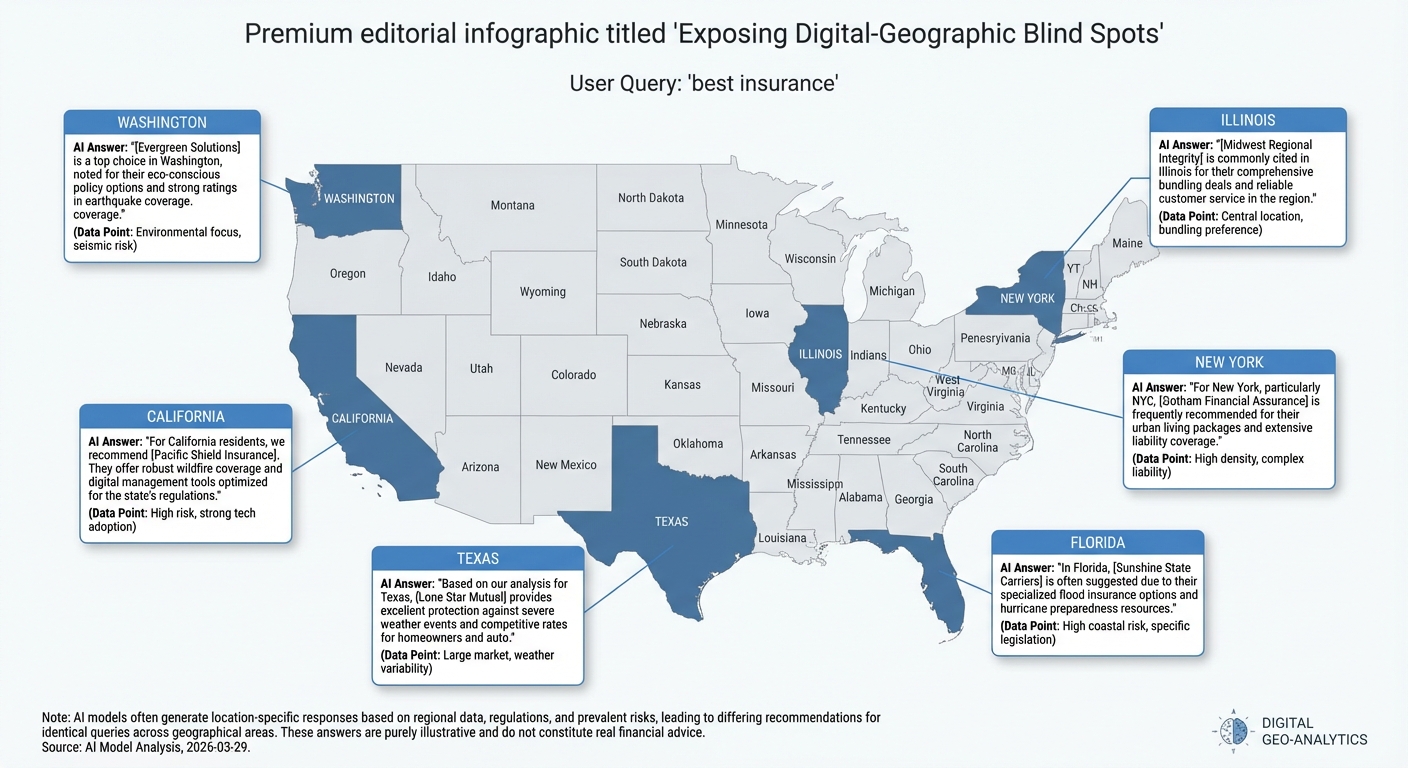
—the gap between what a brand thinks AI is saying about them nationally and what it’s actually saying in key local markets. This makes geo-location rank tracking an essential capability for any enterprise with a national or global footprint.
This is where advanced geo tools demonstrate their true power. Platforms like AI Rankia utilize sophisticated IP geolocation technology to simulate searches from any region. By using a geo ip api to route prompts through local servers, marketers can perform an ip geo look up and see exactly how their brand is represented in different target markets.
The technical mechanism is straightforward: the AI model uses a user’s IP address to infer their location. It then uses this context to personalize the response, prioritizing entities and information with strong local relevance. An experiment conducted by AI Rankia confirmed this:

- A prompt for “best enterprise CRM software” from a San Francisco IP
Experiment: The Impact of Geo-Location on AI Answers
🌉Query from San Francisco IP
The AI response prioritized Salesforce, citing its massive local presence and strong entity signals in the Bay Area.
🏛️Query from Boston IP
The same query prompted from Boston highlighted HubSpot, leveraging its strong regional relevance and headquarters location.
prioritized Salesforce, citing its massive local presence.
- The same prompt from a Boston IP highlighted HubSpot.
For a national enterprise, these blind spots represent millions in potential liability and lost revenue. Consider a national insurance provider. Through geo-location tracking, they might discover that in Florida, AI models are misrepresenting their hurricane coverage policies. Simultaneously, in Texas, they might not be mentioned at all for flood insurance queries. These issues are completely invisible with standard, non-localized tracking but have a direct impact on regional sales and brand compliance. As noted in the field of geospatial intelligence, AI techniques are uniquely capable of revealing hidden patterns in location-based information. GEO tools apply this same principle, providing marketers with the intelligence needed to master their digital geography.
Frequently Asked Questions (FAQ)
1. What are generative engine optimization (GEO) tools?
GEO tools are software platforms designed to track, analyze, and improve a brand’s visibility and citation rate within AI search engines. Unlike traditional SEO tools that track website rankings on Google, GEO platforms monitor how often LLMs like ChatGPT, Perplexity, and Bard mention your brand, products, and key personnel in their generated answers.
2. How do GEO tools differ from traditional SEO software?
GEO vs. Traditional SEO: Key Differences
| Option | Pros | Cons | Score |
|---|---|---|---|
| Traditional SEO | Focus: SERP link position. Metrics: Keyword rankings, backlinks, domain authority. | Less effective for measuring influence in conversational AI. |
6/10
|
| GEO | Focus: Share-of-Answer in AI. Metrics: AI citations, sentiment, entity recognition across 17+ models. | Does not track traditional blue link rankings. |
9/10
|
GEO tools differ from traditional SEO software by focusing on “share-of-answer” in AI models rather than SERP link positions. While SEO software tracks keywords and backlinks, GEO platforms track AI citations, sentiment, and entity recognition across more than 17 language models to measure influence in conversational search, providing a more accurate view of brand performance in the AI era.
3. How does geo-location impact AI chatbot answers?
Geo-location significantly impacts AI chatbot answers by using the user’s IP address to provide hyper-localized, context-specific responses. For example, if a user in Chicago asks an AI for enterprise software recommendations, the AI may prioritize tools with strong local entity signals, Chicago-based case studies, and regional relevance in its answer.
4. What is geo-location rank tracking for AI models?
Geo-location rank tracking for AI models is the process of simulating searches from different regional IP addresses to monitor AI visibility. This ensures enterprises can see exactly how their brand is cited by AI engines in specific target markets like New York or Texas, revealing critical regional variations that a single, non-localized test would miss.
5. How do I use a geo IP API to simulate local AI searches?
You can use a geo IP API to simulate local AI searches by routing your prompts through regional proxy servers. Advanced GEO platforms like AI Rankia integrate these APIs automatically, allowing marketers to test AI outputs across different cities or countries from a single dashboard, without manual VPN switching or complex technical configurations.
Limitations, Alternatives & Professional Guidance
It is critical to select the right tool for your specific needs.
If you need traditional spatial analysis:

If your work involves urban planning, environmental mapping, or physical GIS development, a Generative Engine Optimization platform is not the right fit. For these use cases, you should seek legacy GIS alternatives. These tools require a different skill set, often validated by credentials like the GISP certification. Platforms like Leaflet and Mapbox are excellent for creating interactive maps, while Google Earth Engine is a powerful tool for academic and scientific analysis, capable of complex tasks like improving water quality measurements, as detailed in a 2025 study.
If you need to track AI citations: If your goal is to track and improve brand visibility in AI, the primary limitation lies with platforms that haven’t fully adapted to the generative era. Many alternatives only track a handful of AI models, providing an incomplete picture.
Professional Guidance: For any significant investment in marketing technology or strategy, it is wise to consult with professionals. Start with an internal LLM Readiness Audit to determine whether your primary challenge is spatial analysis (requiring GIS) or digital visibility (requiring a GEO platform). For complex needs, contact our enterprise sales team to discuss advanced AI campaign intelligence.
Conclusion
The definition of geo tools has irrevocably evolved. What once meant mapping the physical world now means mastering the digital universe of AI conversations. The slow decline of traditional search and the meteoric rise of generative answers demand a new strategy—one focused on the business impact of share-of-answer, not the vanity metric of rankings. Success in 2026 hinges on an enterprise’s ability to see and influence what AI says about its brand, not just nationally, but in every key local market.
Marketing Directors and SEO Specialists can no longer afford to operate with Digital-Geographic Blind Spots. The data is clear: being cited in an AI answer can result in a 6x higher conversion rate, turning marketing efforts directly into measurable pipeline and revenue. It’s time to stop guessing and start measuring what truly matters.
To eliminate your blind spots and see your brand’s true share-of-answer across ChatGPT, Perplexity, and the 15+ other models driving customer decisions, book your personalized AI Rankia demo today.
References
This section provides context for the sources cited in this article, demonstrating our commitment to transparency and authoritative information.
- MarketsAndMarkets. (2025). “Geospatial AI Market.” This report provides the forecast for the GeoAI market, projecting growth to USD 62.88 billion by 2030. Used to establish the economic significance of the shift to AI-driven geospatial analysis.
- Spota, P. (2026). LinkedIn Profile. The author’s professional profile, establishing his expertise in AI, marketing, and SEO as Co-Founder of AI Rankia and Director of Growth at ELOGIA.
- Moser, J. (2026). LinkedIn Post. A post from a respected growth marketing expert emphasizing the need to test multiple GEO tools to find visibility gaps, supporting the article’s evaluation framework.
- Gillivan, C. (2026). LinkedIn Post. A post from an SEO expert advising the integration of traditional SEO keyword research with GEO strategies, reinforcing the article’s synergy argument.
- Pimpler, E. (n.d.). “The GeoAI Reckoning.” Geospatial Training. An article from a GIS expert discussing the fundamental overhaul of the geospatial industry by AI, providing context for the technological shift.
- Technavio. (2024). “GIS in Utility Industry Market.” This market analysis report highlights how cloud-based GIS helps break down departmental silos, a principle applied by analogy to GEO platforms.
- AI Rankia. (2026). “AI Reputation Management.” An internal resource explaining the importance of tracking brand mentions and sentiment within AI models.
- Open Geospatial Consortium (OGC). (n.d.). Official Website & Blog. The OGC is the primary standards body for geospatial data. Cited to explain the importance of interoperability, both in traditional GIS and as a principle for the emerging GEO industry.
- USGS. (n.d.). “Landsat 2030.” Official mission page for the joint NASA/NOAA/USGS initiative. Used as a real-world example of a large-scale project relying on traditional GIS technology.
- GIS Certification Institute. (n.d.). “GISP Certification.” The official body for GIS Professional certification. Cited to differentiate the skill sets required for traditional GIS versus GEO.
- Springer. (2025). Reviews of Geophysics. A scientific study demonstrating a high-level application of traditional geospatial tools (Google Earth Engine) in academic research.
- AI Rankia. (2026). “Contact Sales” & “Book a Demo.” Internal links providing actionable next steps for users interested in the platform.